
320 kg of Plecostomus Fish Captured from Kaja Reservoir, Here's How the East Jakarta City Government Disposes of Them
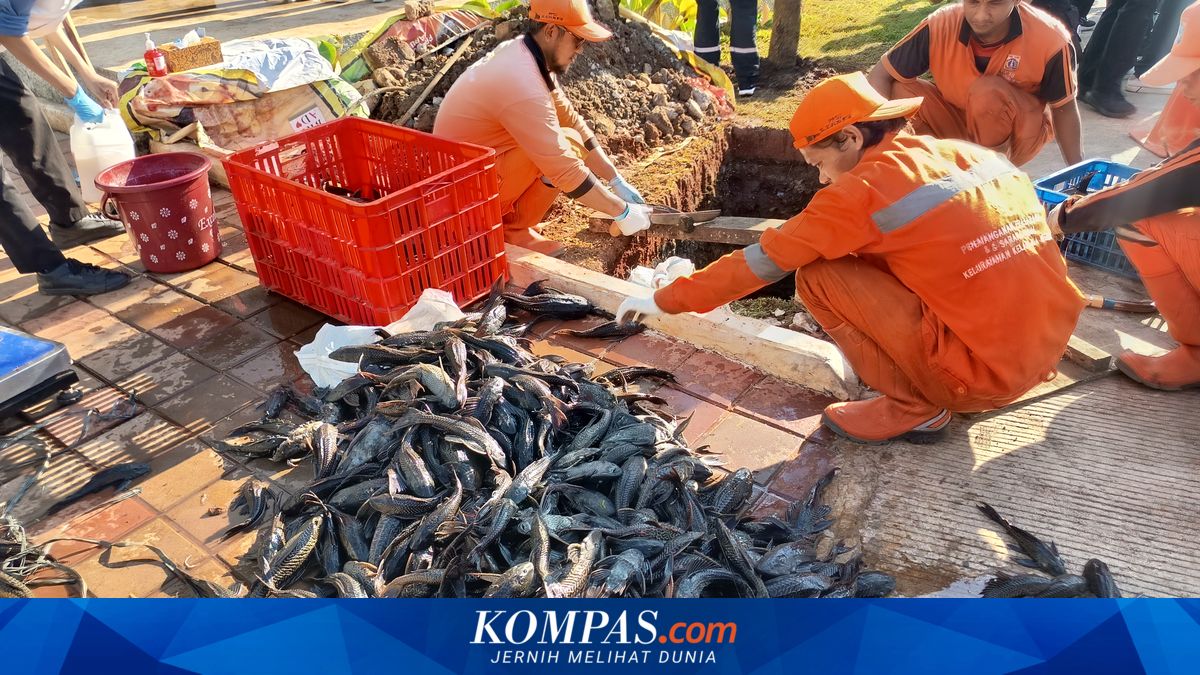
The East Jakarta City Government has once again launched an operation to capture plecostomus fish in the Kaja Reservoir, Ciracas, East Jakarta. The operation was directly led by the Mayor of East Jakarta, Munjirin, involving the Water Resources Sub-Department, Public Infrastructure and Facilities Handling Unit (PPSU), and the Environmental Sub-Department. The capture was carried out by first reducing the reservoir’s water flow. Afterwards, the plecostomus fish were netted from the edges of the Kaja Reservoir. After being caught, all the fish will be disposed of by burying them in prepared holes. Before burial, the fish are first killed by splitting their heads. “We collect them, then weigh them, kill the fish first, and then bury them. Currently, all sub-districts are mobilised similarly. But now it’s focused on the Kaja Reservoir,” he explained. “Yes, this (disposal) is in accordance with the recommendations from the Agriculture and Fisheries Office, that the process of eliminating plecostomus fish after capture is to bury them,” he added. Previously, the Governor of DKI Jakarta, Pramono Anung, expressed his support for massive efforts to control plecostomus fish in Jakarta’s rivers. He assessed that the invasive species could disrupt ecosystem balance and potentially endanger the public. “I am one of those who approved conducting it massively to eliminate or reduce plecostomus fish,” Pramono said at Lapangan Banteng, Central Jakarta, on Saturday (11/4/2026). “Because if left alone, the other fish will disappear. Native fish and so on will definitely disappear,” he emphasised. Pramono also said he directly monitored the plecostomus fish capture process in areas around Grand Hyatt and Plaza Indonesia. He explained that the species originating from South America has strong resilience. According to him, plecostomus fish can eat various types of food, thus potentially damaging river ecosystems. Additionally, he considered the fish unsafe for consumption.