
30% Economy Train Discount Used by 1.30 Million Passengers During School Holidays
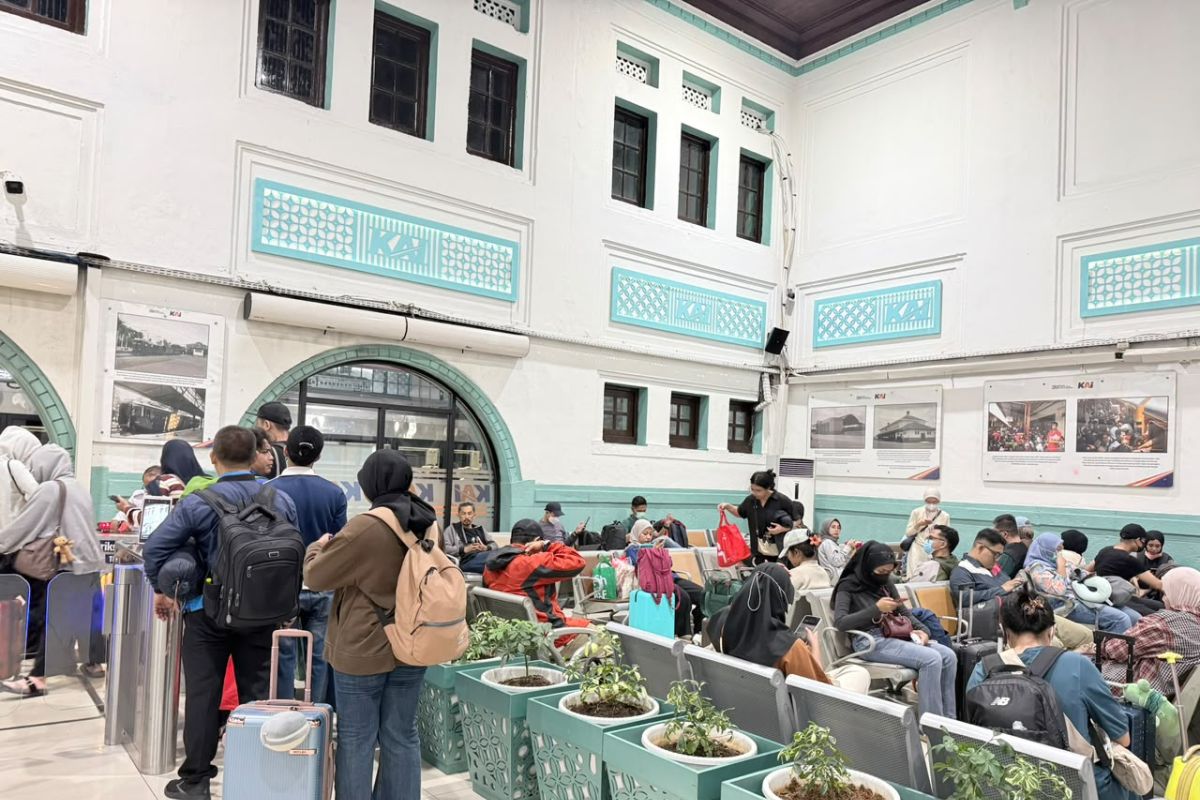
Jakarta (ANTARA) - PT Kereta Api Indonesia (Persero) served 1,303,191 passengers who took advantage of the 30% fare discount during the school holiday period of 20 June to 5 July 2026.
During the same period, KAI continued to operate subsidised trains under the public service obligation (PSO) scheme, as well as business class, executive class and other services. Overall, KAI served 3,451,031 passengers during the 16 days.
Vice President of Corporate Communication at KAI, Anne Purba, said the 30% discount offered a more affordable fare option, whilst PSO trains continued to serve the public’s travel needs.
“Some 1.30 million passengers took advantage of the 30% discount. In addition, KAI continued to run PSO trains and other services to serve people’s mobility during the school holidays,” said Anne.
Of KAI’s total passengers, 37.8% used the 30% discount, whilst 2,147,840 passengers, or 62.2%, used services outside the discount programme.
The discount, provided by the Government through the Directorate General of Railways at the Ministry of Transport, applied to designated Commercial Economy trains, covering 150 regular journeys and 26 additional journeys.
Compared with the 2025 school holiday period, the number of discount recipients rose 11.04%, from 1,173,612 to 1,303,191 passengers. This means an additional 129,579 passengers benefited from the discount in 2026.
Overall, KAI’s passenger numbers also increased by 3.75%, from 3,326,281 passengers in 2025 to 3,451,031 in 2026. Meanwhile, passenger numbers outside the discount programme remained relatively stable, going from 2,152,669 to 2,147,840.
“The increase in passengers during the school holidays is mainly visible in the discount recipient group. This programme helps people plan their travels at lower cost,” said Anne.
The Joglosemarkerto train recorded the highest number of discount recipients, at 67,556 passengers. This was followed by the Ambarawa Ekspres with 67,298 passengers, the Kaligung with 55,256, the Pangrango with 49,085, and the Kamandaka with 48,921.
These services connect a number of cities in Central Java, the Special Region of Yogyakarta, West Java and Jakarta.
“Discount users favour the Joglosemarkerto, Ambarawa Ekspres, Kaligung, Pangrango and Kamandaka. These journeys support tourism, family visits and intercity mobility,” explained Anne.
Based on discount recipient data, Pasar Senen Station recorded the highest number of departures with 136,136 passengers. This was followed by Yogyakarta Station with 87,836, Semarang Poncol with 69,952, Semarang Tawang with 64,451, and Surabaya Pasarturi with 51,887.
For destination stations, Pasar Senen also topped the list with 127,571 passengers, followed by Yogyakarta with 89,801, Semarang Poncol with 67,181, Semarang Tawang with 63,695, and Surabaya Pasarturi with 54,567.
The routes with the most discount recipients were Lempuyangan–Pasar Senen with 17,726 passengers, Pasar Senen–Lempuyangan with 16,913, Surabaya Gubeng–Yogyakarta with 16,029, Solo Balapan–Semarang Tawang with 15,398, and Semarang Tawang–Solo Balapan with 15,383.
The data shows that journeys by discount recipients were largely directed towards Jakarta, Yogyakarta, Semarang, Solo and Surabaya.
Looking across all KAI services, travel peaked on Sunday, 5 July 2026, with a total of 254,939 passengers. This comprised 94,977 discount recipients and 159,962 passengers using other services.
Discount recipients reached 110.95% of the programme’s cumulative capacity of 1,174,624 passengers. This percentage compares total discount recipient numbers with the programme capacity over the entire implementation period.
“Our thanks go to the Government through the Directorate General of Railways at the Ministry of Transport, to all staff, and to the public for supporting this programme. The travel data will serve as evaluation material to prepare services for the next holiday period,” Anne concluded.