
30,000 Workers Involved at Freeport, Franciscus Sibarani: Investment Must Build People
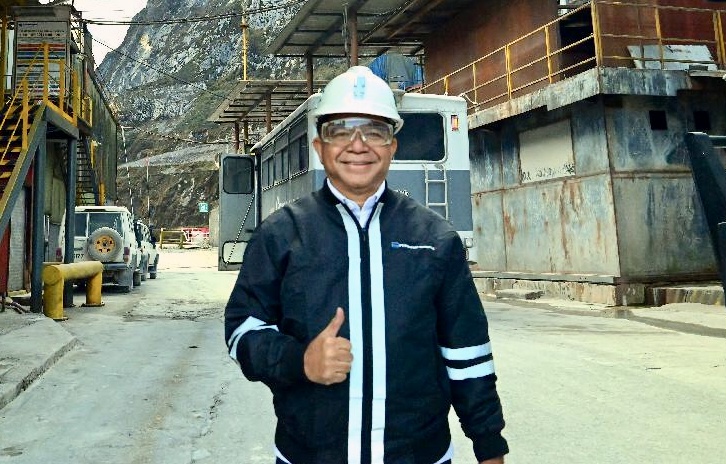
Jakarta - Franciscus Sibarani, a member of Commission XIII of the Indonesian House of Representatives from the Golkar Party faction, has urged that investment and large-scale industrial activities be measured not only by the economic value they generate, but also by the extent to which they build human capacity.
Sibarani made the remarks during a working visit by Commission XIII of the House of Representatives to PT Freeport Indonesia in Central Papua, together with the Regional Office of the Directorate General of Immigration and the Regional Office of the Ministry of Human Rights.
During the visit, Sibarani observed the vast scale of PT Freeport Indonesia’s operations, which involve around 30,000 workers, including thousands of native Papuan workers. Meanwhile, foreign workers employed in technical, management, and specialised expertise fields number in the hundreds.
“This scale of activity shows that investment has a significant impact on people’s lives. Therefore, the success of investment must not be judged solely by the economic value it generates, but also by how much it builds its people,” said Sibarani.
According to him, human development is an important part of Business and Human Rights practice. In this context, he commended PT Freeport Indonesia’s compliance in managing foreign workers and fulfilling immigration requirements.
However, he emphasised that the presence of foreign workers must not stop at meeting administrative requirements. Foreign workers employed in technical, management, and specialised expertise fields must also add value to improving the capacity of Indonesian workers.
“Foreign workers should not simply come, work, and then leave. There must be expertise left behind. If technology and knowledge are brought in, then when those foreign workers finish their assignments, our local workforce must become stronger,” he said.
Sibarani believes the challenge of development in Papua is not merely attracting investment, but ensuring that local communities have the opportunity to develop alongside the arrival of investment.
“When investment arrives in a region, the people of that region must grow stronger. Not only by gaining employment, but also by acquiring skills, experience, knowledge, and the opportunity to rise to a higher level,” he said.
He therefore stressed that Business and Human Rights practice must be viewed more broadly. Corporate responsibility relates not only to the obligation to prevent human rights violations, but also to how business activities create space for workers and communities to develop.
“Ultimately, development is not only about what we build, but about whom we build. Investment must build people,” said Sibarani.
He also urged that oversight of foreign workers and the application of Business and Human Rights principles be carried out in an integrated manner through synergy between the Directorate General of Immigration, the Ministry of Human Rights, regional governments, and the business community.
“Monitoring foreign workers is not enough just to ensure their permits are complete. We also need to see what they bring, what they transfer, and what they leave behind. The same applies to investment - we must look not only at what is built, but at what kind of people are built,” he concluded.
Source: jawawa.id (https://jawawa.id/newsitem/30-000-workers-involved-at-freeport-franciscus-sibarani-investment-must-build-people-1785210614)
Originally published by fraksigolkar.com (https://fraksigolkar.com/read/2375/30-ribu-tenaga-kerja-terlibat-di-freeport-franciscus-sibarani-investasi-harus-bangun-manusia), translated from Indonesian