
3 Ways to Distinguish Authentic from Fake Fortified Rice, Don't Be Deceived!
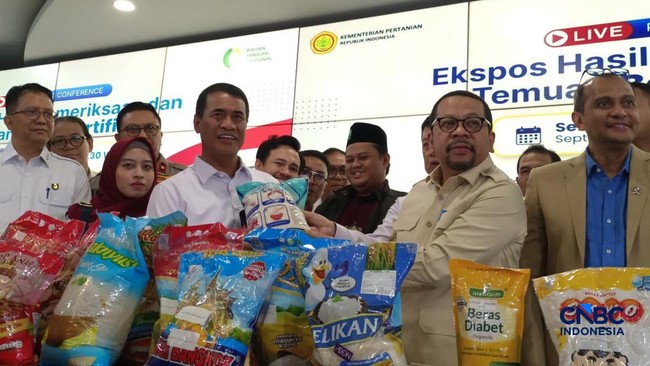
Fortified rice has come under scrutiny after the government discovered dozens of brands suspected of failing to meet the standards and nutritional content specified on their labels.
The Minister of Agriculture and Head of the National Food Agency (Bapanas), Andi Amram Sulaiman, previously revealed the discovery of 25 brands marketed as fortified rice that allegedly do not comply with regulations. The government is taking several steps, ranging from withdrawing products from circulation and revoking permits to pursuing legal action against those suspected of involvement.
According to reports, inspections are being conducted based on compliance with SNI 9314:2024 for fortified rice kernels and SNI 9372:2025 for fortified rice.
So, can the public distinguish standard-compliant fortified rice simply by looking at its appearance?
What is Fortified Rice?
Fortified rice is not merely ordinary rice. This product consists of polished rice mixed with fortified rice kernels to achieve specific nutritional compositions.
Fortified kernels are manufactured to resemble rice grains and contain various vitamins and minerals. These kernels are then mixed with polished rice so that the final product physically resembles the rice commonly consumed by the public.
Referring to SNI 9372:2025, every 100 grams of fortified rice must contain a minimum of 0.25 mg of vitamin B1, 0.25–0.38 mg of folic acid, 1.0–1.5 mcg of vitamin B12, 3.50–5.25 mg of iron, and 3.0–4.5 mg of zinc.
Food fortification is a strategic measure to help meet micronutrient needs and improve the nutritional status of the population.
How to Distinguish Fortified Rice
There are several things the public should observe when purchasing fortified rice.
- Check product labels and permits
Do not merely look at the words “fortified” or “enriched with vitamins” on the front of the packaging. Consumers need to check the product name, manufacturer identity, nutritional information, and the claims regarding vitamin and mineral content listed.
Fortified rice producers are also required to have distribution permits in accordance with regulations. To ensure safety, quality, and nutritional content, products must undergo testing in accredited laboratories.
- Observe the rice kernels
Fortified rice contains fortified kernels mixed with ordinary rice. Some grains may appear slightly different from other rice grains.
However, differences in shape or colour cannot be the sole benchmark for determining whether the fortified rice meets the standard. Therefore, the public does not need to be immediately concerned when finding a few grains with a different appearance, as these may be the kernels providing additional vitamins and minerals.
- Do not judge by colour or shape alone
Fortified rice is designed to resemble ordinary rice, making it difficult to ensure nutritional content with the naked eye.
Colour, shape, aroma, and texture cannot confirm whether the vitamin and mineral content in the rice matches the claims on the packaging. The assumption that problematic rice can be identified because it is too white, too shiny, or has a specific shape is also not a reliable indicator of fortification levels.
Can it be tested with water?
Simple methods for checking rice often circulate on social media, such as soaking rice grains in water. However, whether the rice floats or sinks is not an indicator of whether the product contains vitamin B1, folic acid, vitamin B12, iron, and zinc according to the standard.
The same applies to methods involving burning or roasting rice. Changes in colour, aroma, or texture after heating cannot be used to measure micronutrient levels.
This means there is no simple home test that can confirm whether fortified rice truly possesses the nutritional content claimed by the manufacturer.
Laboratories are the most accurate method
To accurately determine the content of fortified rice, laboratory testing is required. Such testing is used to determine whether the vitamin and mineral content meets SNI requirements and aligns with the information stated on the product label.
SNI 9372:2025 also regulates the consistency between nutritional content and the information on the packaging. Bapanas stated that the vitamin and mineral content must reach at least 80% of the value stated on the label, while minerals such as iron and zinc must not exceed 120% of the stated value.
Therefore, consumers should not immediately trust claims regarding fortified rice based solely on physical appearance or various simple experiments circulating on social media.
Source: jawawa.id (https://jawawa.id/newsitem/3-ways-to-distinguish-authentic-from-fake-fortified-rice-dont-be-deceived-1789651740)
Originally published by CNBC Indonesia (https://www.cnbcindonesia.com/lifestyle/20260917134535-33-768710/3-cara-bedakan-beras-fortifikasi-asli-dan-palsu-jangan-terkecoh), translated from Indonesian