
3 Powerful Warren Buffett Investment Techniques That Are Often Overlooked
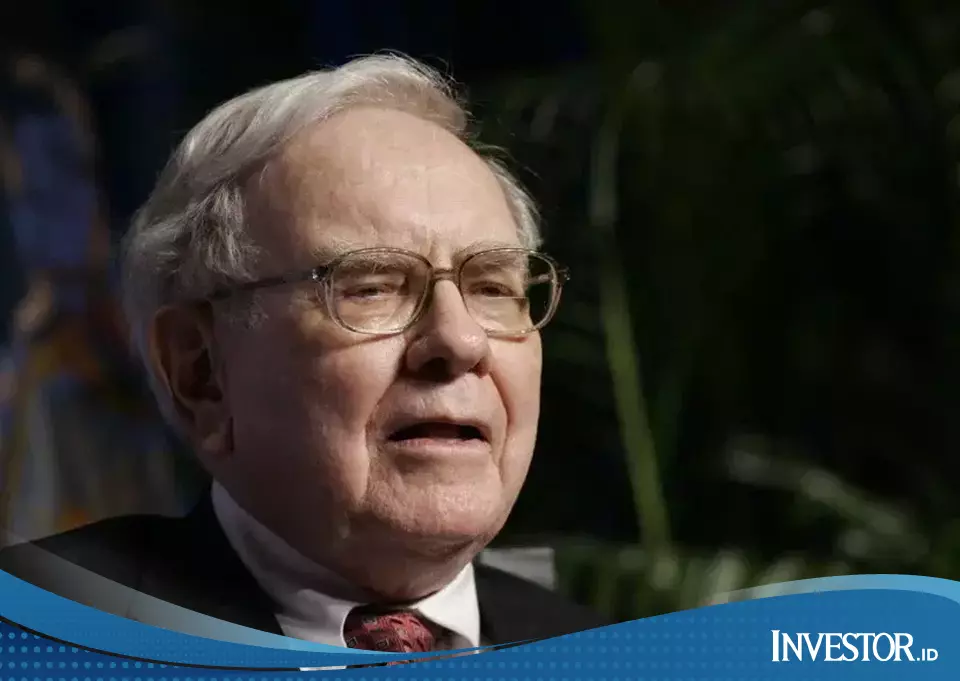
The world investment legend, Warren Buffett, is renowned for his extraordinary investment record spanning decades. Although he is one of the most frequently quoted business figures globally, many retail investors overlook the three most fundamental principles of his investment strategy.
The good news is that these three core Buffett techniques do not require billions of rupiah in capital or complex technical analysis knowledge. These three techniques can be applied by anyone, at any income level, to sustainably improve investment portfolio performance.
Here is an in-depth breakdown of the three Warren Buffett investment techniques that are often neglected, as quoted by MoneyLion on Thursday (2/9/2026):
Understand a Company’s “Economic Moat”
For most beginner investors, the term “economic moat” may sound unfamiliar. However, for Buffett, the existence of a moat is the very first and most crucial question before he decides to buy shares in a company.
Simply put, an economic moat is a sustainable competitive advantage that protects a company from competitors attempting to imitate its products or services.
A real-world example can be seen in Coca-Cola. Despite many soft drink products on the market, Coca-Cola possesses a robust moat. Its brand value exceeds the Gross Domestic Product (GDP) of several small nations, it possesses an unmatched global distribution network, and it has built consumer loyalty over decades.
The logic is simple: If you are a Coca-Cola lover and a new soda brand offers a similar taste at 10% cheaper, would you abandon Coca-Cola forever? A small minority might try, but the majority of loyal consumers will stick with Coca-Cola. This is a business advantage that is almost impossible for competitors to dismantle.
Why is this often overlooked? Most individual investors are often caught up in looking at price movement charts, social media rumours, or momentary viral trends. For Buffett, buying shares based solely on trends without understanding the business moat is not investing, but pure speculation.
Extend the Holding Period
One of Warren Buffett’s most legendary quotes (from his 1988 letter to shareholders) states that his favourite holding period is “forever”.
Buffett believes that short-term stock price fluctuations have no fundamental meaning and are almost impossible to predict. If he does not feel comfortable holding a stock for at least 10 years, he will not consider the stock worth buying.
The Centre of Money Relocation: In his 1991 shareholder letter, Buffett shared another wise remark: “The stock market is a device for transferring money from the impatient to the patient.”
The Retail Investor Trap: Many individual investors often fall into damaging emotional patterns: buying at high prices due to the fear of missing out (FOMO), panic selling at low prices when the market drops, and then merely becoming spectators when stock prices recover.
Discipline Practice: To avoid these emotional traps, ask yourself: Do you have the discipline to hold this stock for the next 10 years? If you buy a stock today, will you still feel comfortable owning it in 2036?
View Stocks as Real Businesses, Not Just Numbers on a Screen
The third principle that is frequently ignored is realising that a stock is not merely a series of numbers or red-green graphs fluctuating on a computer screen. A stock represents ownership in a real business that has products, sales, customers, and revenue.
Buffett buys companies, not just stock tickers. In his 2017 shareholder letter, he emphasised the importance of focusing on the fundamental strength of a business rather than its price movements.
Essential Questions to Ask
Rather than spending time analysing daily technical charts or internet memes, ask fundamental questions such as:
What exactly does this company sell?
How loyal are consumers to its products or services?
Does the management also hold shares in the company (skin in the game)?
These fundamental questions define the sustainability of a business, yet they are the most frequently ignored by retail investors.
Warren Buffett officially ended his tenure as Chief Executive Officer (CEO) of Berkshire Hathaway and handed over the position to Greg Abel in early 2026. This transition marks the end of one of the most phenomenal chapters in global capital market history.
Under Buffett’s leadership over several decades, Berkshire Hathaway managed to record an extraordinary average annual return, achieving more than double the growth of the S&P 500 benchmark index. This consistent success has made Buffett one of the most successful investors of all time and a CEO whose views are most frequently cited by global market participants.
Although the operational leadership of Berkshire Hathaway has now transitioned, the three basic principles above remain timeless investment foundations.
These principles prove that long-term investment success is not determined by massive capital or the ability to guess daily market directions, but by deep business understanding, patience, and consistent discipline.
Source: jawawa.id (https://jawawa.id/newsitem/3-powerful-warren-buffett-investment-techniques-that-are-often-overlooked-1790261524)
Originally published by investor.id (https://investor.id/money-lab/455290/3-teknik-ampuh-investasi-warren-buffett-yang-sering-terlewatkan), translated from Indonesian