
3 Months of Iran Conflict: Trump's Diplomacy Forces Allies to Use Backdoor Channels
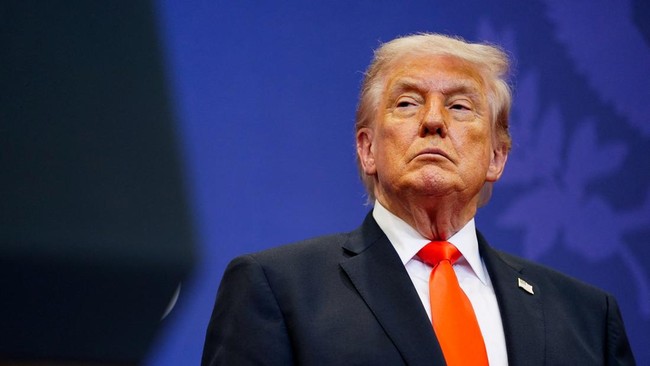
The threat made by US President Donald Trump towards Iran in early April caused panic among several European capitals. The statement ‘a whole civilization will die tonight’ raised questions, rarely voiced openly among Washington’s allies, about whether America was considering nuclear options.
According to a Reuters investigation, European governments immediately sought clarification through official US diplomatic channels. However, officials at the US State Department reportedly did not understand Trump’s intentions or the direction of White House policy.
This is where US allies’ anxiety grew. Their concerns extend beyond Iran; European diplomats interviewed by Reuters said Russia could exploit the situation to escalate tensions in Ukraine. The risk of nuclear escalation in two regions simultaneously is now being seriously discussed in Western diplomatic circles.
Reuters described this as the most significant damage to modern American diplomacy. Washington’s partners struggle to interpret policy signals due to vacant diplomatic posts, inter-agency communication delays, and foreign policy decisions concentrated within a small circle around Trump.
Oxford University international history professor Margaret MacMillan said America’s diplomatic capacity is eroding. In a fragile global environment, the ability to build relationships, prevent wars, and craft international agreements has weakened considerably.
The Trump administration denies these claims. State Department spokesperson Tommy Pigott said the changes have made US diplomacy more efficient and accelerated decision-making.
But Reuters data shows a different picture. Of 195 US ambassador positions worldwide, 109 remain vacant. Many embassies are led by interim officials or chargés d’affaires rather than Senate-confirmed ambassadors.
The most sensitive situation is in the Middle East. Five of seven countries bordering Iran lack a US ambassador. Four of six Gulf nations face the same issue.
Former US ambassador to the UAE Barbara Leaf called the situation dangerous during open conflict, stating diplomatic missions should be strengthened during crises, not stripped of leadership.
Reuters also found many allies are abandoning formal diplomatic channels, opting instead to communicate directly with individuals close to Trump. Jared Kushner and property tycoon Steve Witkoff frequently feature as key conduits for nations seeking to gauge White House intentions, despite Kushner holding no official government role and Witkoff lacking diplomatic experience.
South Korea reportedly bypassed official US trade negotiators to communicate directly with White House Chief of Staff Susie Wiles over Trump’s 25% import tariffs. Japan, meanwhile, has used SoftBank founder Masayoshi Son as an informal channel to Trump.
Former Japanese Prime Minister Shigeru Ishiba acknowledged direct access to Trump is vital due to foreign policy decisions being highly centralised in one person.
Other major changes have occurred within the US diplomatic bureaucracy. In 2025, Secretary of State Marco Rubio launched a major State Department restructuring, with around 3,000 staff leaving the agency. Nearly half were fired, the rest accepted buyout packages.
In December last year, approximately 30 ambassadors were abruptly recalled. Senior diplomats referred to this as the ‘Saturday Night Massacre’, a term associated with mass dismissals during the Watergate era.
The diplomatic composition has shifted dramatically. For nearly 50 years, career diplomats typically filled 57%-74% of US ambassador posts. During Trump’s second term, Reuters found career diplomats accounted for just 9% of new appointments.
This has led to a loss of technical expertise in international negotiations. Reuters revealed that during nuclear talks with Iran in Geneva, the US team led by Witkoff arrived without senior nuclear specialists. European diplomats said they had to explain basic uranium enrichment details to the American delegation.
Former US diplomat Nate Swanson, involved in the 2015 Iran nuclear deal, said expert technical input is increasingly ignored.
Washington’s Arms Control Association noted several of Witkoff’s statements on Iran’s nuclear technology contained technical errors.
Amid the chaos, American allies are changing their approach to Trump. Many governments are choosing silence over strong public reactions to White House threats.
The UK, France, and Germany briefly drafted a joint strong statement after Trump threatened Iran, but withheld publication for fear that a public response would prolong the conflict and trigger further bombings.
Some European diplomats describe this strategy as the ‘Merkel method’, referencing former German Chancellor Angela Merkel’s approach during Trump’s first term: suppressing public responses while safeguarding national interests.