
3 Months of Iran Conflict: List of Dozens of Destroyed Oil Refineries and Energy Storage Facilities
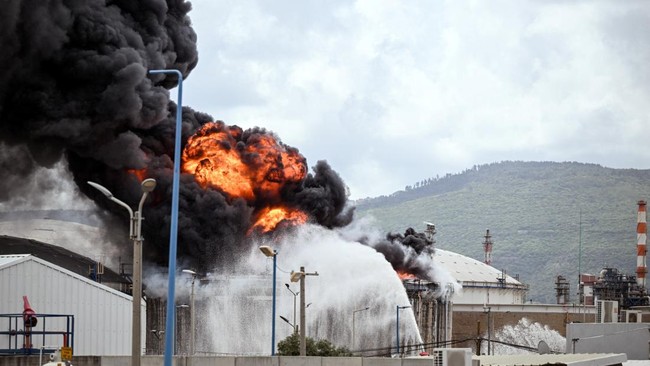
The Iran conflict has ushered in a new pattern of frequent attacks on energy facilities. These attacks worsen energy supplies, ultimately sparking global concerns.
Since the war broke out on 28 February 2026, three months ago, dozens of energy facilities and infrastructure have been destroyed.
As tensions rise in the Middle East, the Gulf region is not the only area affected. Oil prices surge, shipping companies alter routes, and global markets become more cautious.
In recent days, concerns have resurfaced as attacks and threats against Gulf energy facilities escalate amid the Iran conflict. Tanker routes are closely monitored, while market participants assess potential disruptions to global oil and gas supplies.
Reactions are often swift. Even before major damage occurs, energy prices typically rise as markets price in risks to global energy flows.
The World’s Most Sensitive Energy Corridor
Global attention usually focuses on the Strait of Hormuz, the narrow sea passage between Iran and Oman that handles around 20% of the world’s oil trade daily.
Not just oil. Qatar, one of the world’s largest LNG exporters, relies heavily on this route to ship liquefied natural gas to Asia and Europe.
Thus, when tensions rise around Hormuz, global energy markets almost always react.
Oil Refineries and Terminals
Ruwais, UAE
One of the world’s largest refinery complexes suffered multiple fires due to air defence interception debris on 5 April, according to the Abu Dhabi government.
Ras Tanura, Saudi Arabia
Saudi Aramco temporarily halted operations at the kingdom’s largest oil processing facility, with a capacity of around 550,000 barrels per day, following drone attacks at the start of the conflict.
Samref, Saudi Arabia
Drones reportedly struck the Samref refinery on 19 March. The facility is partially owned by ExxonMobil.
Bapco Energies, Bahrain
A 400,000-barrel-per-day refinery suffered damage and declared force majeure on affected operations.
GPIC, Bahrain
Several operational units of Gulf Petrochemical Industries Co. caught fire following drone attacks on 5 April.
KPC Facilities, Kuwait
Kuwait Petroleum Corporation stated that several Kuwait National Petroleum Co. and Petrochemical Industries Co. facilities sustained significant damage after attacks on 5 April.
Mina Al-Ahmadi, Kuwait
Drone attacks sparked fires in multiple operational units on 3 April. The facility was also hit in consecutive attacks the previous month.
Mina Abdullah, Kuwait
A fire at Mina Abdullah was extinguished after the 19 March attack.
Lanaz, Iraq
Operations at Lanaz facility in Erbil were temporarily halted due to a fire caused by drone attacks, according to Reuters.
Gas and LNG
Ras Laffan, Qatar
QatarEnergy stated the Ras Laffan LNG facility was hit by Iranian missiles, causing fires and significant damage, including to Shell’s gas-to-liquids plant.
QatarEnergy also declared force majeure on some long-term LNG supply contracts.
Habshan, UAE
Abu Dhabi suspended operations at the country’s largest gas processing facility after an attack sparked a fire.
South Pars, Iran
Israel attacked the South Pars facility on 18 March. Fires halted several production units, according to Tasnim.
Isfahan, Iran
Gas pressure regulation stations and administrative buildings in Isfahan were targeted in a US-Israel attack, according to Fars.
Shah, UAE
Operations halted after Iranian drone attacks on 16 March sparked fires at the Shah gas field.
Das Island LNG, UAE
Das Island LNG facility is operating at reduced capacity due to export difficulties via the Strait of Hormuz.
Oil Fields and Industry
Majnoon, Iraq
Iraq’s Oil Ministry stated the Majnoon oil field was targeted, though without further details.
Shaybah, Saudi Arabia
The Shaybah oil field, with a capacity of around one million barrels per day, has been targeted by drones multiple times, though no major damage has been reported.
Bushehr, Iran
Projectiles struck the Bushehr nuclear power plant area on 27 March, according to Fars. Iran stated there was no damage to the main facilities.
Al Taweelah, UAE
Emirates Global Aluminium said the Al Taweelah facility suffered “significant damage” from Iranian attacks on 28 March.
Alba, Bahrain
Aluminium Bahrain stated it is assessing the extent of damage following Iranian attacks.
Mobarakeh, Iran
Mobarakeh Steel halted all production after attacks damaged key units, according to Nour News.
Ports and Shipping Routes
Yanbu, Saudi Arabia
Loading activities at Yanbu Red Sea port resumed on 19 March after being halted due to Iranian attacks.
Fujairah, UAE
Fujairah port has repeatedly suspended operations due to drone attacks. Its location is critical as it lies outside the Strait of Hormuz.
Jebel Ali, UAE
DP World temporarily suspended operations at Dubai’s largest container port as a precaution.
Khor Fakkan, UAE
Air defence interception debris fell at Khor Fakkan port on 5 April, sparking a fire.
Sohar, Oman
Sohar port resumed operations after previously closing due to drone attacks.
Mina Al Fahal, Oman
Mina Al Fahal oil export terminal reopened on 12 March after being closed as a precaution.
Salalah, Oman
Salalah port suspended operations following attacks on 28 March, according to Inchcape Shipping Services.
Khalifa Bin Salman, Bahrain
APM Terminals, owned by Maersk, suspended operations at this port on 12 March.
Shahid Haghani, Iran
US-Israel attacks targeted Shahid Haghani port in Bandar Abbas near the Strait of Hormuz, according to Tasnim.
Why do markets panic immediately? Oil prices often rise even before