
3 kg CNG to Be Subsidised, but Costs 40% Less Than LPG
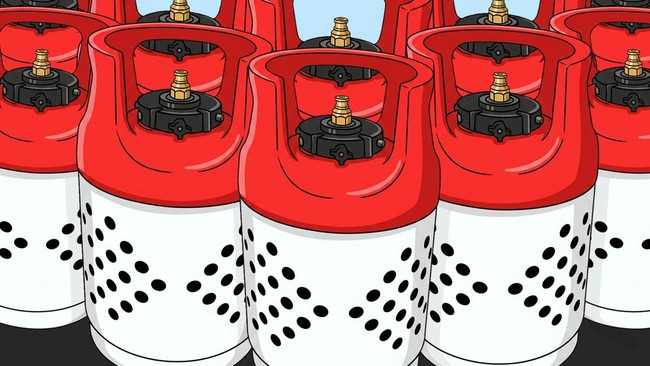
The Ministry of Energy and Mineral Resources (ESDM) has revealed that the subsidy scheme for 3 kilogram (kg) Compressed Natural Gas (CNG) is far more efficient than the subsidy for 3 kg Liquefied Petroleum Gas (LPG). In fact, the subsidy savings for the 3 kg CNG project are 30–40% more efficient.
Director General of Oil and Gas at the Ministry of ESDM, Laode Sulaeman, said that the subsidy for 3 kg CNG will still be provided so that its selling price remains competitive at the consumer level.
“He (Minister of ESDM Bahlil Lahadalia) said that it is subsidised but the subsidy saves 30% to 40%, meaning the subsidy is still lower than the LPG subsidy. That is what he meant,” he said when met at the Ministry of Finance office in Jakarta on Tuesday (11/8/2026).
The government plans to equalise the usage capacity of one CNG cylinder with one 3 kg LPG cylinder. This equalisation is intended to allow the public to feel the benefits of savings directly without having to change their daily energy consumption patterns.
“Yes, equivalent to 3 kilos. One 3 kg LPG cylinder will later be made equivalent to one CNG cylinder equal to 3 kilograms of LPG,” Laode continued.
Meanwhile, Minister of ESDM Bahlil Lahadalia confirmed that preparations for the infrastructure and safety of this alternative gas cylinder have entered the preparation stage for public trials before being widely commercialised.
“The trial will be next week. We will check,” Bahlil said on the same occasion.
Previously, Bahlil revealed that the 3 kg CNG cylinder project is currently undergoing final testing by the Oil and Gas Testing Centre (Lemigas). This is to ensure that CNG is safe for widespread public use.
“Three days ago I was presented with the results of the 3 kilogram CNG cylinder and its valve. Lemigas is now conducting the final test,” Bahlil said when met at the Ministry of ESDM office, as quoted on Monday (10/8/2026).
Based on the report he received, only one testing stage remains, namely the fire test or testing the cylinder’s resistance to extreme conditions. The test is carried out with heat exposure of up to around 850 degrees Celsius.
“But according to the information I received from their results, only the fire test remains. Because it is tested by firing with 850 degrees of heat. And only the fire test remains,” he said.
When asked whether the fire test is conducted in Indonesia or China, Bahlil said testing is carried out in both countries. “Just pray, okay. Pray for the best for our beloved Mother Earth,” he said.