
3.8 Million Students to Take 2026 Academic Ability Test as MPR Deputy Speaker Calls for Classroom Improvements
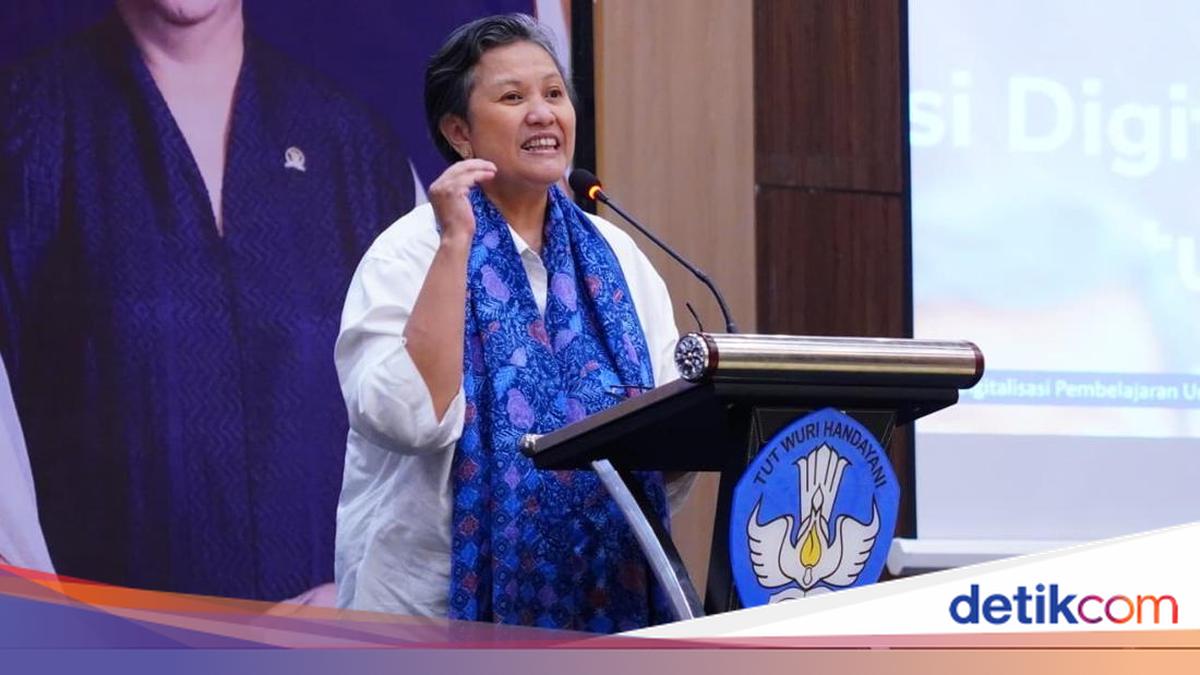
Registration for the 2026 Academic Ability Test (TKA) for senior high school, vocational school and Islamic senior high school students has reached 3.86 million. The high participation rate, a deputy speaker of the People’s Consultative Assembly (MPR) said, should lead to tangible improvements in classroom learning.
The online assessment officially began on Monday, 26 October. The government says its system is ready to serve up to 900,000 participants simultaneously. In response, MPR Deputy Speaker Lestari Moerdijat warned that the government now has data on competencies at both individual and school level.
“The question now is whether we are all truly ready to change our teaching and support methods,” said Moerdijat, who is known as Rerie, in a written statement on Sunday, 25 October.
She stressed that the TKA must serve as a precise roadmap for intervention, rather than merely a paper exercise in mapping performance.
Rerie also drew attention to the results of the TKA for primary and junior secondary pupils in May, which showed low average scores. Junior secondary pupils scored just 40.34 in numeracy and 60.83 in literacy. Only 9.67 per cent were rated as performing well in mathematics.
“Let us not spend heavily on assessment only to do very little afterwards,” said the member of Commission X of the House of Representatives.
Despite claims that the system is ready, Rerie said the test still faces basic infrastructure challenges. Government data show that around 23 per cent of educational institutions in Indonesia are not connected to the internet. A shortage of devices has forced some schools to hold the test in several sessions.
She said this disparity in infrastructure raised questions about whether test scores would be fair to all participants.
“There must not be a one-size-fits-all policy for problems that differ from place to place,” said Rerie, a member of the NasDem Party’s High Council.
Rerie proposed several solutions, including allocating funding for data-driven remedial programmes. She called on central and local governments not only to fund the tests, but also to provide teacher training and teaching aids tailored to the specific weaknesses of each region. TKA data, she said, should guide budget allocations, rather than simply be filed as a report.
She added that teaching methods also needed to change. Teachers should move beyond simply pursuing marks and focus instead on building students’ competencies and character. Teacher evaluations should encourage the development of students’ reasoning, rather than rote learning.
Most importantly, Rerie said, all stakeholders needed to make a collective commitment. Parents should not fixate on rankings, but should support meaningful learning at home.
“The TKA has given us a roadmap. Now we all have to be brave enough to take the next step,” Rerie concluded.
With registrations exceeding 3.86 million, the 2026 TKA represents a major opportunity. But its success will not be measured by the smooth running of the online system or the level of participation; it will depend on whether learning gaps are actually addressed in classrooms.
Source: jawawa.id (https://jawawa.id/newsitem/3-8-million-students-to-take-2026-academic-ability-test-as-mpr-deputy-speaker-calls-for-classroom-improvements-1792929090)
Originally published by detikcom (https://news.detik.com/berita/d-8723545/3-8-juta-siswa-ikut-tka-2026-waka-mpr-dorong-perbaikan-di-ruang-kelas), translated from Indonesian