
3,002 Aftershocks Rock Flores, BMKG Reveals When They Will Subside
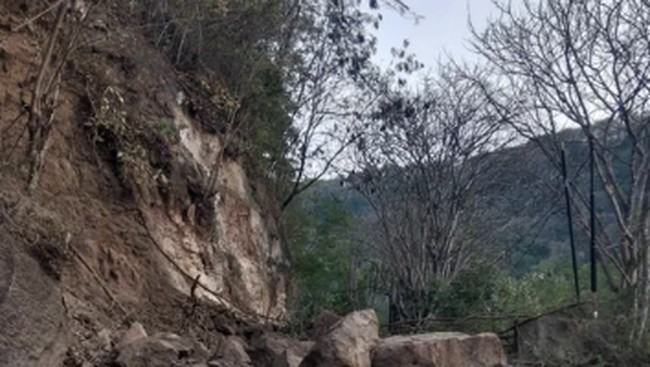
Seismic activity continues to shake the Flores region of East Nusa Tenggara (NTT) following the magnitude 7.7 earthquake on Saturday, 15 August 2026. On the fifth day of disaster response, the Meteorology, Climatology, and Geophysics Agency (BMKG) has recorded thousands of aftershocks.
BMKG Deputy for Geophysics, Nelly Florida Riama, said that as of Wednesday (19/8/2026) at 14.00 WIB, a total of 3,002 aftershocks had been recorded with magnitudes ranging from 1.1 to 6.2. Of that number, 86 aftershocks were reported to have been felt by the public and 25 events had a magnitude of 5 or greater. The data was also reported at a BNPB press conference on Wednesday afternoon.
“As of today, 19 August 2026, based on our records at 14.00 WIB, BMKG has recorded 3,002 aftershocks with magnitudes between 1.1 and 6.2. A total of 86 of these aftershocks were reported to have been felt by the public, and there were 25 events with a magnitude of 5 or greater,” Nelly said during a virtual press conference on Wednesday (19/8/2026).
The high number of aftershocks is part of the earth’s crust adjustment process following a major earthquake. The energy release continues in order to reach a new state of equilibrium.
“The public needs to know that the number of aftershocks is quite high. Why? It is actually part of the earth’s crust adjustment process or energy release to achieve a new equilibrium after a major earthquake,” she explained.
BMKG confirmed that aftershock activity is still ongoing. However, based on monitoring graphs, the activity shows a decaying trend. Nevertheless, BMKG still sees the possibility of periods when seismic activity increases again.
“From the monitoring results carried out by BMKG, this aftershock activity is still ongoing,” Nelly said.
Based on preliminary calculations from the data collected, BMKG estimates that aftershock activity will decay within approximately 21 to 30 days. The BMKG model also estimates that aftershock activity levels could reach relatively low conditions within a range of two to three weeks, or until around the end of September 2026.
However, this estimate does not mean that the Flores region will be completely free from earthquakes after entering that period. BMKG stressed that the decay estimate is dynamic and will continue to be updated in line with developments in seismic data.
“However, we also need to emphasise that this does not mean that after that date earthquakes cannot occur. This estimate is highly dynamic and will continue to be updated in accordance with the development of aftershock data that we record,” Nelly stressed.
Spatially, the aftershocks are concentrated in the central to western Flores region. The activity shows a connection with the Flores Back Arc Thrust tectonic zone, which is one of the active tectonic areas in the region.
BMKG is also continuing to deploy teams to a number of affected areas to conduct macroseismic surveys, microseismic surveys, soil condition assessments, and tsunami surveys. These measures are being taken to obtain a picture of shaking intensity in the field, soil characteristics, and the impact on buildings and public facilities.