
28 Tonnes of Palm Oil 'Waste' from Sumatra Enters Chinese Market
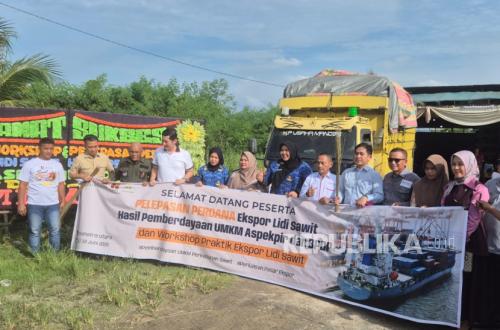
Palm oil waste, which has previously been underutilised, is beginning to emerge as a new economic resource for farmers and small businesses. A total of 28 tonnes of palm oil midribs from plantations in Riau, North Sumatra, and Aceh have been exported for the first time to China through a collaboration involving farmers, cooperatives, MSMEs, and exporters.
The maiden export was officially launched during an event organised by the Palm Oil Fund Management Agency (BPDP) alongside the Indonesian Smallholder Palm Oil Farmers Association (ASPEKPIR) in Belawan, Medan, North Sumatra, on Wednesday (1_7/6/2026).
The General Chairman of ASPEKPIR, Setiyono, explained that this initial export is a follow-up to various MSME empowerment programmes conducted in conjunction with BPDP across several palm oil production centres. He noted that at least seven ASPEKPIR member cooperatives were involved in supplying the palm midrib raw materials for the export to China.
He stated that the involvement of these cooperatives has the potential to provide economic benefits to approximately 2,800 cooperative members. Developing businesses based on palm oil waste is seen as a way to provide additional income for farmers amidst efforts to increase the added value of the plantation sector.
“Palm midribs, which have been underutilised, actually possess high economic value. We hope that more palm oil farmers will be interested in making the collection and processing of palm midribs a source of additional income,” said Setiyono.
BPDP believes that the utilisation of palm midribs demonstrates that plantation by-products can be processed into commodities with high market value. In recent years, BPDP and ASPEKPIR have conducted various workshops and mentoring sessions in several regions to improve production quality to meet export market standards.
The Director of Law and Cooperation at BPDP, in a written speech read by Anwar Sadat, explained that palm midribs have the potential to be developed into various economically valuable products, ranging from export raw materials to MSME handicraft products.
According to him, the development of products based on palm oil waste is also in line with circular economy principles, as it helps reduce waste while simultaneously creating new economic value for communities surrounding the plantations.
Meanwhile, the President Director of PT Arra Setyable Abadi, Ilham Setiadi, stated that international market demand for palm midribs continues to show a positive trend. Therefore, the opportunity to develop businesses based on palm oil waste remains wide open for farmers and MSMEs in various plantation hubs.
In addition to the maiden export launch, BPDP and ASPEKPIR also held a workshop on palm midrib export practices in Langkat Regency, North Sumatra. The event was attended by approximately 100 participants and concluded with the signing of a memorandum of understanding between palm oil cooperatives and exporters to increase the production of export-ready palm midribs.
Source: jawawa.id (https://jawawa.id/newsitem/28-tonnes-of-palm-oil-waste-from-sumatra-enters-chinese-market-1781963780)
Originally published by Republika (https://ekonomi.republika.co.id/berita/tgxlq2349/28-ton-limbah-sawit-dari-sumatera-tembus-pasar-china), translated from Indonesian