
267 Indonesian Hajj Pilgrims Join Arafah Safari Wukuf Service
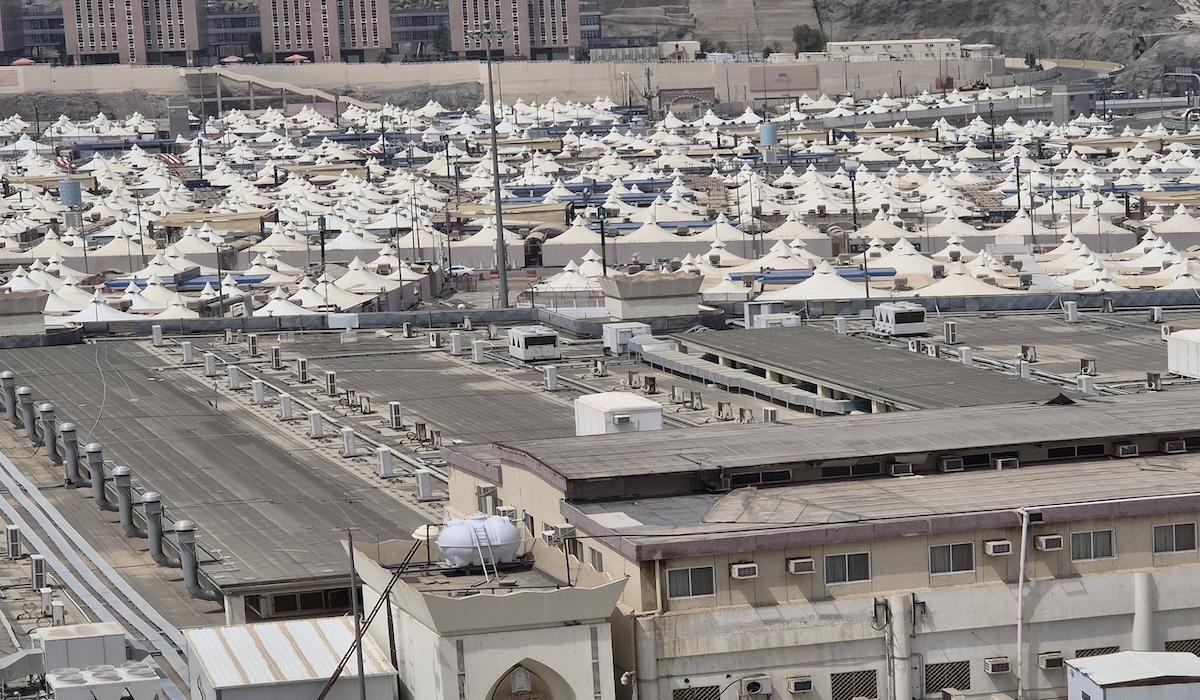
Saudi Hajj Service Agency (PPIH) has prepared a Safari Wukuf service for elderly, disabled, and health-compromised pilgrims during the 1447 H Hajj peak. The special service is in place as the Hajj’s peak phase (Armuzna) at Arafah, Muzdalifah, and Mina commences.
Hajj and Umrah Ministry spokesperson Maria Assegaf stated that this year’s Hajj season will see 267 pilgrims using the Safari Wukuf service, supported by 150 accompanying staff. Participants are scheduled to depart for Arafah on Tuesday, 26 May (9 Zulhijah).
“To bolster health services during the Hajj peak, the Saudi Hajj Service Agency has deployed an Indonesian Hajj Health Clinic (KKHI),” Maria said in a press conference on Monday, 25 May.
After completing the wukuf ritual, these pilgrims will be transported back to a transit hotel in Mecca for medical monitoring and recovery before rejoining their respective flight groups (kloter) on 13 Zulhijah.
In addition to deploying the Indonesian Hajj Health Clinic (KKHI) in Arafah and Mina, PPIH has assigned at least 657 Arafah Task Force (Satgas) personnel, including ad hoc teams, centre coordinators, and food supervisors. All services—transport, accommodation, catering, religious guidance, and pilgrim protection—are being reinforced during the Armuzna phase.
Maria also urged pilgrims to look out for one another while in the holy land. “We hope today’s movement of pilgrims to Arafah proceeds smoothly, orderly, and with good health and strength to complete the Hajj rites,” she added.
Following the wukuf ritual in Arafah, pilgrim movements will follow two schemes: murur and non-murur. Those under murur will pass through Muzdalifah without alighting, staying overnight in buses. Non-murur pilgrims will disembark to spend the night of 10 Zulhijah in Muzdalifah before proceeding to Mina after midnight.
Movement from Muzdalifah to Mina will also follow two scenarios. Pilgrims under the tanazul program—estimated at 20,000—will return directly to their Mecca accommodation hotels. Meanwhile, non-murur pilgrims will remain in Mina tents until 13 Zulhijah.
While in Mina, all pilgrims are scheduled to perform the rami al-jamarat (stoning of the devil) at Jamarat al-Aqabah on 10 Zulhijah, followed by jumrah ula, wustha, and aqabah on the days of tashriq. Pilgrims choosing nafar awal will conclude their stay in Mina on 12 Zulhijah, while those opting for nafar tsani will remain until 13 Zulhijah.
To prevent pilgrims from getting lost while walking from Mina tents to the Jamarat stoning site, Saudi Hajj Service Agency has established a Special Task Force (Timsus) Mina.
Harun Arrasyid, Coordinator of Armuzna Operations and Pilgrim Protection at PPIH Saudi Arabia, explained that Timsus Mina is mainly staffed by experienced Pilgrim Protection (Linjam) officers from previous years. Field surveillance is reinforced by Mobile Crisis Rescue (MCR) teams stationed along the Mina-Jamarat route.
The team’s duties include welcoming murur pilgrims, monitoring movement from tents to the third floor of Jamarat, and providing protection and emergency assistance during the stoning ritual on the night of Zulhijah.
“We have positioned teams at critical points where congestion and fatigue are likely, requiring officer assistance,” Harun stressed.
Since Sunday (24 May), officers have been deployed early to Arafah to ensure all tent facilities and supporting infrastructure are ready ahead of today’s pilgrim arrivals.