
26 Years of the Human Rights Court Law: 13 Cases of Gross Violations Still in Limbo
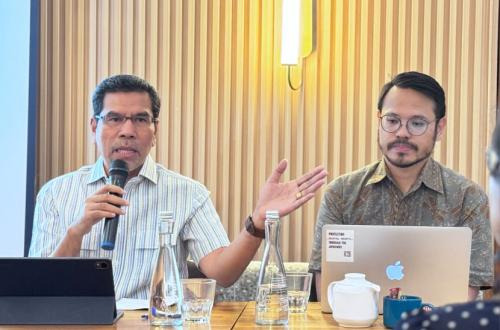
JAKARTA — Twenty-six years after Law No. 26 of 2000 on the Human Rights Court came into force, it has yet to deliver justice for victims of gross human rights violations. More than a dozen cases investigated by the National Commission on Human Rights (Komnas HAM) remain in limbo without legal certainty, while those responsible have not been held accountable.
Komnas HAM Commissioner Amiruddin said the commission had investigated 17 incidents suspected of involving crimes against humanity. The investigations began in 1999 and covered events both before and after the Reformasi era.
“Since 1999, Komnas HAM has conducted investigations resulting in 17 case files concerning incidents suspected of involving crimes against humanity. These incidents are just the tip of the iceberg of a series of alleged gross human rights violations, from before to after Reformasi. This means that, if examined more thoroughly, the number could certainly rise,” Amiruddin said at a public discussion titled “26 Years of the Human Rights Court: Where Is the Court?” in Cikini, Jakarta, on Tuesday (24 November 2026).
Four of the 17 incidents went to trial: the cases relating to East Timor, Tanjung Priok, Abepura and Paniai. However, Amiruddin said all 35 defendants in those four cases were acquitted by the Human Rights Court.
The other 13 incidents have seen no clear progress in the legal process, even though their investigation files have been submitted to the Attorney General’s Office.
“For almost 20 years, the other 13 incidents have been left in limbo without any clarity. Everyone has remained silent, as if this were solely Komnas HAM’s responsibility. All the political parties have also kept quiet. As a result, total impunity has taken hold,” he said.
Amiruddin said the situation demonstrated the failure of the Human Rights Court to fulfil its mandate as a means of ensuring accountability for gross human rights violations and delivering justice to victims.
He said the court had also failed in its preventive role of ensuring that crimes against humanity did not recur. The Paniai incident in 2014 was one example, demonstrating that alleged gross human rights violations continued after the law came into force.
He warned that similar incidents could happen again in the future unless the cases were given a clear legal resolution.
Amiruddin also highlighted the Supreme Court’s cassation ruling in the Paniai gross human rights violations case. He said the decision should provide a basis for the Attorney General’s Office to proceed with investigations into the other 13 cases.
Amiruddin stressed that Komnas HAM had used the same investigative method for all the case files, including Paniai. He therefore said the Attorney General’s Office had no reason to continue delaying action on them.
“Komnas HAM believes the Attorney General should not hesitate to investigate the 13 incidents whose files have been at the Attorney General’s Office for several years,” he said.
He also said that relations between Komnas HAM and the Attorney General’s Office had so far followed the mandate of the Human Rights Court Law. The two institutions have their respective powers and do not need another institution to act as an intermediary in pursuing the cases.
Beyond law enforcement, Amiruddin said resolving gross human rights violations was important for three reasons: to prevent similar crimes in the future; to repair the damage to the legal, political and social systems caused by such violations; and to establish the truth so society can learn from the events.
He also underscored the importance of restoring the lives of victims and their families. Restoration, he said, must not be reduced to social assistance or temporary compensation. Programmes should be designed to restore the dignity of victims and their families.
He said restoration must also be grounded in a full, open and official disclosure of the truth. Without this, restoration programmes risk becoming no more than temporary assistance.
“If the government intends to implement a programme to restore victims, it must be based on a policy issued by the President in his capacity as Head of State. The principle is to restore the dignity and worth of victims and their families as human beings, to the condition they were in before,” Amiruddin said.
He stressed that restoring victims of gross human rights violations was different from providing assistance.
“The principle of restoration is different from assistance. Assistance is temporary and charitable, and is not based on the disclosure of the truth,” he said.
Source: jawawa.id (https://jawawa.id/newsitem/26-years-of-the-human-rights-court-law-13-cases-of-gross-violations-still-in-limbo-1795521168)
Originally published by Republika (https://news.republika.co.id/berita/tp07zi393/26-tahun-uu-pengadilan-ham-13-kasus-pelanggaran-berat-masih-terkatungkatung), translated from Indonesian