
26 Years of Data Reveals Silver's Returns More Aggressive Than Gold
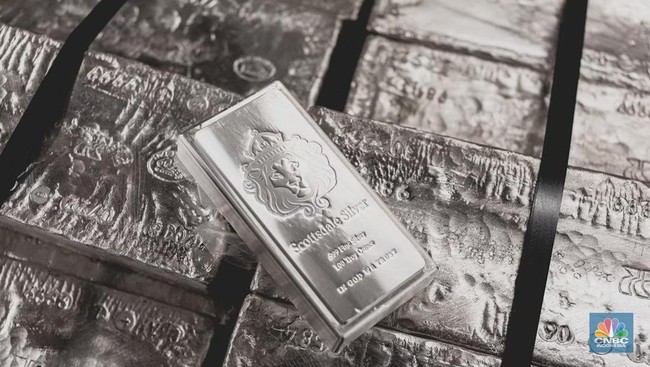
Jakarta, CNBC Indonesia - Although both are classified as precious metals, gold and silver display different characteristics. When uncertainty rises, gold is generally the primary choice for investors because it is more stable. Conversely, the price of silver tends to be more volatile because it is influenced not only by investment sentiment but also by industrial demand.
Historically, this difference has not occurred just once. The same pattern has repeated across various periods of recession and market turmoil. In 2025, the price of silver soared by 148.1%. During the same period, the price of gold rose by 64.7%.
They Do Not Always Move Together
People often place gold and silver in the same investment category. However, annual data since 2000 shows their behaviour diverges when the market enters a phase of crisis or recovery. For instance, silver recorded an annual increase of 148.1% in 2025, more than double gold’s rise of 64.7%. Conversely, there are periods when gold holds up better while silver comes under pressure. This divergence demonstrates that status as a precious metal does not always result in the same market response.
When the Market Reverses Direction
The 2008 global financial crisis serves as one of the clearest examples. While many risky assets were under pressure, the price of gold still managed to rise by 3.4%. Silver, on the other hand, fell by 26.9%. Yet this changed once the market began to recover. In 2009, the price of silver surged by 57.5%, while gold rose by 27.6%. The following year, silver recorded an 80.3% increase, far outpacing gold’s 27.7% gain. Those three years illustrate their distinct characteristics. Gold tends to preserve its value better when uncertainty increases, whereas silver reacts more extremely, both when the market weakens and when sentiment improves.
Why Are Its Movements Sharper?
This difference stems from silver’s role in the market. Gold is viewed almost entirely as a safe-haven asset. Silver also serves this function, but it is simultaneously a crucial raw material for various industries. This dual role makes silver more sensitive to economic cycles. When economic activity slows or the market enters a period of high uncertainty, industrial demand tends to weaken, causing the price of silver to fall more deeply than gold. Conversely, when sentiment improves, investment demand and industrial activity often increase simultaneously. This is why silver frequently records much larger gains during economic recoveries. For this reason, although they are often mentioned in the same category, these two metals essentially offer different risk profiles. This very difference is one of the reasons investors continue to monitor both, especially when the market undergoes significant changes.