
26 Batam Solar Panel Companies Hit by US Tariffs as BP Batam Seeks Solutions
US government tariffs on solar panel products entering the country have become a challenge for Indonesia’s solar panel industry, including in Batam.
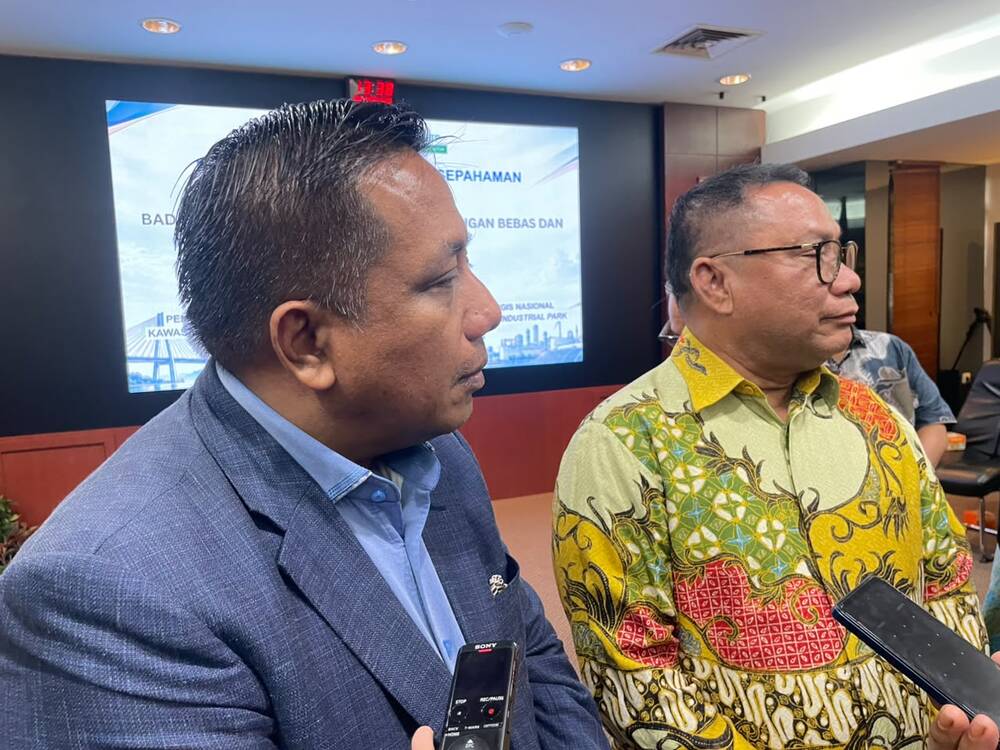
Akhmad Ma’ruf Maulana, president director of PT Wiraraja Indonesia, said 26 solar panel companies in the city had been affected by the US tariff policy because of the high costs involved in exporting their products to the country.
Ma’ruf said the policy was a decision made by another country that businesses had to contend with. He was not concerned that the situation would prompt investors to leave Batam, saying other investors were arriving with larger investments.
“That’s normal; it’s a policy adopted by a country. But the fact is, some are leaving. Others are coming in with even bigger investments,” Ma’ruf said on Wednesday afternoon (28 October), after the signing of a memorandum of understanding at the BP Batam office.
Pressure on Indonesia’s solar panel industry has increased after the US government imposed anti-dumping and countervailing duties on crystalline solar cell products from Indonesia.
Combined, the two duties could bring the tariff burden to around 167.56 to 268.06 per cent, depending on the company concerned. This does not include any other charges that may apply.
On 14 October 2026, the US International Trade Commission (USITC) said imports of the products from Indonesia, India and Laos had injured the US domestic industry.
The decision cleared the way for the issuance of official anti-dumping and countervailing duty orders.
The US government had previously scheduled the orders for early November 2026. Provisional duties had also been imposed during the investigation.
The policy poses a challenge for companies that rely on the US market as an export destination. High tariffs could make Indonesian products more expensive and reduce their competitiveness there.
Nevertheless, Ma’ruf likened Batam to sugar that attracts investors. He said the departure of some companies would not necessarily diminish the island’s appeal as an investment destination.
“Batam is like a sweet bun. It has a very attractive offer. Investors come on their own, so I’m not worried about some leaving. Today, even bigger investments are coming in,” he said.
Ma’ruf claimed that his side was also working to attract a large-scale project amid pressure on the solar panel industry. He mentioned a project with a capacity of 100 gigawatts that was being pursued, but gave no further details about its nature or stage of development.
“Today I’m travelling to Jakarta to meet the Energy and Mineral Resources Minister [Bahlil Lahadalia] and the Industry Minister, and report on investments that are currently being realised,” he said.
“Some are looking for solutions that would allow them not to enter the US market. Some are going to Europe, the Arab countries and elsewhere,” he said.
He also referred to the treatment of products located in the Free Trade Zone (FTZ). He said products outside the zone faced certain payment obligations, but did not specify the charges or rules involved.
Meanwhile, Fary Djemy Francis, deputy for investment at BP Batam, said the agency was also holding discussions with the 26 solar panel companies to find a way to address the impact of the US government’s policy.
Fary said BP Batam was seeking ways to help the companies deal with the problem, but did not provide details of the proposed solutions.
“The US government’s policy is what it is. But we’re exploring ways to address the fact that these facilities in the US have no offtakers. That’s one issue, and there are also changes in national transport. We’ll discuss it further,” Fary said.