
26,000 Land Plots in South Sulawesi Remain Uncertified
The South Sulawesi provincial government records that around 26,000 land plots in its territory remain uncertified and face various problems.
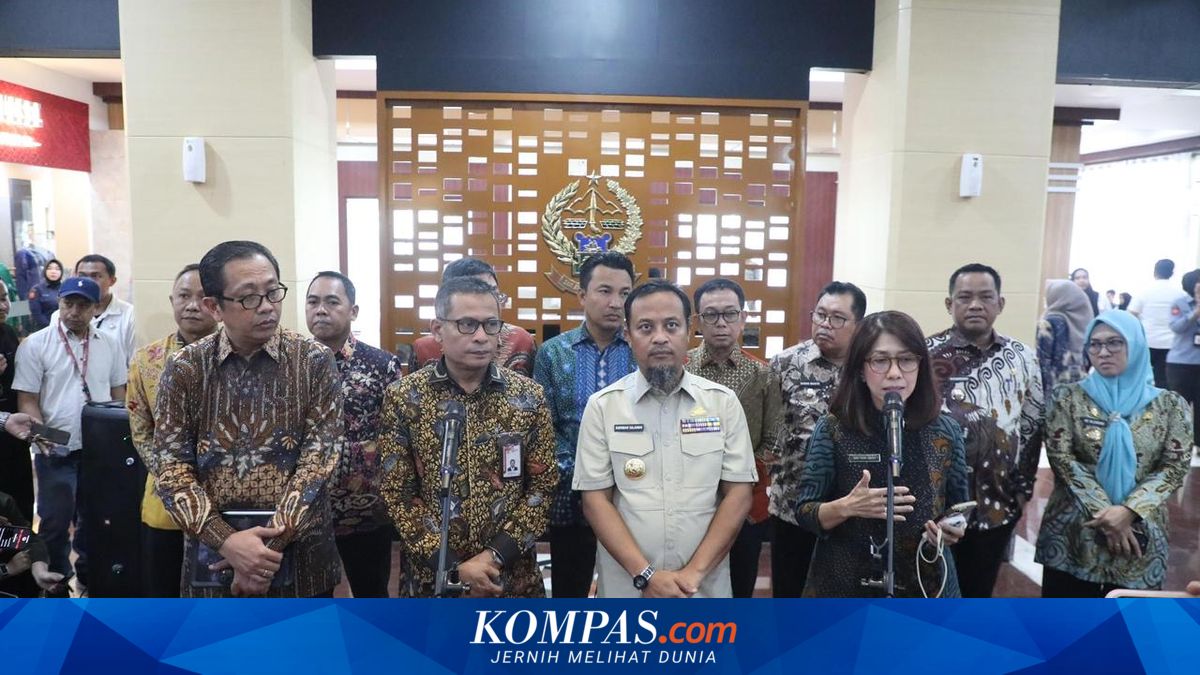
This situation was discussed at the Coordination Meeting on Optimising Cooperation between the Ministry of Agrarian Affairs and Spatial Planning/National Land Agency (ATR/BPN), the Corruption Eradication Commission (KPK), and the South Sulawesi Provincial Government at the South Sulawesi Governor’s Office in Makassar.
South Sulawesi Governor Andi Sudirman Sulaiman stated that these thousands of land plots have various obstacles that need to be resolved together.
“We actually have around 26,000 plots with various problems within them, which is what we are discussing together,” he said on Thursday (30/4/2026).
“This is also related to 70 per cent of the regional revenue potential that could later serve as the basis for regional income objects,” he added.
In the meeting, the Ministry of ATR/BPN, together with the KPK and the South Sulawesi Provincial Government, is optimising cooperation through nine strategic programmes related to land affairs and regional asset management.
Staff Advisor for Community Participation and Local Government Affairs at the Ministry of ATR/BPN, Andi Tenri Abeng, explained that this collaboration is the first initial step implemented in South Sulawesi.
“We come here with a shared commitment to resolve land issues in South Sulawesi,” said Andi.
He explained that the Ministry of ATR/BPN will still conduct in-depth studies on various land problems in South Sulawesi to ensure solutions are carried out appropriately.
“We from the Ministry of ATR/BPN are very pleased with this collaboration and hope that this activity can be implemented down to the regional level and achieved in line with our desired goals,” he said.
Meanwhile, Director of Coordination and Supervision for Region IV at the KPK, Edi Suryanto, stated that the collaboration focuses on improving public services, managing regional assets, and optimising regional revenue.
Edi added that certifying local government land assets is crucial to ensure physical, legal, and administrative control.
“The most important thing is that local government assets are secure and truly owned under physical, legal, and administrative control by the local government,” he said.
The nine strategic programmes that are the focus of the cooperation include the integration of Land Plot Identification Number (NIB) and Tax Object Number (NOP).
Then, integration of land services with the Public Service Mall (MPP), acceleration of land registration, acceleration of Detailed Spatial Planning (RDTR) preparation integrated with the Online Single Submission (OSS) system, and geospatial-based land census.
In addition, other programmes include integrating Sustainable Food Agriculture Areas/Sustainable Food Agriculture Land (KP2B/LP2B) into the Regional Spatial Plan (RTRW), optimising the role of the Agrarian Reform Task Force (GTRA), developing Land Value Zones (ZNT), and land consolidation for regional development.