
25th Anniversary of the 9/11 Tragedy: What Has Changed in the World of Intelligence?
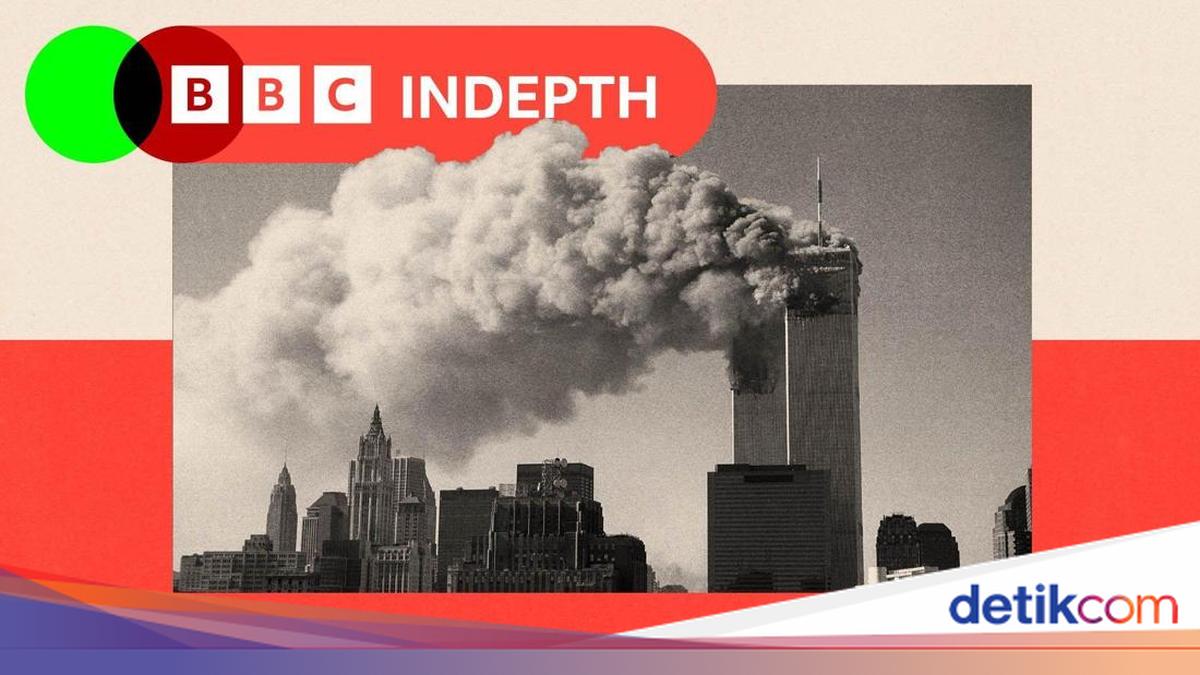
The primary duty of a government, as many leaders have stated for decades, is to protect its people. On 11 September 2001, the United States clearly failed to fulfil that duty.
Intelligence information actually existed, but no one managed to connect all the clues in time. The events subsequently known as 9/11, and the ensuing response, became the defining force for foreign policy, security, and intelligence during the first two decades of the 21st century.
On 11 September 2001, as the al-Qaeda suicide pilots flew hijacked planes into the Twin Towers of the World Trade Center, BBC journalist Frank Gardner had just finished an assignment at the Middle East bureau. As a Palestinian taxi driver drove him through the pine hills west of Jerusalem towards Ben Gurion Airport in Tel Aviv, he suddenly turned up the car radio volume.
“Something big is happening in America,” he said. He was not exaggerating. 2,977 people died in the attacks that day.
The attacks did not occur without prior warning. The US Central Intelligence Agency (CIA) had known about the existence of the al-Qaeda network and its leader, Osama bin Laden—a Saudi national living in exile—for years before 2001. The CIA even had a special task force deployed to hunt him.
Nine days after the September 11 attacks, then-US President George W. Bush declared the “War on Terror.”
Twenty-five years have passed since then. Intelligence agencies on both sides of the Atlantic have recorded numerous successes and failures. Among the successes are various foiled attack plots, and suspects arrested, tried, convicted, and imprisoned. However, what about the bigger picture? To what extent have intelligence gathering, counter-terrorism efforts, and strategic planning changed in the 25 years since the deadliest terrorist attack in US history? In other words, what lessons have truly been learned since the 9/11 tragedy, and how prepared is the world today to face similar threats in the future?
US Intelligence’s Major Failure
It is undeniable that 9/11 was a massive intelligence failure, or more accurately, a failure of imagination within the US intelligence community. At the time, both the CIA and FBI possessed information that, if properly shared and analysed, could have potentially prevented the tragedy. The 9/11 Commission Report, published after the event, blamed the US government for a “failure of imagination, policy, capability, and management.” The report concluded that the CIA and FBI failed to assess intelligence appropriately, failed to share information effectively, and failed to take adequate steps to intercept and thwart attack plans.
The most fundamental lessons from that failure have largely been learned, though not entirely. Information exchange between Western intelligence agencies is now far superior to that of 2001. The long-standing rivalry between agencies such as MI5 and the UK Police Counter-Terrorism Unit has gradually faded. This competition began to diminish with the creation of regional coordination centres across the United Kingdom, and more recently through the establishment of the high-security Counter Terrorism Operations Centre (CTOC) in London. At this centre, MI5 intelligence officers can work alongside police officers responsible for taking operational action to stop terror plots. They can also work alongside FBI federal agents from the United States or linguists seconded from GCHQ.
Since 9/11, the United States has also undergone a massive reorganisation of its intelligence structure. The US government formed the National Counterterrorism Center on the outskirts of Washington DC. It then created the position of Director of National Intelligence to ensure information can be shared effectively across 18 US intelligence agencies. The relationship between the CIA and its UK partner, the Secret Intelligence Service—better known as MI6—is perhaps one of the closest intelligence partnerships in the world. This cooperation is strengthened by the Five Eyes alliance, which enables intelligence sharing between the United States, the UK, Canada, Australia, and New Zealand.
Nevertheless, failures in intelligence, analysis, and strategic planning have continued following the attacks on the Twin Towers. Leading up to the US-led invasion of Iraq in 2003, MI6 was judged to have unwisely allowed its intelligence to be politicised. As a result, the agency suffered a blow to its reputation, considered the worst since the betrayal by double agent Kim Philby and several other Soviet spies in the 1950s and 1960s. Under immense political pressure from Washington to find evidence that Iraq, under President Saddam Hussein, still possessed Weapons of Mass Destruction (WMD), MI6 provided intelligence to Prime Minister Tony Blair’s government that was later proven to be incorrect. Iraq did possess WMDs in the past, but the weaponry had been destroyed after the 1991 Gulf War. Following the 2003 invasion of Iraq, MI6 underwent a thorough overhaul of how they assess intelligence.
Source: jawawa.id (https://jawawa.id/newsitem/25th-anniversary-of-the-9-11-tragedy-what-has-changed-in-the-world-of-intelligence-1789221409)
Originally published by detikcom (https://news.detik.com/bbc-world/d-8660118/peringatan-25-tahun-tragedi-9-11-apa-yang-berubah-dalam-dunia-intelijen), translated from Indonesian