
250 Years of US Independence: The Fate of the Native American Struggle
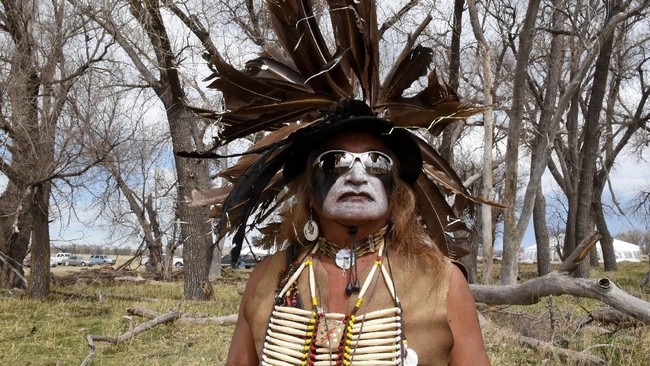
The United States (US) entered its 250th year of independence today, Saturday (4/7/2026). This moment is celebrated as the 250th anniversary of the signing of the US Declaration of Independence, a major milestone in American history. Behind the long history of America as a free nation, there is a history of indigenous peoples that cannot be separated from the country’s journey. The native people of America are often referred to as Indians. However, the indigenous peoples of America are not just one tribe, but consist of many different groups, such as the Cherokee, Navajo, Choctaw, Sioux/Lakota, Apache, Creek, Seminole, Pueblo, Hopi, and Haudenosaunee or Iroquois. As of 30 January 2026, the Bureau of Indian Affairs officially recognised 575 tribes within the US government.
The history of Native Americans is far older than the United States itself. The National Museum of the American Indian explains that American Indians have lived in the Western Hemisphere for at least 15,000 to 20,000 years. They had diverse, advanced, and complex societies long before Europeans arrived. However, the arrival of Europeans changed everything. Land grabs, the spread of disease, unfair treaties, and war increasingly marginalised the indigenous population. For the Europeans and later the United States, the land was seen as an opportunity for expansion. For the native peoples, the land was home, ancestral heritage, and part of their identity.
In 1776, the US proclaimed its independence from Britain. But that independence did not automatically mean freedom for all people living in the territory. The Library of Congress notes that after Britain ceded western territory to the US, there was no consultation with the native peoples already living on that land. The US government then faced pressure from settlers wanting to open new lands. Congress sought ways to make treaties with Native Americans to guarantee settler safety and obtain official claims to the land. This is where the major problems began. The US government initially made many treaties with native tribes. In practice, however, these treaties were often unfair. As the need for land for settlement, agriculture, mining, and development grew, the position of indigenous peoples was increasingly suppressed.
One of the darkest periods in Native American history was the Indian Removal Act. Signed by President Andrew Jackson in 1830, this law provided the legal basis to relocate native tribes from areas east of the Mississippi River to the west, primarily to Indian Territory, which is now part of the state of Oklahoma. This policy forced many indigenous people to leave their ancestral lands. One of the most famous tragedies is the Trail of Tears. In 1838-1839, thousands of Cherokee were forced to march to Indian Territory. The National Archives records that around 16,000 Cherokee were forcibly removed, and approximately 4,000 died along the way from starvation, disease, and harsh conditions. The Trail of Tears became a symbol of how US independence and territorial expansion brought immense suffering to native peoples.
Displacement from ancestral lands was not the only deep wound for Native Americans. After their land was seized and their tribes relocated, the US government also implemented a policy of forced assimilation. For more than a century, many native children were separated from their families and sent to Indian boarding schools. The goal was not merely education, but to transform their identity to follow white American culture. A 2024 US Department of the Interior report recorded that at least 973 American Indian, Alaska Native, and Native Hawaiian children died while attending federal boarding schools. The report also identified at least 74 burial sites at 65 school locations. In these schools, native children were often prohibited from using their native languages, practising ancestral culture, and performing their spiritual traditions.
Ironically, Native Americans did not immediately become official citizens of the country built on their ancestral lands. The Indian Citizenship Act was only passed on 2 June 1924. This law granted US citizenship to all Native Americans born in the United States. However, voting rights remained regulated by individual states. The Library of Congress notes that until 1957, some states still barred Native Americans from voting. This means that nearly 150 years after US independence, indigenous peoples only then received full citizenship recognition. Even after that, their political access remained restricted in several areas. To this day, native voting rights remain an issue. The Native American Rights Fund states that Native American voters still face barriers and discrimination, especially in rural areas and reservations.
Today, Native Americans have not disappeared. They still exist, endure, and continue to fight for their rights. Based on US census data, the American Indian and Alaska Native population, both alone and in combination with other races, reached approximately 9.7 million people, or 2.9% of the total US population in 2020. However, their socio-economic conditions still lag behind the national average. The Office of Minority Health recorded that in 2024, the median household income for American Indians and Alaska Natives was US$62,420, lower than the median for all US households.