
250 Years of the US: From a Nation of Farmers to Global Food Superpower
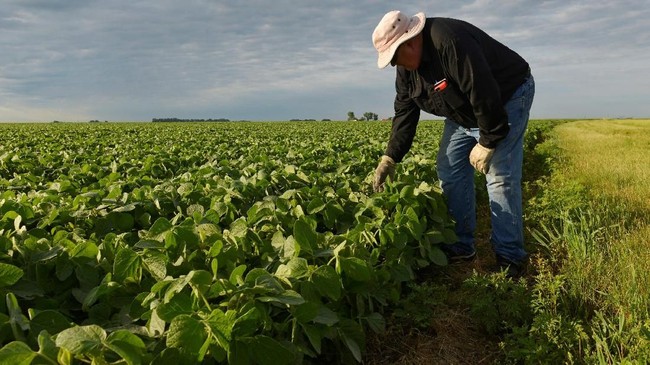
The United States was once known as a nation of farmers. At the end of the 18th century, around 90% of its workforce depended on agriculture for their livelihood. Fields were the centre of economic activity, and nearly every family managed land to meet their food needs or produce trade commodities. Two centuries later, the landscape has completely transformed. By 2025, according to the World Bank, only about 1.52% of the total workforce is employed in agriculture. This decline does not signify a weakening of American farming but rather its evolution into one of the most productive sectors in the world.
The foundations of American agriculture were laid during the colonial period in the 17th century. European settlers brought cattle, horses, and wheat, while indigenous communities introduced maize, squash, beans, and tobacco. Following independence in 1776, the government opened up vast new territories in the west, leading to a rapid expansion of farmland. The Louisiana Purchase of 1803 further extended the area under cultivation, and the completion of the Erie Canal in 1825 drastically reduced the cost of distributing harvests to major cities and export ports.
The most significant changes came through mechanisation. In 1793, Eli Whitney invented the cotton gin, which sped up the separation of cotton fibres from seeds. Decades later, Cyrus McCormick introduced the mechanical reaper in 1834, followed by John Deere’s steel plough in 1837, which could break the tough prairie soil of the Midwest. Productivity soared as tasks that once required many labourers could be completed by far fewer people. The completion of the transcontinental railroad in 1869 then connected production centres with national markets, enabling crops to be sold on a much larger scale.
The government accelerated this transformation. The Homestead Act of 1862 granted land to citizens willing to cultivate it. That same year, the United States Department of Agriculture (USDA) was established as a centre for agricultural research and technology development. The Hatch Act of 1887 strengthened research efforts, while the Morrill Act expanded higher education in agriculture through a network of land-grant universities. This combination of policies allowed innovations to be adopted more quickly at the farm level.
Entering the 20th century, the focus shifted from expanding land area to increasing crop yields. George Washington Carver introduced crop rotation systems to maintain soil fertility. Henry A. Wallace championed the use of hybrid corn seeds, which significantly boosted maize productivity. After the Second World War, tractors replaced horses as the primary source of power on farms, followed by the widespread adoption of synthetic fertilisers, pesticides, modern irrigation, and increasingly efficient harvesting machinery. In the 1970s, Norman Borlaug spearheaded the Green Revolution with high-yield wheat varieties that were subsequently adopted by many countries.
The wave of innovation continued into the digital age. From the 1990s, GPS technology began to be used for precise application of fertilisers and planting. Advances in sensors, satellite imagery, drones, artificial intelligence, and genetically modified seeds have minimised the waste of fertiliser, water, and pesticides. Farming has been transformed into a data-driven industry where decisions are increasingly determined by digital tools. These technologies were developed by many scientists, including Pierre Robert, known as a pioneer of precision agriculture, and Robert Fraley, who played a key role in developing modern GMO seeds.
This long journey is reflected in the changing structure of the labour force. In 1840, there were approximately 9 million people working as farmers, equivalent to 69% of the national workforce. This number continued to grow, reaching over 30 million by 1930 as the American population increased. After widespread mechanisation took hold, the trend reversed. The farming population fell to around 25 million by 1950, shrank further to 15.6 million in 1960, about 9.7 million in 1970, then just 6 million in 1980 and roughly 4.6 million in 1990. The share of the agricultural workforce correspondingly dropped from 12.2% in 1950 to 8.3% in 1960, 4.6% in 1970, 3.4% in 1980, 2.6% in 1990, reaching an estimated 1.52% by 2025 according to World Bank data.
This decline in the number of farmers was not accompanied by a drop in food production. The US remains one of the world’s leading exporters of corn, soybeans, wheat, cotton, and meat. This sustained output is underpinned by a fundamental transformation in farming methods. Tractors and combine harvesters replaced most manual labour, while hybrid seeds and high-yield varieties increased harvests. The use of synthetic fertilisers, pesticides, and modern irrigation systems has continuously boosted land productivity since the mid-20th century. Entering the digital era, American agriculture utilises GPS technology, soil sensors, satellite imagery, drones, artificial intelligence, and precision agriculture to more accurately determine planting times, fertiliser needs, irrigation, and pest control. In the livestock sector, the use of robotic milking machines, animal health sensors, and automatic feeding systems has further reduced dependence on human labour. According to the USDA, this approach allows farmers to save water, fertiliser, and pesticides while simultaneously increasing crop yields and cost efficiency. The National Institute of Food and Agriculture (NIFA) states that digital technology, robotics, sensors, and data-driven systems have become the core foundation of modern American agriculture, enhancing productivity, food safety, and environmental sustainability. It is this combination of innovations that keeps the US agricultural sector among the most productive in the world, even though it now employs only about 1.5% of the workforce.