
250 Years of the United States: Still a Superpower, but Not as Dominant as Before
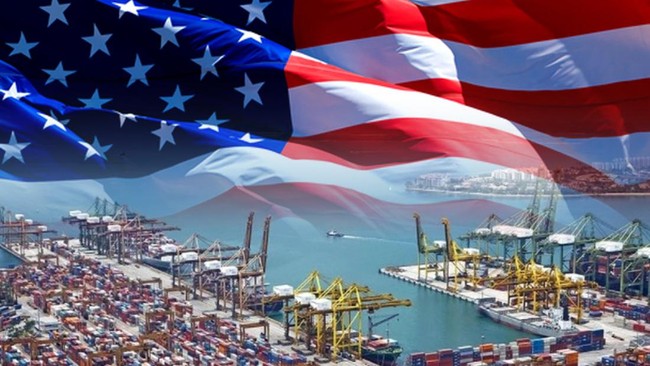
The United States is approaching a historic moment. On 4 July 2026, the nation will mark 250 years since declaring independence in 1776. Over nearly two and a half centuries, the US has grown from a new country on the American continent into the world’s greatest power. Its economy became the largest, its military spread across various regions, its technology transformed modern life, and its dollar became the backbone of the global financial system. However, as this 250th anniversary nears, a major question arises: is the US still as dominant as it once was? Citing The Economist, a range of data shows that the US remains extraordinarily powerful. Economically, militarily, and technologically, the country is richer, stronger, and more advanced than in previous eras. Yet, in relative terms, its position is no longer as far ahead of other nations as it used to be. The debate over American power is often wrapped in exaggerated language. In his first inaugural address in 2017, Donald Trump painted a very bleak picture of the country’s condition. Meanwhile, in his second inaugural address in 2025, Trump declared the US would reclaim its position as the greatest, strongest, and most respected nation on earth. Interestingly, the American public itself is becoming pessimistic about the country’s global standing. Six out of ten US citizens now predict that by 2050, their country will be less important in the world than it is today. The question, therefore, is not just whether the US is weakening, but what the true shape of American power looks like today. The Economist attempted to answer this with a data-driven approach. The result: the US is still very strong, but its dominance across many measures is no longer as great as in the past. The roots of America’s rise to world power are most easily traced through its economic ascent. In 1820, the US was a small country of about 10 million people, including European settlers, slaves, and Native Americans. Its territory was less than half its current size, and its economy was roughly one-tenth that of the British Empire. At that time, China under the Qing Dynasty was the world’s economic giant, controlling about a quarter of global economic output. Britain’s power then surged due to war, colonisation, and the Industrial Revolution. Around 1840, during the first Opium War between Britain and China, the British Empire overtook China as the world’s largest economy. However, the US also began to catch up rapidly. One crucial factor was cotton production. The invention of the cotton gin in 1793, combined with the brutal use of slave labour, made the US a major world cotton producer by the 1850s. Simultaneously, the US continued its westward expansion, often through violent means. Economically, this expansion gave the country access to enormous natural resources. Vast forests provided timber for rapid construction. Strategic ports and the Mississippi River became vital trade and export routes. Coal mines in Pennsylvania, Appalachia, and the Midwest powered railways and factories, while iron ore deposits in the Great Lakes region became the raw material for the steel industry. The Civil War damaged many parts of the US but did not destroy the nation. The war ended in 1865, also bringing an end to slavery. Afterwards, American industrialisation accelerated rapidly. By 1891, the US officially surpassed Britain in energy consumption. By 1899, following the Spanish-American War and the Treaty of Paris, which gave the US control of Puerto Rico, Guam, and the Philippines, the US was estimated to have more fertile land than almost any other country, second only to the Russian Empire. A few years later, in 1903, the US became the world’s largest economy. American dominance strengthened further as Europe was drained by war. By 1945, when many major powers were devastated by the Second World War, the US economic position reached its peak. Unlike other great powers, American territory was virtually untouched by the conflict. At that time, the US had only about 6% of the world’s population but controlled roughly a third of global economic output. After the war, the US economy continued to soar, driven by industrial strength, massive consumer spending, and state investment. The government also invested in national laboratories, highways, and other critical infrastructure. The US also benefited from oil, which began flowing abundantly from Texas wells in the 20th century after its initial discovery in Pennsylvania in the mid-19th century. Other factors accelerated the US economy, including immigration, legal certainty, large capital reserves, and an entrepreneurial spirit. From 1945 to 1999, the US economy grew more in nominal terms than any other country. American researchers also created many foundations of modern life, including the transistor, computer chip, personal computer, and the internet. Today, the US economy is smaller than China’s when measured by local purchasing power parity. However, using 2025 exchange rates, the US remains the world’s largest economy, with a gross domestic product of US$32.4 trillion, which is 55% larger than second-place China. The US also continues to lead in the development of generative artificial intelligence and is now the world’s largest producer of crude oil and natural gas.
Source: jawawa.id (https://jawawa.id/newsitem/250-years-of-the-united-states-still-a-superpower-but-not-as-dominant-as-before-1783003904)
Originally published by CNBC Indonesia (https://www.cnbcindonesia.com/research/20260702113805-128-747458/250-tahun-amerika-serikat-masih-superpower-tapi-tak-sehebat-dulu), translated from Indonesian