
24 Regencies/Cities in East Java Declare Drought Emergency Status
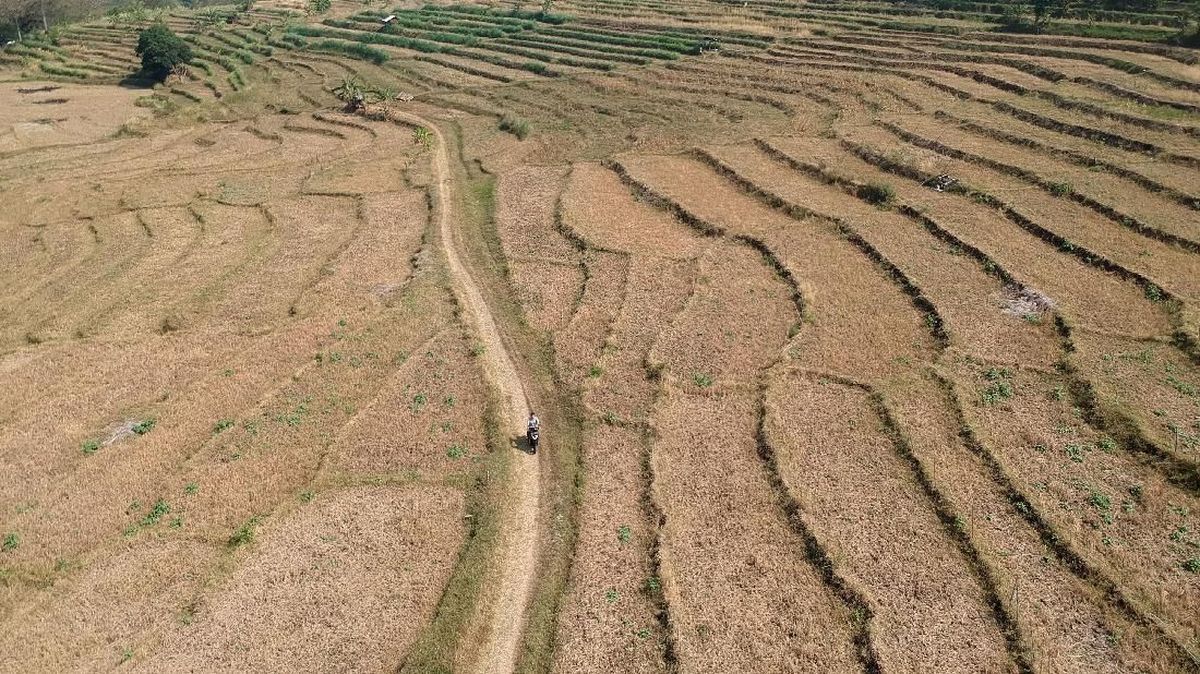
The drought crisis in East Java is spreading further. Head of East Java’s BPBD disaster agency, Gatot Soebroto, revealed that 24 regencies/cities have declared either emergency alert or disaster response status for drought.
“For the drought, as of today it is still the same. The number that have proposed and declared a status, whether emergency alert or disaster response, totals 24 regencies/cities,” said Gatot on Monday (7/9).
Of that number, 20 regencies have begun distributing clean water assistance to affected areas. Three districts on Madura Island are recorded as the worst hit by the drought.
“Of the 24, those that have declared a status and have started distributing clean water number 20 regencies,” he said.
Of the 38 regencies/cities in East Java, 24 areas have declared a drought emergency status. Six areas have declared disaster response status, namely Lumajang, Pasuruan, Malang, Mojokerto, Situbondo and Sumenep regencies.
Meanwhile, the 18 areas that have declared emergency alert status are Bondowoso, Lamongan, Banyuwangi, Bangkalan, Blitar, Trenggalek, Gresik, Jember, Sampang, Tulungagung, Ngawi, Pacitan, Ponorogo, Batu City, Jombang, Bojonegoro, Pamekasan and Probolinggo.
“Bangkalan, Sumenep and Pamekasan are our main concern, and we have already dispatched assistance to those areas, totalling 5,410 tanker trips of water. We have also prepared roughly 1,400 water tanks, along with folding tanks and tarpaulins,” he said.
BPBD East Java is also relying on weather modification operations (OMC) as one of its efforts to tackle the drought, in addition to wetting mountain and forest areas prone to fire.
“OMC was carried out earlier. The function of OMC, besides addressing water shortages, is also to wet mountainous areas considered vulnerable to fires,” said Gatot.
However, Gatot stressed that OMC cannot be carried out arbitrarily. The technology is only effective when there is potential for rain clouds in the target area.
“OMC is carried out when rain cloud potential is detected. Without rain clouds, OMC is not possible. So we continuously coordinate with BMKG to determine whether cloud and wind movements are heading towards an area suitable for OMC before proceeding,” he explained.