
24 Hours of Terror! Major Earthquakes Strike Multiple Countries, Coincidence?
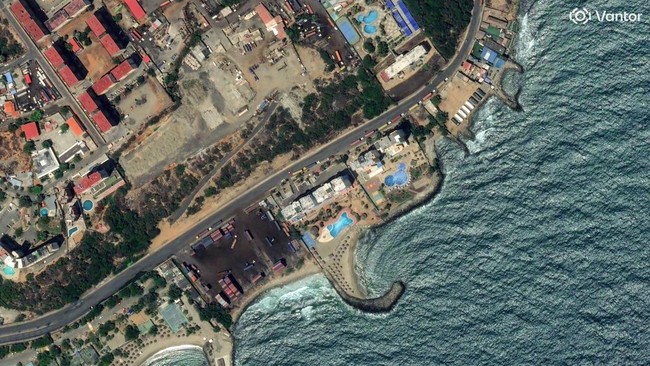
In less than 24 hours, strong earthquakes shook several parts of the world on Wednesday and Thursday (24-25/6/2026). California was hit by a magnitude (M) 5.6 quake, while Venezuela experienced two successive major earthquakes. Japan was then struck by an M6.9 quake off the coast of Iwate Prefecture. During the same period, seismic activity was also recorded in the Philippines, Indonesia, Papua New Guinea, Mexico, New Zealand, and the Kermadec Islands.
The three largest quakes in the series occurred in Venezuela, Japan, and California. The US Geological Survey (USGS) recorded that Venezuela was shaken by two major earthquakes less than two minutes apart. An M7.2 quake was immediately followed by an M7.5, causing widespread damage, casualties, and a tsunami warning in the Caribbean region. Several hours later, an M6.9 quake struck off the coast of Iwate Prefecture, Japan. The tremors were felt as far away as Tokyo and prompted operators to temporarily suspend Tohoku Shinkansen bullet train services as a safety precaution. Earlier, Northern California experienced an M5.6 quake, the strongest in the area since 1940. At almost the same time, global earthquake catalogues recorded dozens of other quakes in the Philippines, Indonesia, Alaska, Mexico, Chile, and New Zealand.
Viewed on a map, this sequence appears striking. However, are they all interconnected? Most of the affected locations lie on the Pacific Ring of Fire, a roughly 40,000-kilometre tectonic belt where about 90% of the world’s earthquakes occur. Japan, California, the Philippines, Indonesia, Papua New Guinea, New Zealand, and the Kermadec Islands are all on this path, creating the impression that the events are linked. Yet there is an important exception. The two largest quakes occurred in Venezuela, which is not part of the Pacific Ring of Fire. According to the USGS and the Colombian Geological Service, activity there was triggered by the interaction of the Caribbean and South American plates, not a subduction system along the Ring of Fire. This means the close timing of several large quakes does not automatically mean they share the same tectonic mechanism.
The perception that earthquakes are happening everywhere is not solely due to the Earth’s activity, but also to how humans monitor it. The USGS estimates that around 20,000 earthquakes occur worldwide each year, an average of about 55 per day. Most are small, occur under the sea, or are far from populated areas, so they are never felt. Meanwhile, monitoring systems are now far denser than before. Almost every major quake appears on digital maps, social media, and phone notifications within minutes. What has changed is not just seismic activity, but our ability to see it in real time.
Seismologists largely agree that these quakes did not trigger one another. ‘The fact that they happen to have occurred in close temporal proximity is almost certainly just a statistical coincidence,’ said Peter Stafford, Professor of Engineering Seismology at Imperial College London. John Cassidy from Natural Resources Canada shared a similar view, noting that earthquakes occur daily across the Ring of Fire, so their appearance on the same day is not extraordinary. The USGS also records an average of about 16 magnitude 7 or greater earthquakes each year. Under these conditions, several large quakes can appear within a short time span without any causal relationship.
Beneath the surface, tectonic plates are constantly moving a few centimetres each year. Each plate boundary has its own characteristics, mechanisms, and energy release cycles. Therefore, a quake in Japan does not automatically trigger one in Venezuela, nor does a quake in California mean Indonesia will soon experience a major quake. The influence of stress changes from an earthquake is generally limited to the area around its source zone, not across thousands of kilometres. The series of quakes in the last 24 hours is better understood as a reminder that the Earth is never truly still. Although they occurred almost simultaneously and captured global attention, each event has its own distinct geological cause.