
24.9 Million Homebound Travellers Predicted to Flood East Java, Peak Traffic Expected on 18 March
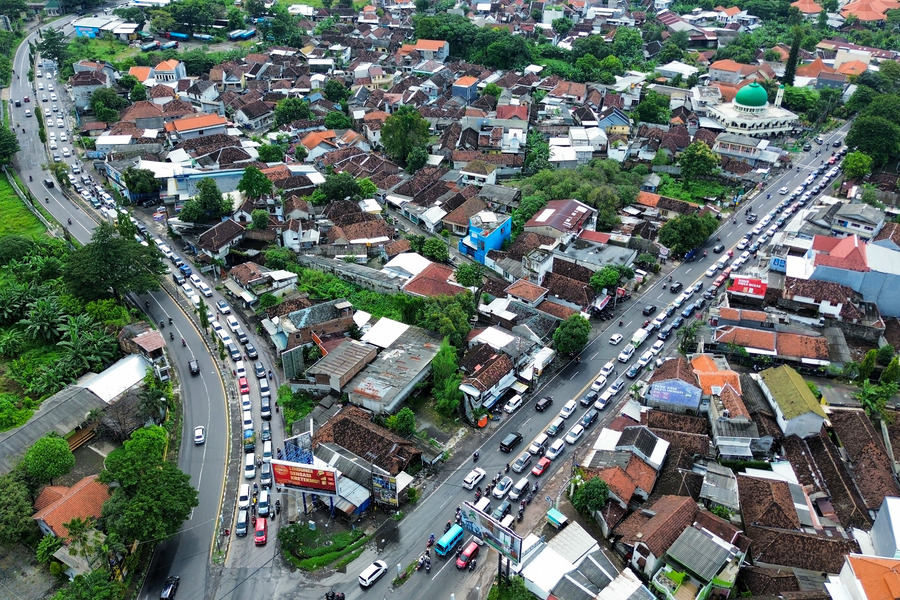
The Transportation Department of East Java Province predicts that 24.9 million homebound travellers will head to East Java during the upcoming Eid holiday period.
The Transportation Department also forecasts the peak of Eid holiday traffic in East Java will occur on Wednesday, 18 March 2026.
“The projected movement towards East Java shows that approximately 15.61 million people originally from East Java will depart the province, but the inflow to East Java is larger at approximately 24.9 million people. The peak of homebound travel is predicted for 18 March,” said Nyono, Head of East Java’s Transportation Department, in Surabaya on Sunday (8 March).
The high volume of travellers heading to East Java positions the province as one of the regions with the largest homebound mobility nationally. The number of travellers entering East Java is estimated to reach 17.30 per cent of the total national population movement.
“Although nationally there is a predicted decline in mobility of 1.75 per cent, the volume of people travelling to East Java is still estimated to be high,” he said.
Based on Transportation Department data, the most preferred transport mode for homebound travellers is trains, accounting for 37.8 per cent or approximately 2.93 million passengers.
Buses rank second at 34.5 per cent or approximately 2.67 million people, followed by inter-island ferries, which are estimated to serve approximately 1.23 million passengers.
To support homebound traveller mobility, the government has prepared 6,637 buses, 148 train sets, as well as hundreds of aircraft and ships.
The Transportation Department has also identified several potential problems during the Eid holiday travel period, including passenger surges, limited vehicle fleets, road infrastructure conditions, and weather factors due to the ongoing rainy season.
“The main focus of Eid holiday transport problems is passenger surges and vehicle availability. The second is road infrastructure conditions, third is traffic congestion and road safety, and then weather due to the rainy season,” said Nyono.
Traffic congestion is also predicted to occur not only on main homebound routes but also on roads leading to several tourist destinations during the peak Eid holiday period, estimated to occur on 22–23 March 2026.
To anticipate traffic density, the government will impose operational restrictions on three-axle and larger freight vehicles from 13 March until 31 March 2026 on several toll roads and national highways in East Java.
Work From Anywhere (WFA) flexible work arrangements will be implemented during the Eid homebound travel period from 13 March to 29 March 2026 to reduce traffic congestion during peak travel times.
The Chairman of Commission V of the Indonesian House of Representatives, Lasarus, emphasised the importance of infrastructure readiness ahead of the Eid homebound and return travel in 2026, particularly in Central Java which serves as the main national transit route.