
22 East Java Regions Declare Drought Emergency, 84,000 People Affected
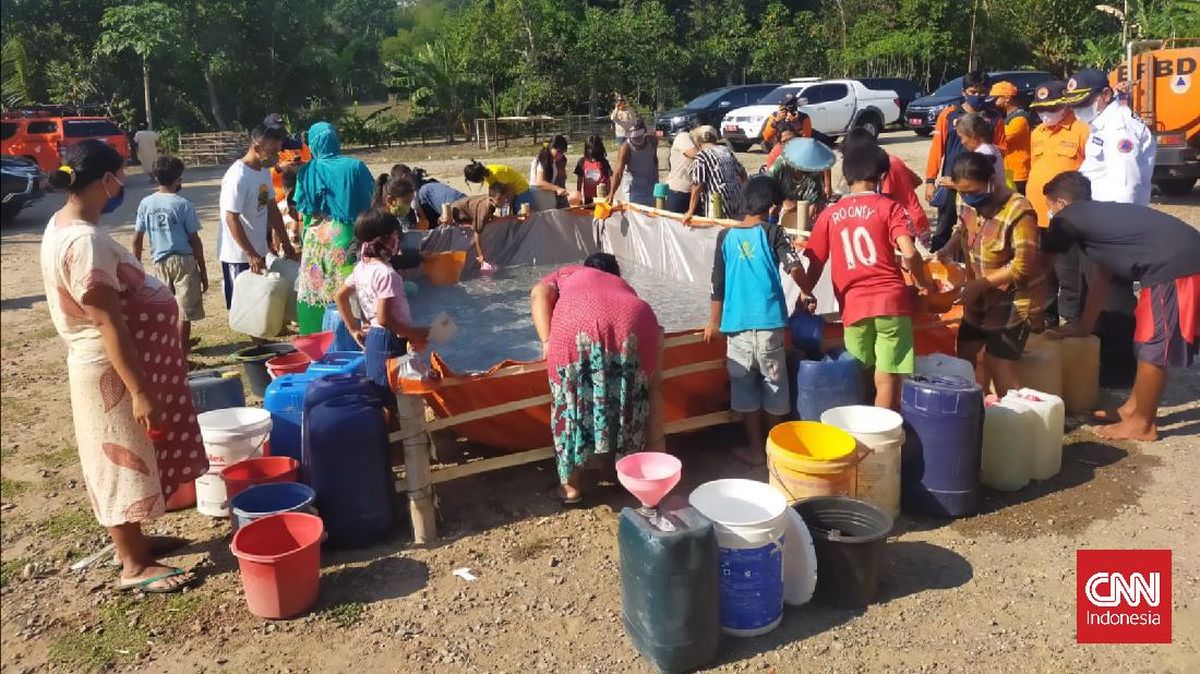
The East Java Regional Disaster Management Agency (BPBD) has revealed that 22 regencies and cities in the province have declared a state of drought emergency.
Head of Emergency and Logistics at East Java BPBD, Satriyo Nurseno, said that in these 22 regions, at least 84,000 people have been affected.
“Currently there are 22 regencies and cities affected by drought, with an estimated 24,136 households impacted. The estimated number of people affected is around 84,458,” said Satriyo on Wednesday (19/8).
The 22 regencies and cities that have declared a drought emergency are Bondowoso, Lamongan, Banyuwangi, Lumajang, Bangkalan, Blitar Regency, Pasuruan Regency, Trenggalek, Gresik, Malang Regency, Jember, Sampang, Mojokerto Regency, Situbondo, Tulungagung, Ngawi, Pacitan, Ponorogo, Jombang, Bojonegoro, Pamekasan and Batu City.
Chief Executive of East Java BPBD Gatot Soebroto said that all 22 regions that have declared a drought emergency have carried out clean water distribution to agricultural land to prevent crop failure, using their respective regional government budget allocations.
However, Gatot said 11 of these regions have submitted requests for clean water assistance to the East Java provincial government. This is because, he explained, the fiscal capacity of these regency governments has been used to the maximum extent possible to fund irrigation efforts for land at risk of drought.
“There are 11 regencies that have requested support from the province. This means they have already carried out clean water distribution using their own budgets and have exhausted them, so they need support from the provincial budget,” said Gatot.
Nevertheless, Gatot said there are 15 regency governments that are still able to carry out clean water distribution independently using funds held by each regional government.
“There are already 15 regencies that have carried out clean water distribution. Among them are Bondowoso, Situbondo, Blitar, Ponorogo and Probolinggo, which have already distributed clean water,” he explained.
Furthermore, Gatot said East Java BPBD has also prepared 5,410 water tanker trips, 100 folding tanks, 50 fixed tanks, and 9,600 tarpaulins as part of efforts to handle the drought phenomenon across all regencies and cities.
Gatot stated that all East Java BPBD personnel are ready to distribute clean water to all drought-affected areas. The condition is that each regency or city government must submit a request to the provincial government based in Surabaya.
“We have also been carrying out massive clean water distribution, but with the caveat that the request for distribution must be submitted by the regency or city experiencing drought. What is this anticipating? So that the public can access all government assistance and the distribution of clean water can be carried out evenly,” he said.
He explained that based on observations by the Meteorology, Climatology and Geophysics Agency (BMKG), the peak of the dry season in East Java will fall in August and September.
To anticipate disasters during this period, Gatot said East Java BPBD is focusing on short-term and emergency response.
Based on the agency’s mapping, there are 29 regencies, 260 sub-districts and 926 villages across East Java that are potentially affected by drought. The phenomenon is also predicted to impact 1,582,672 people or 489,608 households.
Regarding the possibility of carrying out weather modification operations in vulnerable areas with a high chance of drought, Gatot said this cannot be done in the near future because potential clouds or convective clouds with sufficient water content are still not observable.