
21,000 Houses in Jagakarsa Implementing Waste Sorting at Source
The South Jakarta Administrative City Government has recorded that 21,000 houses in the Jagakarsa District have implemented waste sorting at the source, supported by several organic processing facilities, including jumbo biopores and modern ‘teba’ (refuse pits).
“Currently, approximately 21,000 houses in Jagakarsa have implemented sorting, supported by organic processing facilities such as jumbo biopores and modern teba,” said Iwan Santoso, Assistant for Economy and Development of the South Jakarta Administrative City, during a pilot project for collaborative waste management in RW 06 Srengseng Sawah, Jagakarsa, South Jakarta, on Monday.
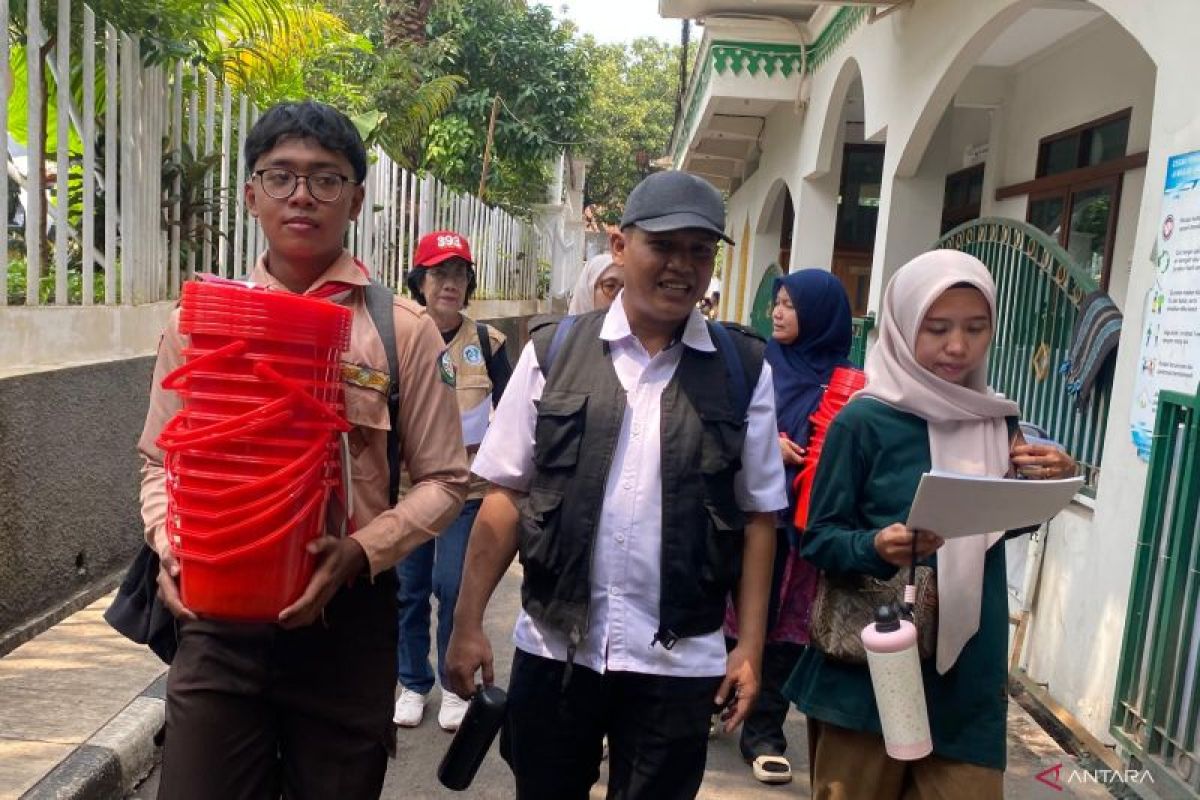
He stated that the authorities will later collaborate with volunteers to provide education on waste selection and distribute facilities, including organic waste buckets and inorganic waste bags.
This volunteer-led assistance will be conducted door-to-door, ensuring that residents not only understand but also practise waste sorting.
“When the government, citizens, and partners move together, the waste management system will become stronger, and the benefits can be felt directly by the environment,” said Iwan.
In practice, the waste sorted by residents will be collected by officers. Organic waste will be processed using jumbo biopore and modern teba methods to be converted into compost.
Meanwhile, inorganic waste will be weighed at the nearest waste bank, such as the Pandan Wangi Waste Bank in RW 06. Subsequently, residue will be transported by self-help officers to the nearest Waste Management Site (TPS 3R) based on the principles of Reduce, Reuse, and Recycle.
Previously, the DKI Jakarta Provincial Government selected RW 06 Srengseng Sawah, Jagakarsa, South Jakarta, as a pilot project for a collaborative waste sorting and collection system involving the government, the community, the business world, communities, and universities.
Waste management at the source in the area has been operational since the issuance of Governor’s Instruction Number 5 of 2026 regarding the Movement for Waste Sorting and Processing at the Source. Through this pilot project, existing practices are being strengthened into a more integrated sort-collect-process system.