
2027 Energy Subsidies Set at Rp261.5 Trillion, Here are the Details
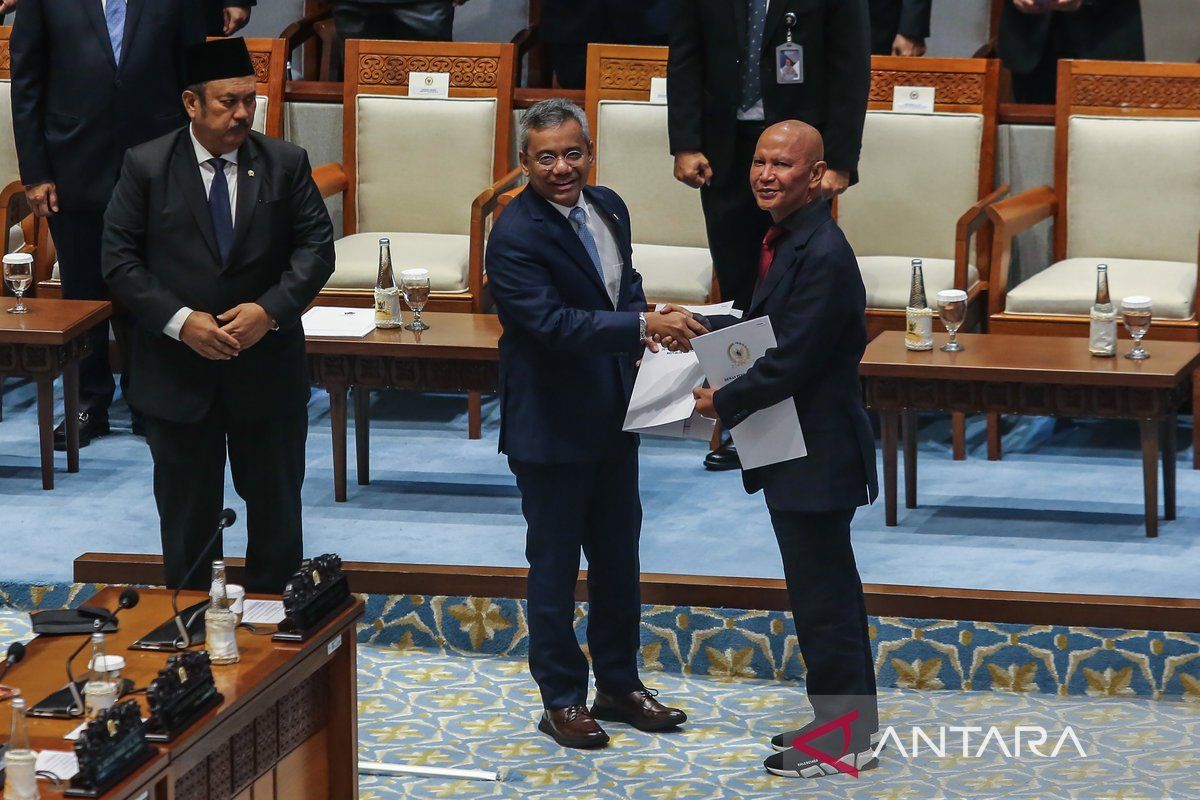
Jakarta (ANTARA) - The Government and the House of Representatives (DPR RI) have agreed on an energy subsidy budget within the 2027 State Budget (UU APBN) of Rp261.5 trillion, a decrease of Rp11.44 trillion compared to the previous allocation of Rp272.94 trillion.
This budget reduction primarily stems from subsidies for fuel (BBM) and 3kg LPG cylinders, which have been agreed at Rp131.39 trillion, down from the previous Rp143.84 trillion. Meanwhile, the electricity subsidy budget remains unchanged at Rp130.11 trillion. Consequently, the total energy subsidy in the 202cap7 APBN reaches Rp261.5 trillion.
“We need to explain to this honourable council that our agreement to reduce certain subsidy budgets, such as for kerosene, diesel, and 3kg LPG, does not mean that our attention to the poor has diminished,” stated the Chairman of the DPR RI Budget Committee (Banggar), Said Abdullah, during the 7th Plenary Session of the DPR RI, First Session Period 2026-2027 in Jakarta on Tuesday.
In terms of volume, the government and DPR have agreed on a volume of subsidised fuel of 19.56 million kilolitres (KL), down from the previous 20.09 million KL. This volume consists of 561,000 KL of kerosene, up from 539,000 KL, and 19 million KL of diesel, down from 19.56 million KL.
Furthermore, the volume for 3kg LPG cylinders has been set at 8 million metric tonnes (MT), a decrease from the previous 8.95 million MT. The subsidy rate for diesel remains fixed at Rp1,000 per litre.
“The reduction in subsidies is accompanied by the improvement of recipient data to ensure it is more targeted and to make our energy subsidy budget more efficient. By refining the recipient data, this step will rectify the errors in subsidy distribution that have persisted for years,” said Said.
According to him, communities in the lower deciles have, until now, been less able to benefit from the implementation of energy subsidies. “Therefore, the refinement of the DTSEN (National Single Social and Economic Data) as the basis for subsidy recipients will continue to be improved by the government,” he added.