
2027 Civil Service Selection to Open, System Traced to Dutch Origins
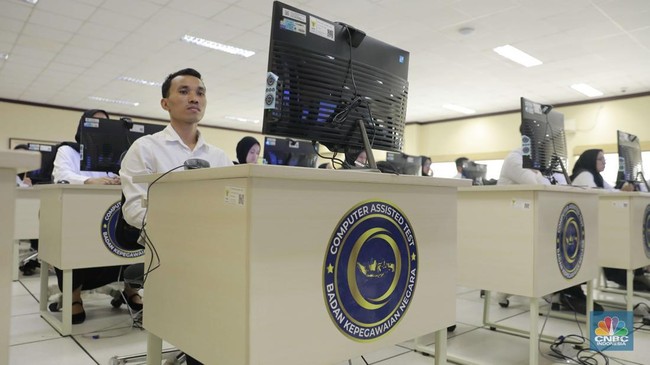
The government and the Indonesian House of Representatives (DPR RI) have finalised a number of policies regarding the employment status of teachers holding the status of Government Employees with Work Agreements (PPPK). One decision that has drawn attention is the opening of opportunities for PPPK teachers to take part in the selection of civil servant candidates (CPNS), which is projected to begin in early 2027.
This news has brought the civil servant profession back into the spotlight. Civil service has long been one of the most sought-after occupations in Indonesia because it offers clear career progression and employment status.
However, the civil service system known to Indonesians today actually has its roots in the Dutch bureaucratic system. The reformer behind this system was a Dutchman named Herman Willem Daendels, who served as Governor-General of the Dutch East Indies from 1808 to 1811.
At the time, Daendels saw that the new administration following the collapse of the VOC required a more orderly bureaucracy. During the VOC era, no such system existed, leaving the administration vulnerable to abuse and corruption.
In Sentralisme Kekuasaan Pemerintahan Herman Willem Daendels di Jawa 1808-1811 (2005), historian Djoko Marihandono notes that Daendels sought to rectify the bureaucratic chaos. He brought a spirit of change influenced by the French Revolution and Napoleon Bonaparte’s model of governance.
Daendels then carried out a large-scale reorganisation of the bureaucracy in Java. He aimed to transform a system of government still influenced by old patterns into a more centralised bureaucracy with clear hierarchies.
Under the new system, officials were placed according to position and hierarchy. They had clearer authority and responsibilities. The government also paid salaries to employees as compensation for their work.
Historian Ong Hok Ham, in Terbentuknya Sebuah Elite Birokrasi (1983), states that Daendels changed the position of the bureaucracy in the Dutch East Indies, particularly in Java. Officials were placed according to hierarchy and rank.
They were also given uniforms and rank insignia to indicate their function and position. With this hierarchy in place, orders from the central government could be passed down through the layers.
The Governor-General no longer needed to give direct instructions to employees at the lowest level. Directives could simply be given to senior officials, who would then pass them down to subordinates according to the established structure.
This system made the government more centralised. Each official had a clearer position, function, and responsibility in running the administration.
The payment of salaries was also an important part of these reforms. Daendels sought to ensure that officials earned their income from the state so that they would not need to seek additional profit through their positions.
In addition to receiving a salary, employees also had the opportunity to receive pay increases if they contributed in line with their duties. Upon taking up a position, they were also required to swear an oath of office to their superiors.
Thus, the system built by Daendels not only regulated who became an official, but also how the relationship between superiors and subordinates worked, how a person carried out their duties, and how the state compensated its employees.
This is what was inherited when Indonesia became independent, even though it has undergone many adjustments along the way, including when the government holds the CPNS selection in the coming year.
Source: jawawa.id (https://jawawa.id/newsitem/2027-civil-service-selection-to-open-system-traced-to-dutch-origins-1787280707)
Originally published by CNBC Indonesia (https://www.cnbcindonesia.com/entrepreneur/20260821081334-25-761140/seleksi-cpns-2027-bakal-dibuka-ternyata-sistemnya-dari-belanda), translated from Indonesian