
2026 State Budget: Orchestrating the Indonesian Economy
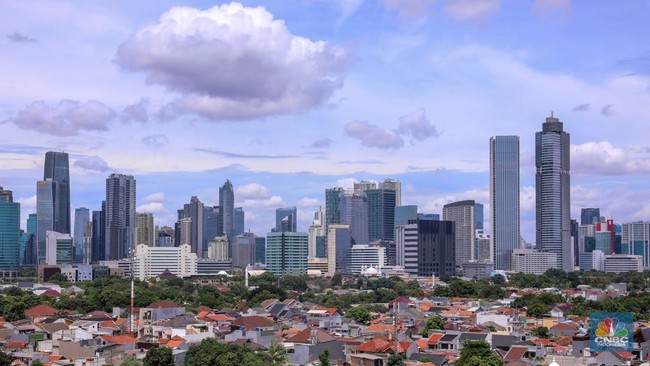
Amidst global economic dynamics still overshadowed by geopolitical uncertainty, a slowdown in world trade, and financial market volatility, the government has built the 2026 State Budget (APBN) posture as a strategic instrument to maintain stability while sustaining national economic growth momentum. Referring to APBN Kita at the Ministry of Finance press conference (5 June 2026), up to May 2026, fiscal performance showed quite encouraging results. State revenue reached Rp1,185 trillion or 37.6% of the APBN target, growing by 19.1% year-on-year (yoy). At the same time, state expenditure reached Rp1,365 trillion or 35.5% of the annual ceiling, with growth of 34.4%. On the other side, the fiscal deficit remained at a relatively safe level, around 0.7% of GDP. The macroeconomic fundamental portrait in the 2026 APBN posture depicts fairly solid resilience. Economic growth in Q1 2026 was at 5.61%, inflation was controlled at 3.08%, manufacturing activity re-entered the expansion zone, the trade surplus continued for 72 consecutive months, and foreign capital flows recorded a positive net inflow of Rp32.8 trillion up to Q2 (as of 3 June 2026), with details of SRBI (Bank Indonesia Rupiah Securities) inflow of +Rp99.9 trillion, offset by SBN outflow of -Rp10.8 trillion and shares of -Rp56.4 trillion. From the explanation of the indicators above, this illustrates that the Indonesian economy is still able to survive and grow amidst global pressures. However, the important question is: Is this condition sufficient to bring Indonesia out of the 5% growth trap and step towards higher, sustainable growth of 6%-8%? In modern economic thought, productivity is the main source of a nation’s prosperity. As stated by Krugman (1994), a nation’s long-term prosperity is ultimately determined by productivity. Although consumption can drive growth in the short term, without an increase in production capacity, that growth will eventually lose its driving force. Thus, the APBN should not be viewed merely as an instrument of government expenditure. More than that, the APBN must become a transformation tool capable of creating new economic capacity, increasing national productivity, and strengthening Indonesia’s competitiveness at the global level. In the Simatupang Framework (2026), economic growth is not the result of a single standalone policy. Growth is the product of synergy among various development instruments encompassing fiscal, monetary, financial sector, investment, trade, industrial, and foreign exchange management policies. In this context, the state acts as a conductor coordinating all these instruments to move in the same direction towards national development goals. Indications of the 2026 APBN implementation moving towards national development goals are beginning to appear. Credit growth approached 9.98% and third-party fund growth was 11.39% in April 2026. Liquidity conditions are relatively maintained, with the government striving to ensure that fiscal stimulus does not stop at the government’s balance sheet but flows into the real sector and drives productive economic activity. The measure of policy success is not based on the amount of credit disbursed, but on the quality of the sectors receiving financing. Credit that enlarges consumption will produce temporary growth. Conversely, financing directed towards manufacturing, natural resource downstreaming, food security, energy, and export-oriented industries will create new production capacity that strengthens the economy’s ability to generate foreign exchange. The government’s attention to the food sector is increasingly evident. Up to May 2026, the food security budget realisation reached Rp66.6 trillion, while the Free Nutritious Meal Programme absorbed Rp88.15 trillion with coverage of more than 63 million beneficiaries. From a social perspective, this programme plays an important role in improving the quality of human resources and maintaining people’s purchasing power. From a development economics perspective, the greatest benefit of the programme will only be achieved if it can create strong linkages with the domestic production sector. The key is that if the programme’s food needs are directed to be met by domestic farmers, livestock breeders, fishermen, cooperatives, and MSMEs, then this programme will not only become a social protection instrument but also a driver of national production. However, if the increase in consumption is not matched by an increase in domestic production capacity, then part of the economic benefits will ‘leak’ through increased imports. In such conditions, economic growth does occur, but it does not fully generate added value enjoyed by the national economy. Therefore, we must distinguish between growth and transformation. Growth can be created through expansion of spending and consumption. But economic transformation can only be realised through increased productivity, productive investment, and strengthening of sectors that generate high added value. From several indicators, manufacturing is moving back into the expansion zone, and tax revenue from the trade sector grew 52.4% (yoy), becoming the largest contributor with a 25.5% share of total tax revenue from main sectors. However, there is one aspect that still requires serious attention, namely the management of national foreign exchange. Indonesia’s trade surplus reached more than US$92 billion, growing 19.7% (yoy) during January to April 2026, and contributed 23.6% to tax revenue from main sectors. This picture shows the national economy’s ability to generate foreign exchange in large amounts.