
2026 Forest Fires Enter 'Code Red', Major Haze Risk Looms
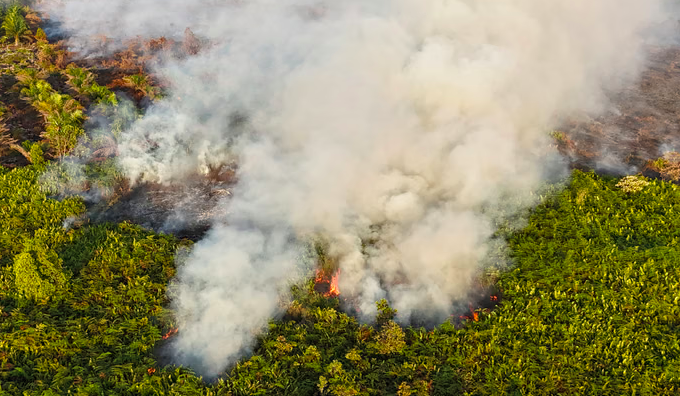
Guru Besar IPB University Bambang Hero Sahardjo has warned that the threat of forest and land fires (karhutla) in 2026 has entered a ‘code red’ stage, following an increase in fire incidents even before the peak dry season and before the El Niño phenomenon fully develops. According to Bambang, the current surge in fires is a serious danger signal that must not be underestimated by local governments or the public. “If local governments and the public do not take the small fires appearing now seriously with early preparedness, we are at great risk of repeating the major haze disasters of 2015 or 2019,” Bambang said when contacted on Thursday (18/6). He likened the current situation to waging war against fire when water reserves are increasingly limited due to persistently drying weather conditions. “We are fighting a war against fire on increasingly dry terrain, while our water weapons are becoming more limited. The rise in cases now is the final warning that this year’s dry season will not be ordinary,” he stated. Bambang assessed that the increase in fires during weather that is not yet extreme also indicates problems with prevention efforts on the ground. This could suggest that some fire control infrastructure, such as canal blocking in peatland areas, is not functioning optimally to maintain soil moisture. Furthermore, he suspects that the practice of land clearing by burning is still ongoing. Perpetrators likely assume the land is still wet enough that fires will not spread, whereas peatland that is beginning to dry is highly susceptible to burning and difficult to extinguish. Bambang also highlighted the recurrence of fires in the same peatland areas year after year. According to him, the root of the problem is not merely a limitation of firefighting technology, but rather economic factors that make land burning the cheapest method for clearing land. “The peatland fire problem remains unresolved because technical solutions are overpowered by economic solutions. As long as clearing land without burning is considered too expensive and law enforcement does not provide a deterrent effect commensurate with the profits gained, the haze will continue to appear every year,” he said. Nevertheless, Bambang believes Indonesia is now far better prepared to face forest and land fires compared to the major haze crises of 2015 and 2019. Early warning systems, inter-agency coordination, and the readiness of personnel and equipment are considered much improved. However, he reminded that the natural threats faced this year are also more severe. The rapid transition from three years of La Niña to El Niño has the potential to create highly fire-prone conditions, as vegetation that previously grew abundantly will dry out quickly and turn into fuel. Additionally, water availability is expected to be a major challenge during the peak of the dry season. Boreholes may run dry, and water bombing operations could be disrupted if the haze becomes too thick. Bambang also cautioned that economic pressures might encourage some parties to clear land illegally by burning to save production costs. He stressed that if the increasing trend of hotspots and burned areas continues into July and September, the risk of a nationwide haze disaster recurring will be very high. “It is not impossible that we will see a repeat of the 2015 or 2019 crisis scenario. We are at a critical moment. If aggressive preventive action is not taken in the next few weeks, the government will only be left with firefighting efforts that are far more expensive and less effective when the peak of the dry season arrives,” Bambang said. He therefore urged the government to immediately strengthen efforts to rewet peatlands, ensure all prevention infrastructure is functioning optimally, and increase law enforcement against land burners before the dry season reaches its peak.