
2026 Economic Census to Comprehensively Map Creative Economy Potential
The creative economy continues to expand and serves as a vital driver of Indonesia’s economic growth. Spanning culinary arts, fashion, music, film, visual communication design, and digital application development, this sector creates new employment opportunities and stimulates economic activity across various regions.
Data from the Indonesian Central Statistics Agency (BPS) indicates that the creative economy’s contribution reached 7.38% of the national Gross Domestic Product (GDP) in 2025, with a growth rate of 6.86%, surpassing the national economic growth of 5.11%. In the same year, the creative economy absorbed 27.40 million workers, representing 18.70% of the total national workforce. West Java emerged as the province with the largest absorption of creative economy labour, reaching 6.24 million people.
The 202rol6 Economic Census (SE2026) will provide a more complete picture of the creative economy’s potential in Indonesia. The Coordinating Minister for Community Empowerment, Abdul Muhaimin Iskandar, stated that SE2026 is a strategic instrument to produce data capable of mapping Indonesia’s creative economy potential more comprehensively, ensuring that various programmes can be more precisely targeted.
“The census will serve as a strength to allow us to map the creative economy more deeply. The 2026 Economic Census helps us view the creative economy more clearly through three dimensions: first, sectoral intervention; second, geographical understanding; and third, understanding the needs of the players,” Muhaiment explained during the SE2026 Launching and Collaborative Filling event with the Ministry of Creative Economy in Jakarta on Monday.
Muhaimin also encouraged the public to participate actively in the 2026 Economic Census without fear, as participation will open new, more innovative spaces for accelerating the progress of the creative economy.
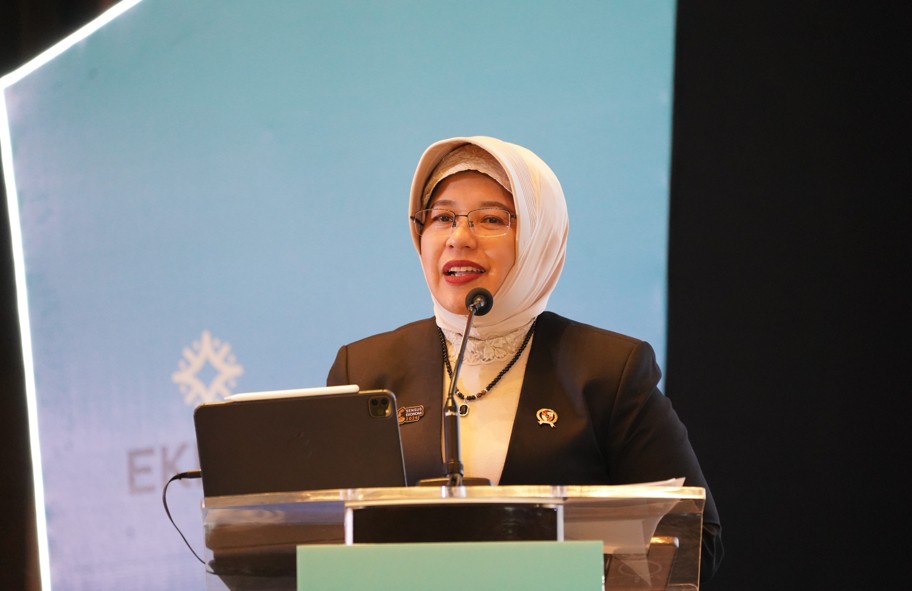
The Head of the Central Statistics Agency (BPS), Amalia Adininggar Widyasanti, stated that the vast potential of the creative economy can only be fully mapped through the 2026 Economic Census. To this end, BPS will deploy approximately 251,000 census officers across Indonesia to conduct business data collection door-to-door from 15 June to 31 August 2026.
“The economic census is like a medical record for the Indonesian economy. When we have complete and accurate data, the resulting policies will be more targeted. Therefore, we invite all business owners to provide correct information. There is no need to worry; data confidentiality is guaranteed in accordance with laws and regulations,” said Amalia.
On the same occasion, the Minister of Creative Economy/Head of the Creative Economy Agency, Teuku Riefky Harsya, mentioned that SE2026 will serve as an important foundation for mapping the distribution and potential of creative economy sub-sectors throughout Indonesia, from Sabang to Merauke.
“With the success of the national economic census, data regarding Indonesia’s creative economy will become clearer, enabling collaboration between the government, associations, academics, and practitioners. This includes facilitating access to funding and identifying which sub-sectors are developing, which need saving, and which are stagnating,” said Ranksy.
Amalia added that the benefits of SE2026 will be felt not only by the government but also by business owners and the community.
“Let us ensure the success of the 2026 Indonesia Economic Census. For business owners, through this census, we can see the position and potential of their businesses, understand market dynamics, and eventually use the results of the Census to develop more adaptive and data-driven business strategies,” said Amalia.