
2026 Economic Census: Reliable Information Begins with Standardised Methodology
Reliable information does not only depend on the volume of data collected, but also on the methodology used. The same principle applies to the 2026 Economic Census.
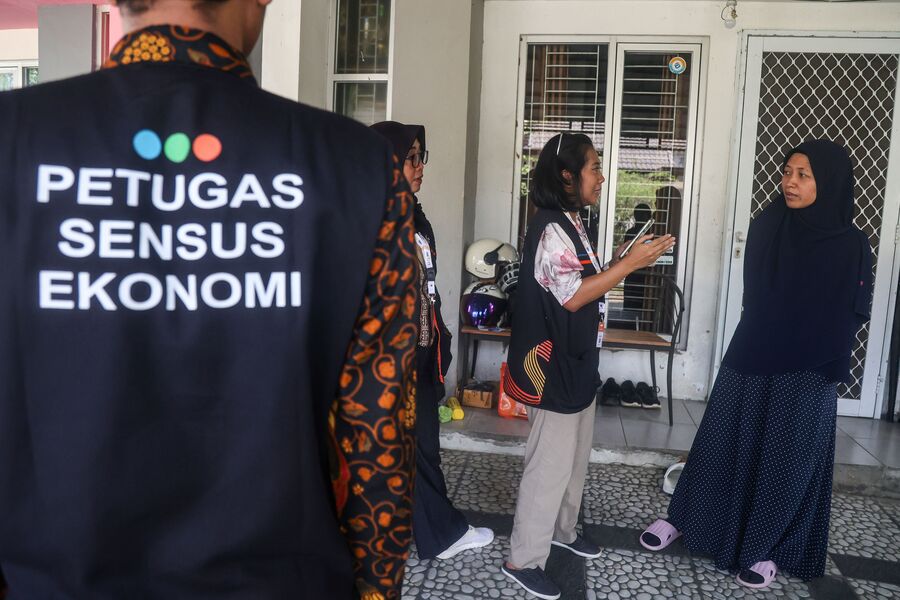
BPS conducts the economic census using official statistical methodologies with business processes that follow international standards to ensure the resulting information is accurate, complete, and trustworthy. One of the primary principles of the census is complete enumeration. Unlike surveys that use sampling, a census does not randomly select specific businesses to be recorded. Census officers work based on statistical working areas to identify all business activities within those regions.
This approach ensures that every business has an equal opportunity to be recorded, ranging from micro-enterprises, household businesses, and informal sectors to large-scale enterprises and those without a physical business location. In this way, the Economic Census can provide a more holistic picture of the structure and characteristics of the Indonesian economy.
This method of complete enumeration to capture economic conditions is not unique to Indonesia; many countries conduct economic censuses using the same approach. In its implementation, BPS also utilises administrative data as one of its information sources. This data helps enrich available information and increase the efficiency of the census. However, administrative data has limitations because not all business activities are recorded within it.
Business activities continue to grow and evolve. There are new businesses being established, those without permits, home-based businesses, those without fixed locations, or those operating digitally. If relying solely on administrative data, a portion of these economic activities might remain unrecorded. Therefore, field data collection remains necessary so that previously unseen businesses can be integrated into official statistics. Administrative data and field collection complement each other to produce a more complete economic picture.
Reliable methodology is applied to all stages of the 2026 Economic Census implementation. From planning, the development of concepts and questions, and officer training, to data collection, processing, and the presentation of results, everything undergoes a quality assurance process. Every stage is designed to ensure that the collected data meets official statistical standards.
The questions posed in the Economic Census are also designed based on the needs of data users. The information collected is expected to meet the requirements of the government, the business community, academics, and the public in understanding the condition and development of the Indonesian economy. With standardised methodology and maintained quality processes, the efforts in the Economic Census will produce relevant, useful, and trustworthy information. Reliable information serves as the foundation for formulating more precise policies and acts as an accurate navigation for national development.