
2026 Economic Census in Bali Begins – New Data for Policy and Investment
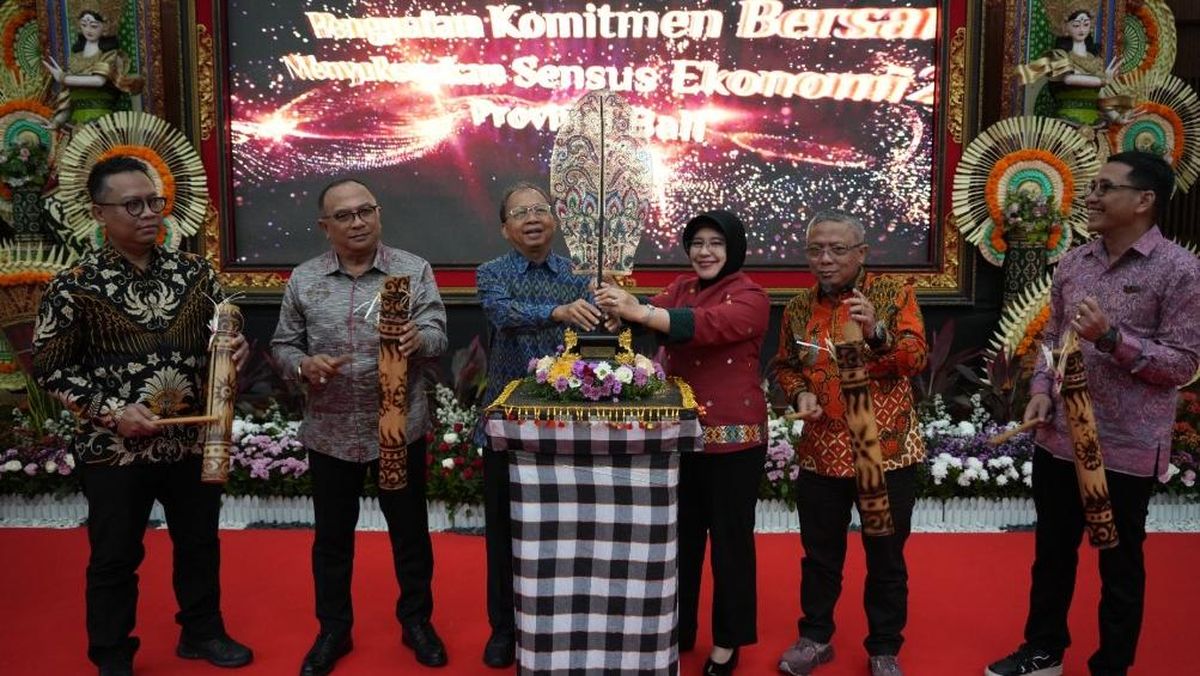
Statistics Indonesia (BPS) and the Provincial Government of Bali have affirmed their joint commitment to ensuring the success of the 2026 Economic Census. During an event held at Wisma Sabha Utama, the Office of the Governor of Bali, on Saturday (11/7), BPS Head Amalia Adininggar Widyasanti stated that the economic census is a vital instrument for producing comprehensive and up-to-date official statistics. She cited Malaysia, which is also conducting an economic census this year, as well as developed nations such as the United States, Japan, China, and South Korea, which carry out censuses every five years. BPS is deploying 3,774 enumerators to record businesses and households across all regencies and cities in Bali. According to Amalia, Bali possesses significant economic potential not only from tourism but also from the creative economy and export products such as coffee, cocoa, marine products, and essential oils. All this potential must be recorded in official statistics so that economic policies for Bali can be formulated based on complete and current data. The 2026 Economic Census is a crucial moment amid Indonesia’s increasingly dynamic structural economic transformation. The data generated will serve as a foundation for central and regional governments to formulate more targeted industrial, investment, and social protection policies. For businesses, the census data provides a map of competition and opportunities in each sector and region. For instance, data on the number of micro, small, and medium enterprises (MSMEs) in Bali can assist investors or logistics companies in planning network expansion. Furthermore, the census results will function as a benchmark for measuring productivity and the formalisation of the informal sector. A direct impact of the census is the increased awareness among business actors to register their enterprises officially. However, challenges remain: active participation from the community and the business world is critical to data accuracy. If participation is low, the resulting data could be biased and diminish the benefits of the resulting policies. Additionally, synergy between BPS and local governments must be maintained to ensure the data collection process runs smoothly without overlapping with other administrative activities.