
2026 Crisis Intensifies: US Economic Turmoil Reaches Indonesia
The global memory chip shortage crisis is not only hitting consumer electronics industries such as mobile phones and laptops, but the automotive industry is also facing a severe impact. This shortage is attributed to the ‘explosion’ of AI, which has caused demand for chips for AI data centres to skyrocket. Chip manufacturers are prioritising these requests as they yield higher profits.
As a result, the production of conventional chips for consumer electronics and automobiles is being sidelined. This situation has triggered massive component price hikes and disrupted global supply chains. A group representing automobile manufacturers, retailers, and electronics companies has written to the US Department of Commerce and the US Department of the Treasury regarding the urgency of the current crisis.
‘The pressing imbalance in the memory chip market could lead to significant and sustained price increases in the short term for the US, as well as disrupting critical US supply chains,’ the letter stated, as quoted by Reuters. The letter highlights the growing seriousness of the issue threatening the prices and supply of key consumer goods. The US government has already allocated billions of dollars in subsidies to boost memory chip production, including at Micron.
The signatories of the letter include the Alliance for Automotive Innovation, National Retail Federation, Medical Device Manufacturers Association, The Internet & Television Association, and the Telecommunications Industry Association. They noted that the consumption of most available memory chip capacity by AI data centres has resulted in unprecedented price surges and reduced supply for manufacturing and consumer-facing industries.
US business groups have reported seeing price increases across various consumer electronics and everyday information technology products, as well as much higher costs for building, maintaining, and upgrading national internet and telecommunications infrastructure. This poses a risk to the production and availability of cars, medical devices, and other manufactured goods.
Reuters reported this week that the global smartphone market is heading towards its sharpest annual contraction in history, with shipments projected to drop by 13.9% this year to 1.08 billion units, according to Counterpoint Research, citing the worsening memory chip shortage. The impact is most felt in entry-level smartphones, as manufacturers shift production capacity to AI-related chips, making low-end devices less economical to produce.
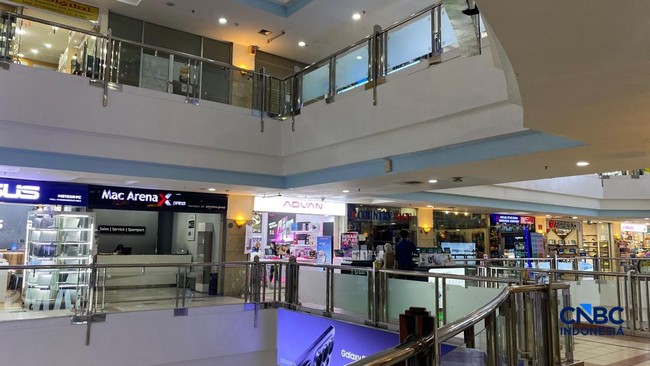
The impact is already being felt in Indonesia. A shop employee at ITC Kuningan stated that the upward price trend has been noticeable since March and April 2026, affecting almost all categories of electronic devices. ‘Prices will likely rise further in the future, following the US dollar. It could rise every two weeks due to the dollar and AI chipsets,’ the employee told CNBC Indonesia.
He noted that price increases are not limited to mobile phones but also affect tablets, laptops, smartwatches, and memory cards. In a worst-case scenario, the price of some products could multiply several times over. ‘All phones, electronics, even memory cards could increase up to three times. Something that used to be Rp100,000 could now be Rp300,000,’ he said.
According to him, the price increases are gradual. For mid-range products like the Redmi series, the increase is typically around Rp100,000 to Rp200,000. However, for flagship lines, the jump can be much larger, with Xiaomi flagship series potentially increasing by Rp500,000 per unit.
Similar complaints were voiced by another shop employee at ITC Kuningan, who noted that price hikes affect not only new products but also second-hand devices. Similarly, shopkeepers at Mal Ambassador, South Jakarta, revealed that laptops previously sold in the Rp7 million to Rp8 million range have now reached over Rp9 million. They anticipate that price increases may continue for several months.
This phenomenon has made affordable laptops, which were once easy to find, increasingly scarce. While consumers could find major brands at the Rp5 million price point a few months ago, that option has nearly vanished from the market. Currently, those under Rp5 million are mostly limited to specific brands like Axioo or Advan, while the cheapest models from Lenovo, Asus, or HP now start around Rp7 million. Even in the premium segment, price surges are evident; for instance, an Asus Zenbook series previously priced at approximately Rp42 million has now reached Rp47 million.
Source: jawawa.id (https://jawawa.id/newsitem/2026-crisis-intensifies-us-economic-turmoil-reaches-indonesia-1780830931)
Originally published by CNBC Indonesia (https://www.cnbcindonesia.com/tech/20260604120530-37-740080/krisis-2026-menggila-petaka-di-amerika-sudah-sampai-ke-indonesia), translated from Indonesian