
2024 Hajj Improved, Indonesia-Saudi MoU Must Be Adhered To
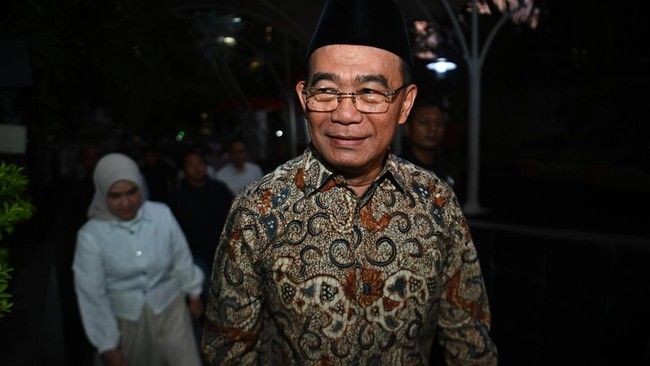
Former Coordinating Minister for Human Development and Culture, Muhadjir Effendy, appeared as a witness on Tuesday (1/9) in the trial concerning alleged corruption regarding the 2024 additional Hajj quota. He provided his testimony in his capacity as the ad interim Minister of Religious Affairs, during the tenure of the then-Minister of Religious Affairs, Yaqut Cholil Qoumas, who travelled to Saudi Arabia for the 2022 Hajj season.
In his testimony, Muhadjir stated that the 2024 Hajj administration has improved compared to previous years, with a greater priority placed on pilgrim safety. Furthermore, he acknowledged that the Indonesian government cannot act outside the provisions set forth in the Indonesia–Saudi Arabia MoU.
When asked about his appreciation for the 2/024 Hajj administration, Muhadjir confirmed he had previously expressed such sentiments. “I can only say generally that the governance has improved compared to before, and there have been innovations implemented that led to many improvements,” said Muhadjir.
Muhadjir also noted that a particular concern for the Saudi Arabian government is the pilgrim mortality rate. According to Muhadjir, during the trial, pilgrim safety must be the primary priority, followed by the quality of services provided to the pilgrims.
“First and foremost is safety. Pilgrim safety must be prioritised, followed by service, ensuring that the Hajj is truly good and the best possible Hajj. Therefore, safety comes first,” Muhadjir stated.
He also provided clarification regarding the relationship between Indonesian regulations and the Saudi Arabian government’s rules for Hajj implementation. “Our regulations must align with the existing regulations in Saudi Arabia,” he said.
He went on to explain that Indonesia must comply with the terms set by the Saudi Arabian government in the execution of the Hajj pilgrimage. “We are merely stakeholders interested in performing the Hajj; the state is the one executing the Hajj, and the regulations must, of course, obey what is determined by the Saudi Government,” said Muhadjir.
Indonesia–Saudi Arabia MoU Must Be Respected
During the trial on Tuesday (1/9), Yaqut questioned Muhadjir regarding the status of the 2024 Hajj Implementation Memorandum of Understanding (MoU) between the Indonesian Government and the Government of the Kingdom of Saudi Arabia. Muhadjir confirmed that the 2024 Hajj implementation was indeed based on the MoU between the two nations.
When asked whether the Indonesian government could take actions different from the signed MoU, Muhadjorkan answered bluntly that it could not. “It cannot,” he replied.
In the final part of the examination, Yaqut provided an illustration: if the MoU stipulated 10,000 regular pilgrims and 10,000 special pilgrims, could the Indonesian Government deploy 15,000 regular and 5,000 special pilgrims? Muhadjir replied again that this could not be done. “It cannot,” said Muhadjir.
Governance Considerations
Muhadjir also explained that Indonesia has the experience of being trusted by the Saudi government to receive additional Hajj quotas. In 2022, Saudi Arabia provided an additional quota of 10,000 pilgrims. However, the Indonesian government, through the Ministry of Religious Affairs, did not take that quota due to various considerations, including time constraints and the financing required to meet the additional quota.
“First is the issue of financing, because any increase would require additional funds, and that process would have to go through a parliamentary (DPR) meeting, which would be impossible,” said Muhadjir.
In addition to financing, Muhadjir cited the readiness of pilgrim management in Makkah and Madinah as another consideration. “Then there is the management when they are in Makkah and Madinah, especially regarding accommodation, hotels, including catering, and particularly in Arafat, Muzdalifah, and Mina (Armuzna)—meaning the most crucial part is in Mina,” he said.
When asked whether the decision not to take the additional 10,000 quota in 2022 caused any financial loss to the state, Muhadjir replied that it did not. “No, there was none. In financial terms, there was no loss, but there was a lost opportunity to utilise those additional 10,000,” said Muhadjir.
Muhadjir also explained, when asked if any pilgrims were disadvantaged by the unused additional quota, that based on existing procedures and assuming no further quota increases, no one was disadvantaged.
Furthermore, Muhadjir explained that while serving as the ad interim Minister of Religious Affairs in 2022, he received a request from an association of special Hajj organisers, led by Fuad Hasan Masyhur and known as Forum 1, to reclassify the unused additional quota as ‘mujamalah’ (invitation-based) pilgrims. He stated that the request was not immediately approved but was first discussed with Ministry of Religious Affairs staff and consulted with the President through the Cabinet Secretary.
Source: jawawa.id (https://jawawa.id/newsitem/2024-hajj-improved-indonesia-saudi-mou-must-be-adhered-to-1788346739)
Originally published by Media Indonesia (https://mediaindonesia.com/politik-dan-hukum/928865/haji-2024-lebih-baik-mou-indonesia-saudi-harus-dipatuhi), translated from Indonesian