
20% Ethanol-Blended Petrol (E20) Targeted for 2028 Implementation
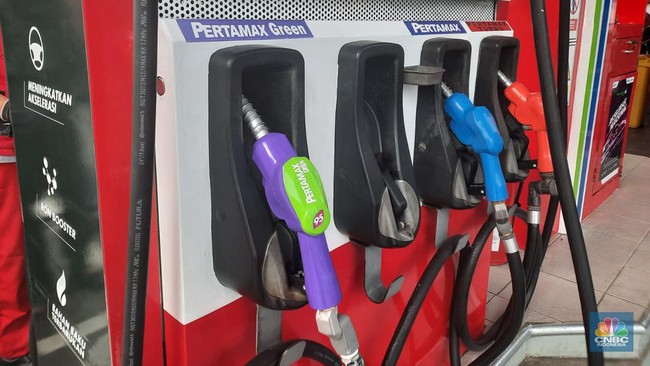
The Ministry of Energy and Mineral Resources (ESDM) targets the implementation of 20% bioethanol-blended petrol (E20) to begin in 2028.
This aligns with the government’s objective to reduce dependence on petrol imports while simultaneously lowering greenhouse gas emissions within the transport sector.
The Director General of New, Renewable Energy, and Energy Conservation (EBTKE) at the Ministry of ESDM, Eniya Listragni Dewi, stated that the government is preparing regulations and encouraging accelerated investment in processing plants to guarantee the supply of domestic raw materials.
“In accordance with the Minister of ESDM’s directive, E20 is targeted for 2028. The goal of accelerating the bioethanol mandate is certainly to reduce petrol imports and support energy transformation in the transport sector,” she said during a Hearing Meeting (RDP) with Commission XII of the Indonesian House of Representatives (DPR RI) in Jakarta on Tuesday.
The stages of the bioethanol blending mandate will begin with a 5% blend (E5) in 2026 across Java, before expanding to Bali in 2027. The government projects that the requirement for pure bioethanol will increase to 1.39 million kilolitres (kl) by the time the E20 target is implemented nationwide.
“In 2026, the mandate will be applied at 5%; in 2027, a minimum of 5% so that if it rises to 10% it will be better; in 2028, a minimum of 10% so that if the target reaches 20% it will be far more optimal,” she explained.
To achieve this target, Indonesia requires at least 20 new bioethanol plants by 2027 to meet feedstock requirements. Currently, bioethanol production capacity only reaches 70,500 kilolitres per year from five existing plants, whereas the requirement for the E10 stage next year is expected to reach 1.2 million kilolitres.
“I want to encourage ethanol investment as quickly as possible; our calculation is that by 2027, there must be 20 plants. For the E10 feedstock next year, we need approximately 1.2 million kilolitres, yet our current capacity is only 70,500 kilolitres per year,” she elaborated.
Regarding regulation, the government has abolished excise duties on bioethanol to facilitate easier blending for business entities. Bioethanol will be optimised from local sources such as molasses, cassava, corn, and sugar palm to ensure energy independence without relying on imported stocks.
“We can now confirm that for the implementation of bioethanol, there is no longer any excise duty. The excise issue has been resolved through a Ministry of Finance Regulation, and since the excise has been abolished, it will make it easier for Pertamina to implement the programme,” she concluded.