
20 Asia-Pacific Nations Gather in Jogja to Discuss International Measurement Standards
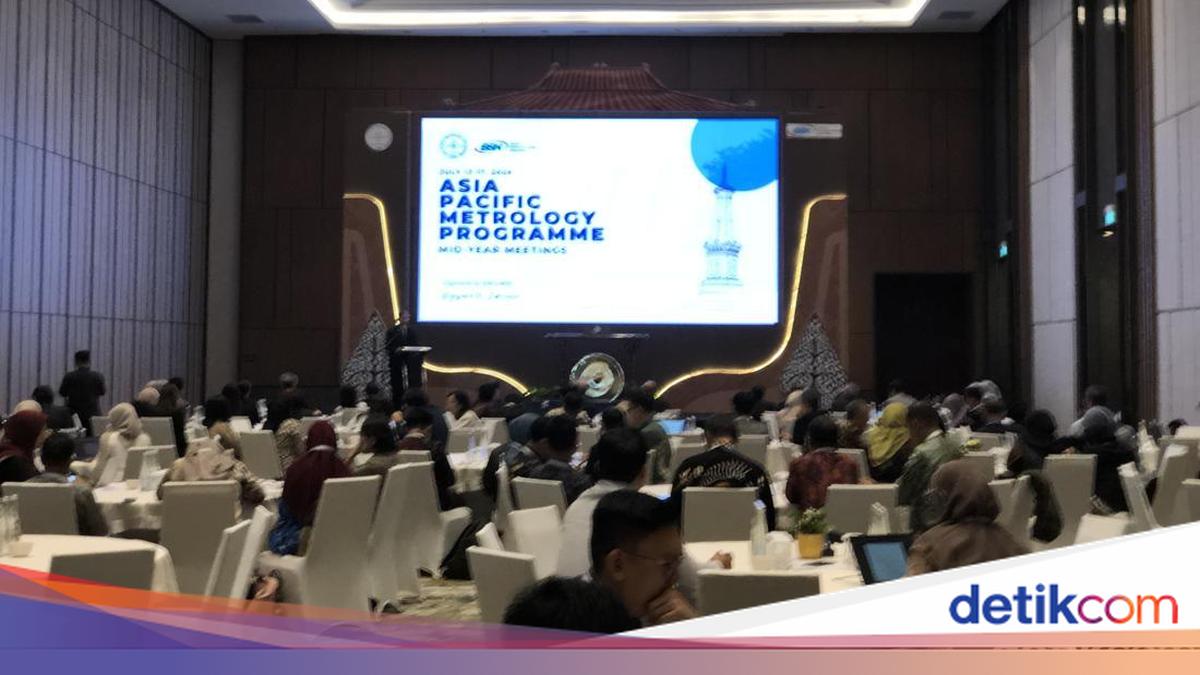
Representatives from 20 countries in the Asia-Pacific region gathered in Yogyakarta to discuss internationally agreed standards for measuring instruments. All measuring and calibration instruments across various fields, including medical and industrial sectors, are subject to these agreed standards. The Asia Pacific Metrology Programme Mid-Year Meetings (APMP MYM) 2026, organised by the National Standardisation Agency (BSN), is being held from 13 to 17 July 2026 in Yogyakarta. This forum brings together various National Metrology Institutes (NMI) and stakeholders from the Asia-Pacific region, serving as a strategic platform to strengthen technical collaboration, harmonise measurement systems, and build mutual recognition of metrology capabilities between countries. “Around 20 countries from the Asia-Pacific region are attending this event,” explained BSN Deputy for SNSU, Kristianto Widiwardono, at the APMP MYM Mid-Year Meeting 2026 in Jogja on Thursday (16/7/2026). “APMP is a collaboration between national metrology bodies in each Asia-Pacific country to ensure that the measurement systems used are truly accurate,” he continued. Kristianto explained that a measuring instrument can be calibrated using a more precise instrument. That more precise instrument is then calibrated with an even more precise one, until ultimately, at the national level, it is calibrated at BSN using the most precise instrument in Indonesia. “However, to ensure that the standards applied at BSN are equivalent to those in other countries, inter-laboratory comparisons are conducted within the Asia-Pacific region. That is why APMP was established,” he said. Kristianto gave the example of weighing scales at a market. To be certain that the measuring instrument is correct and accurate, it needs to be calibrated. The instrument used for that calibration must also be calibrated later. Thus, the calibration process is repeated until the most precise instrument nationally at BSN is used. After that, BSN conducts comparison tests with equivalent metrology bodies in other countries. “So all measuring instruments, whether scales, thermometers, or other devices, must be ensured to be accurate. For instance, if a thermometer should show a temperature of 36 degrees but reads 38 degrees, the diagnosis could be wrong. That is why the measurement result must be correct,” he stated. APMP Chairperson Gregory Goh added that metrology, or measurement, is very important for the entire economy, especially amidst current geopolitical disruptions. “There will always be collaboration in the field of measurement, especially measurements that are important for the economy. An example is batteries. After a battery is used and is to be reused, who can ensure that its capacity is still 85 per cent or only 60 per cent?” Goh said. “The manufacturer might say the capacity is still 60 per cent, but no one really knows if that figure is correct unless proper measurement and testing are carried out,” he concluded.