
2,447 Educational Institutions Affected by Flores Disaster, 1,960 Still Under Emergency Learning
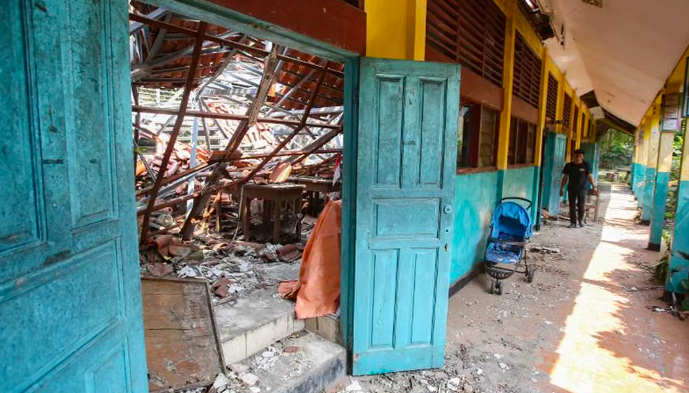
The Ministry of Primary and Secondary Education (Kemendikdasmen) continues to monitor and manage the impact of the disaster that has occurred in Flores, East Nusa Tenggara (NTT), since 15 August 202lar. Monitoring is focused on the continuity of educational services for students across seven affected regencies, including Manggarai, East Manggarai, West Manggarai, Ngada, Nagekeo, Ende, and Sikka.
Saryadi, Director of Special Education and Special Service Education (PKPLK) at the Ministry, stated that monitoring is being conducted alongside local governments and relevant parties to ensure that the learning process continues amidst the emergency response conditions.
“The National Secretariat for Disaster-Safe Educational Units has just held a monitoring and evaluation meeting regarding the implementation of learning during the emergency response period, together with the East Nusa Tenggara Provincial Education Office and all affected regency Education Offices,” Saryadi said during an online press conference on Monday (14/9).
Based on data collected up to 10 September 2026, it is recorded that 2,447 educational units, ranging from early childhood education (PAUD) to senior high schools (SMA, SMK, and SLB), have been affected by the disaster. The impact has been felt by 287,864 students as well as 32,585 teachers and educational staff.
Furthermore, 62,722 members of the educational community were temporarily located in evacuation centres. This figure consists of 54,494 students and 8,228 teachers and educational staff.
In terms of damage, 730 educational units have been recorded as having sustained heavy damage. Meanwhile, out of 13,750 classrooms reported, 8,728 classrooms have been declared damaged.
Saryadi emphasised that these figures are subject to change as the data collection and verification process on the ground is still ongoing. “These numbers will continue to shift as data collection progresses and the verification process conducted by the Ministry of Primary and Secondary Education, together with local governments, is completed,” he said.
The Ministry is also involving revitalisation teams from various directorates in the process of verifying damage to educational units. The team includes elements handling early childhood education, primary, junior high, senior high, vocational, special education, and non-formal education.
Amidst the disaster management process, learning activities in the affected areas continue. Of the 2,44,7 reported affected educational units, 1,960 are currently conducting learning through emergency modes.
This emergency learning is being carried out in various locations, ranging from tents and open spaces to emergency classrooms. Meanwhile, 487 educational units have returned to conducting normal face-to-face learning in classrooms.
Saryadi expressed his appreciation for the cooperation of all parties in maintaining the continuity of the educational process during the emergency response period. “This is the result of collective hard work between the schools, certainly the headmasters and the teaching staff, together with the local government and all our partners in the field,” he concluded.