
2,200 Hectares of Forest Lost to Deforestation in South Kalimantan
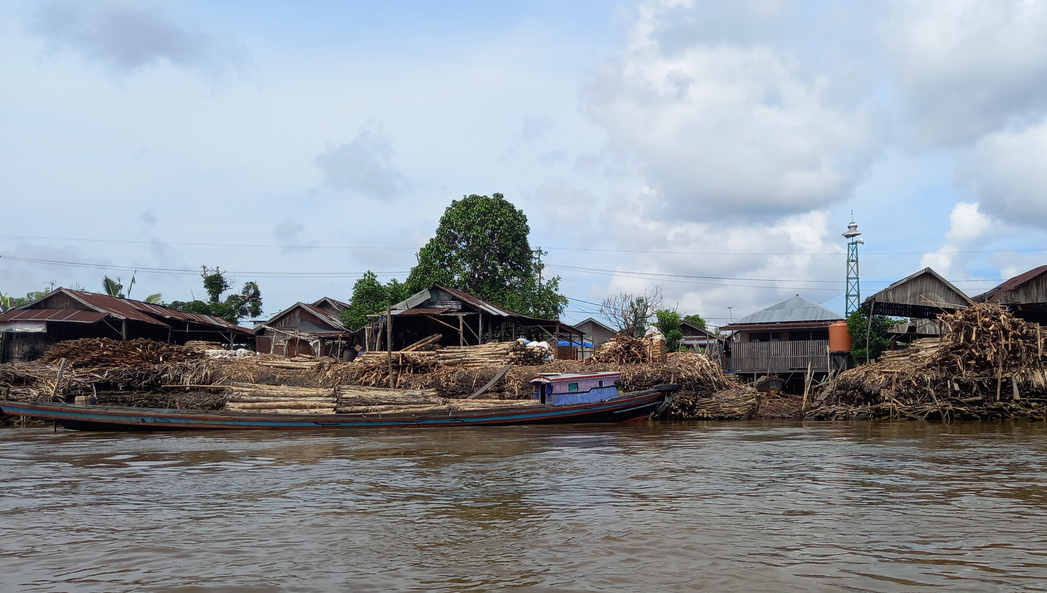
South Kalimantan is now in a state of ecological emergency. As one of the top ten provinces with the highest deforestation rates in Indonesia, the region continues to experience massive tropical forest loss. The latest data up to mid-June 2026 paints an alarming picture of forest destruction in ‘Bumi Lambung Mangkurat’ due to uncontrolled expansion of extractive industries. Throughout 2025, more than 2,200 hectares of natural forest in South Kalimantan were lost. This loss of tree cover not only damages biodiversity but also directly impacts the global climate crisis. The deforestation is equivalent to the release of 1.7 megatons (MT) of carbon dioxide into the atmosphere. Over a longer period, the Indonesian Forum for the Environment (Walhi) recorded that between 2001 and 2025, South Kalimantan lost 960,000 hectares of forest. This figure represents 34% of the total tree cover in the year 2000, with accumulated emissions reaching 600 MT CO2E. Raden Rafiq Wibisono, Executive Director of Walhi South Kalimantan, stated that the high deforestation rate is a systemic impact of large-scale industrial permits. Walhi data shows that 51.57% of the province’s total area of 3.7 million hectares is burdened by extractive industry licences. ‘More than half of South Kalimantan’s territory no longer belongs to its people, but has been handed over to industrial machines working silently. The impact is felt right down to residents’ kitchens, which are submerged by hydrometeorological disasters,’ he stressed on Saturday (13/6). Walhi identified five regencies in South Kalimantan experiencing the most severe forest damage. Kotabaru Regency ranks first with a loss of 340,000 hectares, followed by Tanah Bumbu (180,000 ha), Banjar (84,000 ha), Tanah Laut (73,000 ha), and Tabalong (71,000 ha). The combination of coal mining expansion, massive monoculture plantations, and the timber industry are the main drivers of land clearing. Additionally, increasingly open access roads in concession areas facilitate illegal logging, further worsening environmental degradation. The loss of the forest’s function as a water catchment area has triggered hydrometeorological disasters that have become an annual routine in South Kalimantan. Flash floods and landslides are no longer just weather anomalies, but logical consequences of a landscape stripped bare for extraction purposes. This situation demands serious evaluation from both central and regional governments regarding land governance in South Kalimantan. Without a moratorium on new licences and restoration of remaining forest areas, the ecological risks and economic losses for local communities are certain to increase in the future.