
1979 Saudi Arabia Coup Attempt: Masjid al-Haram Paralysed, Worshippers Held Hostage
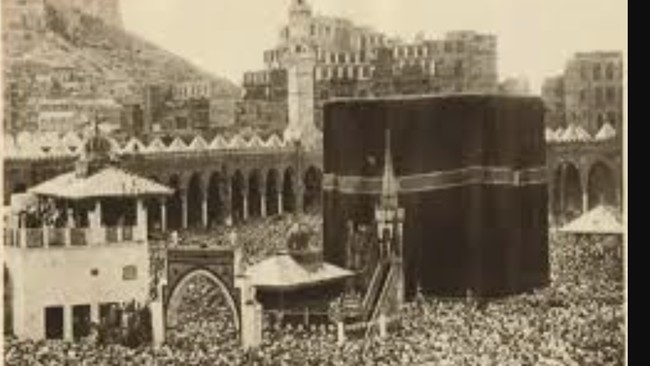
Jakarta, CNBC Indonesia — In 1979, one of the darkest periods in Saudi Arabia’s history. As thousands of Muslims arrived for the Hajj pilgrimage, an armed group seized the Masjid al-Haram in Mecca and took worshippers hostage within the mosque complex.
The incident unfolded on 20 November 1979, coinciding with 1 Muharram 1400 Hijri. Shortly after Fajr prayers, hundreds of armed individuals suddenly took control of the Masjid al-Haram. With many Hajj pilgrims still present in the area, they became trapped in the hostage situation.
The group was led by former Saudi soldier Juhayman al-Otaybi. According to M. E. McMillan’s ‘From the First World War to the Arab Spring’ (2016), al-Otaybi and his followers sought to overthrow the Saudi monarchy. They accused the royal family of deviating from Islamic teachings and being too close to Western influence, claiming their aim was to establish a government more aligned with religious principles.
They also believed the Saudi government was not implementing Islamic law rigorously in the birthplace of Islam. This conviction drove them to launch an armed rebellion at Islam’s holiest site.
During the attack, they declared one of their followers, Mohammed Abdullah al-Qahtani, as the Mahdi—the figure in Islam believed to appear at the end of times to establish justice.
For the Saudi government, the situation was extremely delicate. As the Masjid al-Haram is a sacred site, military operations could not be carried out lightly. Meanwhile, many worshippers remained inside as hostages.
Citing BBC International, after obtaining a fatwa from religious scholars, the government launched an operation to retake the Masjid al-Haram. Saudi forces besieged the complex for nearly two weeks. Intense fighting occurred, particularly in the underground tunnels used by the rebels as hideouts.
To prevent further damage to the sacred site, Saudi forces employed various tactics, including flooding underground tunnels with electrified water to force militants out.
Saudi Arabia also received technical assistance from the French anti-terror unit GIGN during the operation. After nearly two weeks of siege, Juhayman’s resistance was finally crushed.
Mohammed Abdullah al-Qahtani, declared the Mahdi by the group, was killed in the fighting. Hundreds of al-Otaybi’s followers and several worshippers were also killed. Al-Otaybi was captured alive and later executed by the Saudi government in 1980.
The Masjid al-Haram occupation tragedy had a profound impact on Saudi Arabia. Following the incident, the government tightened religious policies and strengthened the role of clerics in social and political life. Analysts regard the event as a pivotal moment in modern Middle Eastern history.