
1965 and the Test of National Maturity
There are histories that conclude when a book is closed, and there are histories that continue to live on after the final page is read. Indonesia possesses the latter.
Every 1st of October, the nation’s memory turns to one of the darkest episodes in its national history: the events known as the 30 September Movement of 1965, or G30S. More than six decades have passed, yet the event has not fully become the past. It remains present in history books, educational spaces, research, family stories, public discourse, and even in memories kept in silence.
Therefore, commemorating Pancasila Sanctity Day should not stop at ceremony and the repetition of chronology. This commemoration can also serve as an opportunity to pose more important questions: what have we truly learned from 1965?
History Unfinished in Books
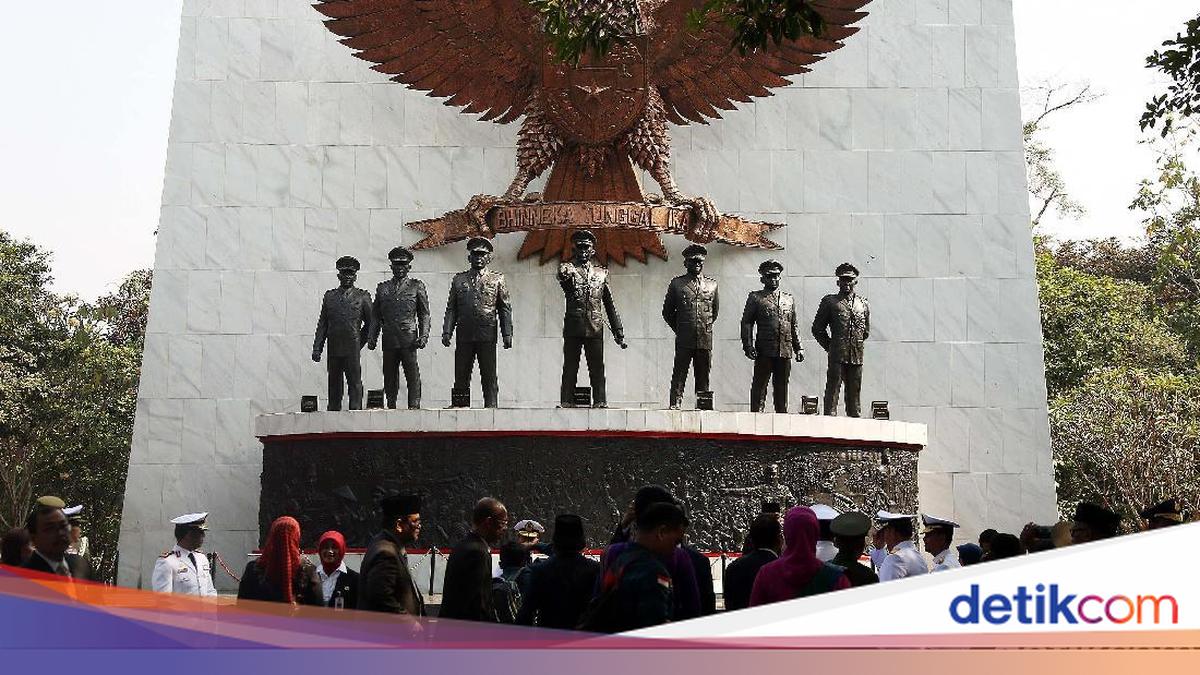
In the early hours of 1 October 1965, a group calling itself the 30 September Movement kidnapped several Army officers. Six generals—Ahmad Yani, R. Soeprapto, M.T. Haryono, S. Parman, D.I. Panjaitan, and Sutoyo Siswomiharjo—were killed. Pierre Tendean, an aide to General A.H. Nasution, also fell victim, while Nasution himself managed to escape.
The movement then seized several strategic points in Jakarta and used Radio Republik Indonesia to deliver political statements. The movement was eventually suppressed by Army forces under Major General Soeharto, who was then serving as Commander of Kostrad.
This chronology is important. However, history should not stop at dates and names. A more difficult question arises afterwards: how did political conflict transform into large-scale violence?
For decades, the Indonesian people knew 1965 primarily through the official narrative of the New Order, which positioned the Communist Party of Indonesia (PKI) as the mastermind behind G30S. After that era ended, historical research presented more diverse readings regarding the relationship between the 30 September Movement, certain PKI figures, the military, and the subsequent power shifts.
Complexity is no excuse to obscure facts. On the contrary, understanding complexity makes us more careful in distinguishing between facts, testimonies, interpretations, and political interests.
Because after G30S, Indonesia entered a period of political violence that left widespread suffering. Through its pro-justitia investigation into the 1965-1966 events, Komnas HAM (the National Commission on Human Rights) stated it found evidence of various forms of crimes against humanity.
Behind the numbers, there are human beings. There are fathers who did not return home. There are mothers waiting without certainty. There are children growing up with questions about their family’s past. There are also people living with a stigma they never chose.
Therefore, speaking about 1965 is not enough by simply asking who won and who lost. We also need to ask: how many human beings lost their futures because of political conflict?
From Wounds to Lessons
This is where history meets education. Historical education should not merely be a space for memorising dates, names, and chronology. History needs to be an exercise in distinguishing fact from interpretation, examining sources, understanding context, and listening to different experiences.
This challenge grows even greater in an era when information moves far faster than the human ability to verify it. A single video clip can become an accusation. A single sentence can turn into a stigma. A single post can turn someone into an enemy simply due to a difference in view. On social media, judgement can occur in seconds.
This is where the lesson of 1965 becomes relevant. The tragedy of the past reminds us how dangerous it is when political differences turn into hostility, when labels replace proof, and when humans lose the ability to see others as fellow citizens.
Remembering 1965 does not mean reopening hostilities. On the contrary, remembering means ensuring that violence does not find space to repeat itself. We can honour the generals who were victims of G30S without erasing the suffering of the victims of the subsequent violence. We can understand the political conflict of that era without justifying violence against civilians. We can study communism as part of Indonesia’s political history without making individuals or their descendants targets of stigma for something they did not do.
We can also respect state institutions while opening space for historical research conducted openly and responsibly. National maturity is seen when a society is able to accept the reality of complex history without resorting to mutual hatred.
Pancasila and National Maturity
More than sixty years after 1965, we may never agree on all interpretations of the event. Historians may differ. Researchers may propose different interpretations. Testimonies may reveal unequal experiences. These differences do not have to be a threat.
What must be agreed upon is something more fundamental: violence against humans must not be a way to resolve political differences.
This is where Pancasila Sanctity Day gains a deeper meaning. Pancasila is not merely a text read during ceremonies, but a value tested in communal life: how we treat those who are different, how we resolve conflicts, and how the state ensures that human dignity remains respected.
We need politics that provides space for difference, education that teaches the courage to think alongside responsibility, media that prioritises accuracy, and a society that does not use difference as a reason to demean the dignity of others. Living together also requires trust.
Source: jawawa.id (https://jawawa.id/newsitem/1965-and-the-test-of-national-maturity-1790837930)
Originally published by detikcom (https://news.detik.com/kolom/d-8687532/1965-dan-ujian-kedewasaan-bangsa), translated from Indonesian