
19 Years Towards One Century of the TNI
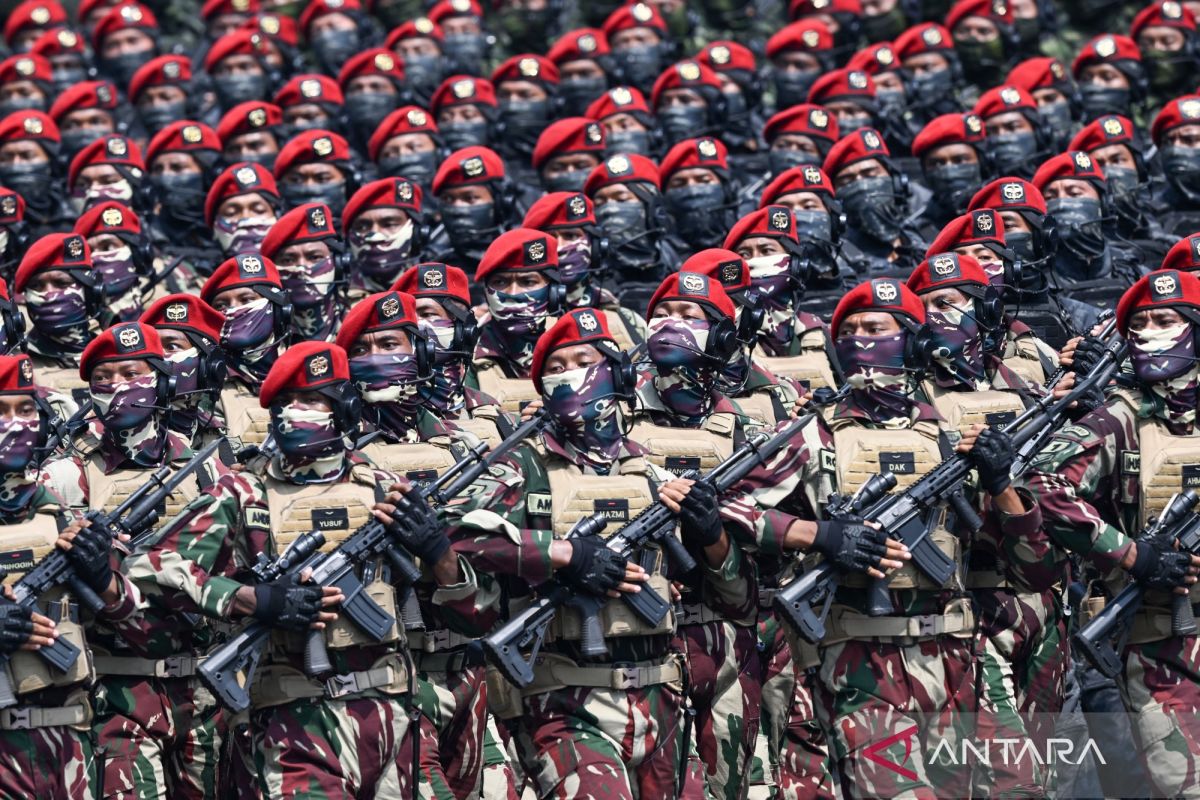
Jakarta (ANTARA) - On 2rag September 2026, two weeks prior to the 81st anniversary of the Indonesian National Armed Forces (TNI), a forum was held at the Ministry of Defence to discuss the interoperability of military equipment. Deputy Minister of Defence Donny Ermawan Taufanto opened the discussion regarding the enhancement of TNI interoperability for integrated joint operations, involving personnel, doctrine, procedures, data, networks, sensors, command, and platforms that must function as a single unit.
Fighter jets, warships, tanks, missiles, and radar are easily recognised as strengths: their forms are visible, and their numbers are countable. However, the work that makes all of this useful takes place far from the view of the humans who operate and maintain them—the data that must move, and the exercises that bring different capabilities together. There is a gap between possessing something and being truly capable of using it as part of a cohesive force.
The forum took place ahead of the TNI’s anniversary. There is another, more distant figure: in 19 years, the TNI will reach one century of age. That span is long enough to bring in new aircraft, build ships, and train thousands of soldiers, but it is also long enough for technology to change generations and for threats to change their face.
The 81st anniversary poses questions for the 100th: when 5 October 2045 arrives, will the strength we build today still answer the challenges truly faced by the TNI at that time?
The TNI has known change since its birth from the People’s Security Agency (BKR) to the Indonesian National Armed Forces, and from the 1998 Reformation which demanded the abandonment of old practices rather than their addition. That history does not guarantee that the next change will be easier.
Every armed force carries old experiences when preparing for wars that have not yet occurred. Problems arise when lessons that once worked persist longer than the circumstances that created them, such as France in 1940, which is more often described as too simple rather than understood as a failure to question one’s own assumptions.
The United States restructured its doctrine after Vietnam, moving from active defence to airland battle; what mattered was not the name of the doctrine, but the mechanism for questioning one’s own answers.
The Russia-Ukraine war shows a similar process with a tempo that is easier to witness: concluding that the future is merely a “drone war” risks taking too narrow a lesson, because the more enduring reality is that the opposing side is also learning.
Indonesia must continue to anticipate threats. Uncertainty is no reason to abandon planning. However, planning always carries assumptions, and systems that currently provide an advantage may face countermeasures that were not available when procurement decisions were made. Threats are under no obligation to wait for everything to be finalised.
Source: jawawa.id (https://jawawa.id/newsitem/19-years-towards-one-century-of-the-tni-1790831108)
Originally published by Antara (Indonesian) (https://www.antaranews.com/berita/5765979/19-tahun-menuju-satu-abad-tni), translated from Indonesian