
18 Killed at Airport: Why Was Saudi Arabia’s Alarm System Silent During the Attacks?
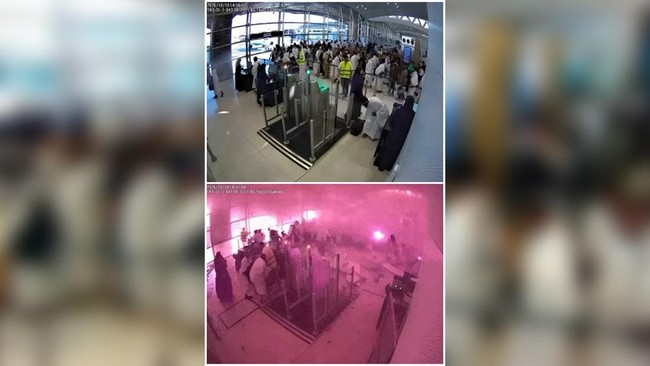
Jakarta, CNBC Indonesia — Saudi Arabia’s early-warning system for military attacks reportedly failed to alert the public for several days before a series of deadly strikes hit Riyadh Airport. The attacks killed at least 18 people and injured more than 300 others.
Reuters reported on Tuesday (13 October 2026) that the Saudi government had not explained why no public warnings were issued before four attacks in Riyadh over the past week. The absence of alerts has raised questions about Saudi Arabia’s ability to protect residents and visitors from missile and drone attacks, particularly amid its conflict with Iran-backed Houthi forces.
The early-warning system had previously been used to notify the public of attack threats via mobile phones and social media. It began issuing alerts in May.
However, as Houthi attacks intensified in the lead-up to last week, the system stopped issuing warnings. According to posts on the Saudi civil defence authority’s X account, the last alert before the series of airport attacks was issued on 29 September for Najran province in the south of the country.
Reuters also reported that several Western and Arab officials, as well as political analysts, had questioned the decision. They said the lack of warnings could increase public uncertainty and anxiety.
“They [the Saudi government] want to have it both ways: launch military operations while at the same time trying to reassure the public and external stakeholders,” said Sultan Alamer, a Saudi academic based in the United States and a senior resident fellow.
According to two people familiar with the matter, an official from a Western country allied with Saudi Arabia asked the Saudi authorities why the early warnings had stopped. The official was told that the alerts were considered too disruptive.
Some residents reportedly complained that the warnings woke them at night. The Saudi government has not officially responded to Reuters’ account.
Warnings resume after attacks
On Monday, the Saudi civil defence authority issued its first warning since 29 September. It cited a potential threat to Riyadh and several cities in the south.
It is not clear whether the decision was a direct response to the airport attacks. Other Gulf states take differing approaches to public alerts.
In Qatar, for example, the government sends mobile-phone warnings before almost every attack. Bahrain and Kuwait, meanwhile, have repeatedly sounded sirens to tell residents to seek shelter.
“Their approach to public communication seems to be a consequence of the dilemma they face. They need to respond to the Houthis but do not want this to trigger social disruption, and their public communications reflect that,” said Michael Ratney, a former US ambassador to Saudi Arabia.
“However, the absence of early warnings about incoming Houthi attacks creates precisely the anxiety they are trying to avoid,” he added.
Why did this happen?
Ali Shihabi, a Saudi analyst close to the government, said the country’s vast size made it extremely challenging to protect all strategic assets. Saudi Arabia has many critical facilities to defend, including airports, pipelines and oil installations.
“In Saudi Arabia, there is too much to protect. It is a very large country with airports, pipelines and oil facilities. Defence coverage is insufficient to protect everything at once; there are not enough Patriot air-defence systems, interceptors or missile batteries to do it all,” he said.
“Saudi Arabia has unlimited needs for air defence,” he added.
The substantial need for protection also requires adequate supplies of defence systems, interceptors and anti-missile batteries. Despite the attacks, Saudi Arabia held an international energy conference in Riyadh on Monday.
However, several executives from major oil companies reportedly withdrew from the event after the attacks. Saudi Energy Minister Prince Abdulaziz bin Salman said holding the conference did not mean that security risks had disappeared.
“The government remains committed to continuing the country’s economic plans,” he said.
Meanwhile, several Western embassies in Saudi Arabia reportedly issued internal warnings to staff about missile and drone threats. The alerts were based on Western government intelligence and information from Saudi authorities.
However, according to several people familiar with the matter, embassy staff also received no internal warning before Saturday’s deadliest attack. The reason no warning was issued ahead of that strike remains unclear.
Source: jawawa.id (https://jawawa.id/newsitem/18-killed-at-airport-why-was-saudi-arabias-alarm-system-silent-during-the-attacks-1791859847)
Originally published by CNBC Indonesia (https://www.cnbcindonesia.com/news/20261013091611-4-775606/18-tewas-di-bandara-kenapa-sistem-alarm-saudi-mati-saat-serangan), translated from Indonesian