
174,791 Prisoners and Juvenile Offenders Granted Independence Day Remission, 3,591 Released Immediately
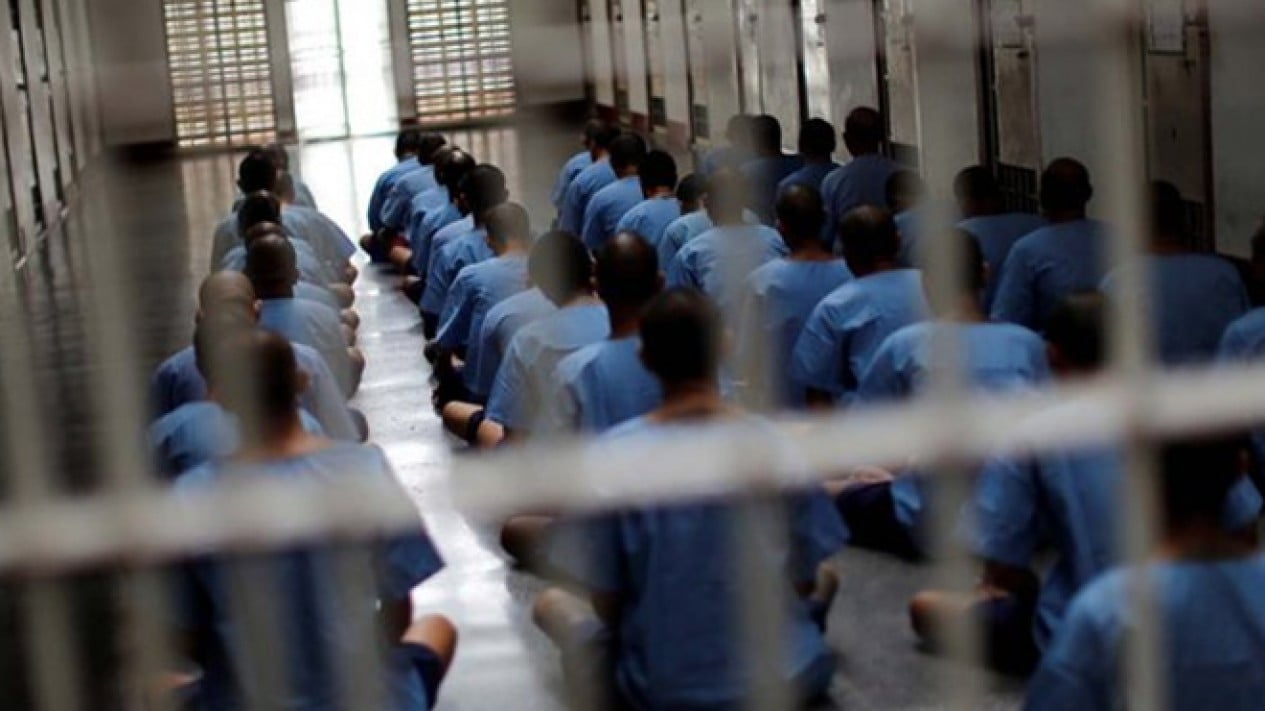
A total of 174,791 prisoners and juvenile offenders across Indonesia received remission in conjunction with the 81st anniversary of the Republic of Indonesia’s independence on Monday, 17 August 2026.
The remission was granted by the Ministry of Immigration and Corrections (Kemenimipas) in the form of General Remission (RU) for prisoners and General Sentence Reduction (PMPU) for juvenile offenders.
Minister of Immigration and Corrections Agus Andrianto said the granting of remission is part of the rehabilitation process for inmates as well as a form of state respect for human rights.
“The granting of RU and PMPU is a concrete implementation of the principle of the rule of law that upholds respect for human rights as well as state recognition of the success of the rehabilitation process,” Agus said on Monday, 17 August 2026.
Of the total recipients, 173,706 prisoners received General Remission. In detail, 170,143 people received RU I, meaning they must still serve the remainder of their sentence.
Meanwhile, 3,563 other prisoners received RU II and were released immediately after receiving the remission. For juvenile offenders, 1,085 people received PMPU.
A total of 1,057 juveniles received PMPU I, while 28 others received PMPU II and were released immediately. Thus, a total of 3,591 inmates were released immediately after receiving RU II or PMPU II.
West Java was the region with the highest number of General Remission recipients, namely 19,269 prisoners. This was followed by North Sumatra with 18,222 people and East Java with 14,673 people.
As for PMPU, the highest number of recipients came from North Sumatra with 94 juvenile offenders, followed by West Java with 86 people and East Java with 85 people.
Agus said remission is not only understood as a reduction in sentence length. According to him, the policy is also expected to encourage inmates to continue maintaining good behaviour while participating in rehabilitation.
Specifically for juvenile offenders, the government places education and recovery as important parts of the rehabilitation process so that they can return to society.
“The state views every child as the nation’s next generation who has broad opportunities to improve towards a better future. Therefore, the approach applied to juvenile offenders prioritises the best interests of the child, education, character development, recovery, and social reintegration,” he said.
Director General of Corrections Mashudi also urged inmates who are released immediately not to waste the opportunity after returning to society.