
172.3 Million Passengers in Four Months, Rail Transport Increasingly Becomes the Backbone of National Mobility
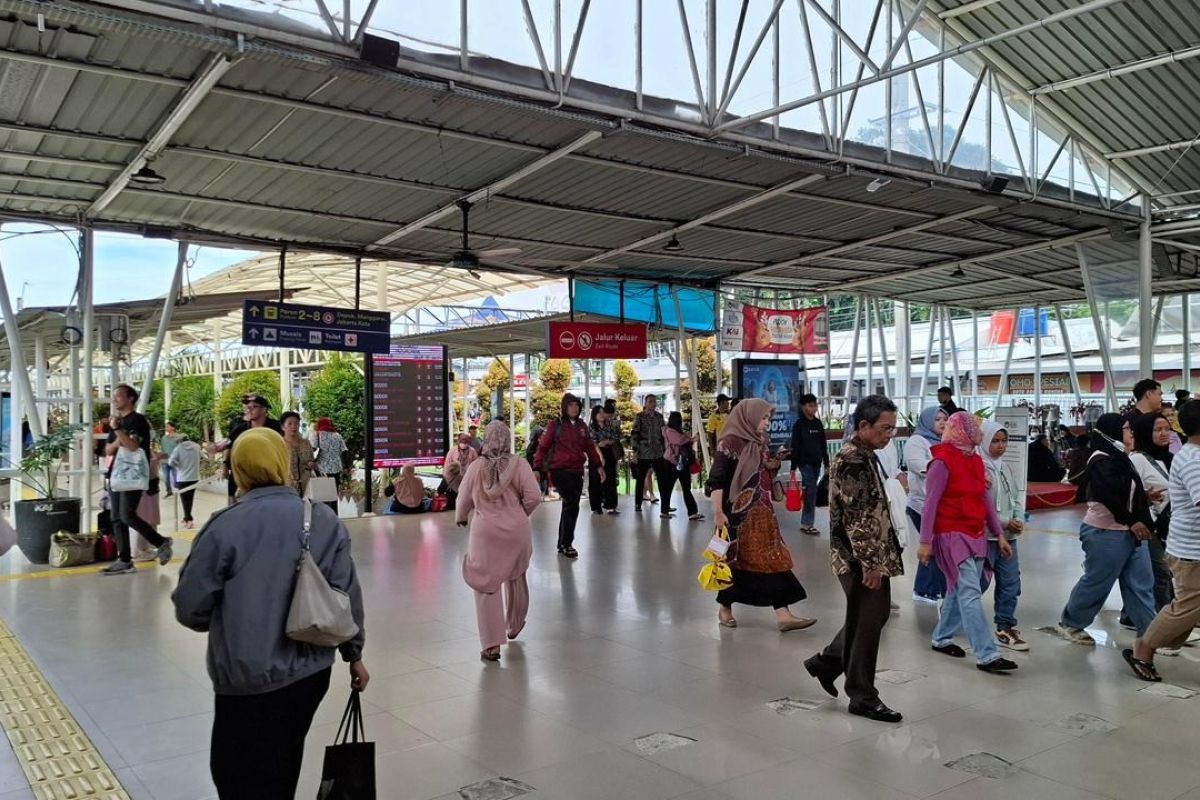
Mobility in Indonesian society continues on a large scale. Work, education, trade, tourism, and inter-city travel activities drive the need for transportation that can serve the public more efficiently, on time, and connected to various activity centres.
Amid this mobility growth, rail-based transportation demonstrates an increasingly important role in supporting public movement across various regions.
PT Kereta Api Indonesia (Persero) recorded a total of 172,359,716 passengers for the entire KAI Group from January to April 2026, an increase of 9.14% compared to the same period the previous year with 157,923,002 passengers.
KAI Vice President of Corporate Communication Anne Purba stated that this passenger growth shows that rail transportation is increasingly becoming an essential part of modern societal activities that require travel time certainty and inter-regional connectivity.
“When cities become increasingly dense and public mobility rises, the need for large-capacity mass transportation becomes ever more important. Rail transportation develops as part of a mobility system that keeps public movement and economic activities running,” said Anne.
For long-distance and local train services managed by KAI, the number of passengers increased by 8.52% from 17,709,669 to 19,218,440 passengers.
This rise reflects high inter-city mobility in various regions. Trains are now used to support business travel, education, tourism, homecoming trips, and daily economic activities of the public.
In destination cities such as Yogyakarta, Bandung, Semarang, Malang, and Banyuwangi, the growth in train travel also boosts supporting sectors like hotels, culinary, onward transportation, SMEs, and economic areas around stations.
For commuter line services managed by KAI Commuter, the number of passengers reached 136,585,949, an increase of 8.34% compared to the same period the previous year with 126,067,645 passengers.
These figures show that commuter lines are increasingly part of the rhythm of urban life, especially in the Jabodetabek area, Greater Bandung, Yogyakarta and Solo, Surabaya and its supporting cities. Millions of people rely on rail transportation every day to maintain measured mobility amid high road density.
Travel efficiency also impacts urban productivity because more certain travel times help daily activities run more effectively.
LRT Jabodebek recorded the second-highest growth in KAI Group services with an increase of 26.47%, from 8,434,674 passengers to 10,667,038 passengers.
This increase shows growing public acceptance of modern urban transportation systems based on automation technology. LRT Jabodebek uses GoA 3 (Grade of Automation 3) technology, an automatic train operation system without a driver in the cab controlled through an operations control centre.
Integration of LRT Jabodebek with KRL Commuter Line, Jakarta MRT, Transjakarta, Whoosh, and other feeder modes is beginning to form increasingly connected urban travel patterns.
Areas connected by the rail network are now developing into new activity centres due to easier and more efficient mobility access.
Whoosh also recorded positive growth of 2.60%, from 1,852,534 passengers to 1,900,641 passengers.
Southeast Asia’s first high-speed train is beginning to shape new travel patterns for Jakarta-Bandung mobility with much shorter travel times. Inter-city travel is now becoming closer and more connected, even starting to present mobility experiences that feel like moving between supporting areas in one metropolitan region.
Integration between Whoosh and LRT Jabodebek through the Halim Station area strengthens inter-city and urban transportation connectivity in one modern travel ecosystem.
For KAI Airport services, the number of passengers increased by 2.96% from 2,267,831 to 2,334,929 passengers.
This growth aligns with the increasing use of public transportation to airports. This service includes KA Bandara YIA connecting central Yogyakarta with Yogyakarta International Airport as well as KA Srilelawangsa supporting mobility to Kualanamu Airport and surrounding areas.
In Palembang, LRT Sumsel served 1,441,069 passengers throughout January to April 2026. The presence of this service supports connectivity to the city centre, education areas, economic centres, and Sultan Mahmud Badaruddin II Airport.
In the tourism travel sector, KAI Wisata recorded the highest increase in KAI Group services at 107.93%, from 48,745 passengers to 101,357 passengers.
This growth indicates a shift in public preferences for enjoying travel. Trains are now developing as part of tourism and leisure experiences, evident from the increasing interest in Panoramic Trains, heritage trips, and other rail-based tourism services.
Train travel is beginning to be seen as part of enjoying landscapes, travel comfort, and social interactions during the journey.
In eastern Indonesia, the Makassar-Parepare train recorded growth of 38.56%, from 79,601 passengers to 110,293 passengers.
This rise shows high enthusiasm from the people of South Sulawesi for train services. Rail-based modes are starting to open new connectivity spaces in eastern Indonesia while strengthening inter-regional mobility access.
Anne added that the passenger growth across various KAI Group services indicates
Source: jawawa.id (https://jawawa.id/newsitem/172-3-million-passengers-in-four-months-rail-transport-increasingly-becomes-the-backbone-of-national-mobility-1778788052)
Originally published by Antara (Indonesian) (https://www.antaranews.com/berita/5567664/1723-juta-pelanggan-dalam-empat-bulan-transportasi-rel-kian-menjadi-penopang-mobilitas-nasional), translated from Indonesian