
17,689 Passengers Have Chosen the Pangrango Train for the Long Weekend
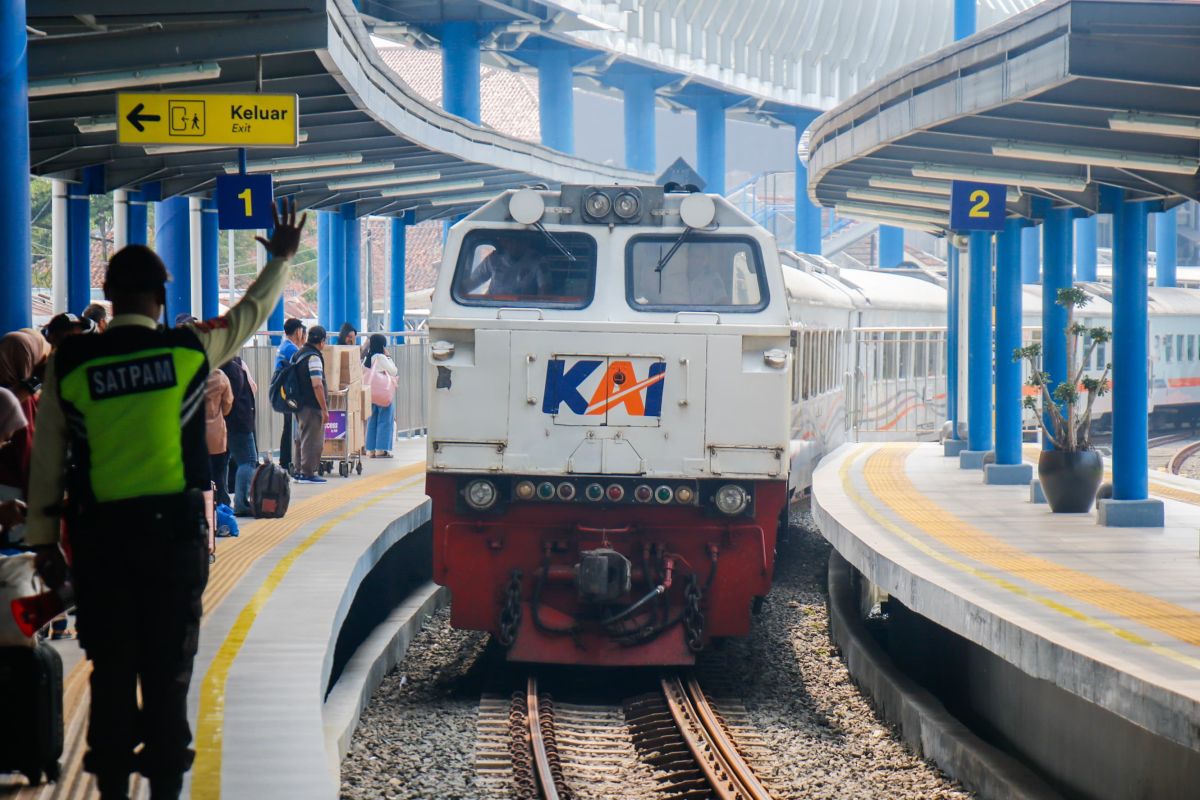
Jakarta (ANTARA) - Long weekends often change the travel patterns of people in the Greater Jakarta area. While on weekdays, mobility is dominated by trips to economic centers, during long holidays, movement shifts towards tourist areas and quieter satellite cities. On the Bogor-Sukabumi route, this change is evident in the increasing interest in using the Pangrango local train.
As of 10:00 AM on May 15, 2026, as many as 17,689 passengers had purchased tickets for the Pangrango train for the long weekend period. This figure shows that the local train is increasingly being chosen by people because it offers reliable travel times amidst the congestion on the Bogor-Sukabumi road, which often increases during weekends and holidays.
The Pangrango train serves the Bogor Paledang-Sukabumi route using executive and economy class carriages with fares starting from IDR 40,000. In a travel time of approximately 1 hour and 40 minutes, this train passes through the Batutulis, Maseng, Cigombong, Cicurug, Cibadak, and Cisaat areas before arriving in Sukabumi.
On this route, the train has developed into a part of the economic pulse of the area. Scheduled journeys make the mobility of tourists, daily workers, MSME actors, and people between regions more efficient. Areas that were previously synonymous with traffic congestion on weekends now have a more stable and measurable travel alternative.
Vice President of Corporate Communication at KAI, Anne Purba, said that the Pangrango train is currently developing as an important link for community mobility on the Bogor-Sukabumi route.
“The Pangrango train provides a more efficient and affordable travel option for the community. When vehicle volume increases during long weekends, the train provides reliable travel times so that people can plan their trips more comfortably,” said Anne.
From a tourism perspective, the presence of the Pangrango train also helps expand access to various destinations along the Bogor-Sukabumi route. Tourists can reach the Lido area via the Cigombong Station, access the Situgunung nature tourism via the Cisaat Station, and enjoy the Batutulis heritage area in Bogor City. This travel pattern encourages local economic activity because tourists are no longer concentrated in one destination.
The ease of connectivity also strengthens the role of this service. The presence of a skybridge connecting Bogor Station and Bogor Paledang Station makes it easier for Commuter Line passengers from Jakarta to continue their journey to Sukabumi. Integration with Trans Pakuan and JR Connexion also expands the reach of community travel without having to rely solely on private vehicles.
The impact of this mobility growth is reflected in the increase in passenger volume at Bogor Paledang Station. In the first quarter of 2026, passenger volume reached 127,510 people, an increase of 410 percent compared to the same period in 2025, which was 24,979 passengers. Meanwhile, the number of passengers decreased by 130,515, an increase of 561 percent compared to the first quarter of 2025, which was 19,729 passengers.
This surge shows that Bogor Paledang Station is developing into a new mobility hub in southern Greater Jakarta. The station’s role is not only as a departure point but also as part of the daily and tourist travel patterns of the community, which continue to grow along with the increasing need for practical, affordable, and integrated public transportation.
“KAI sees the growth in passengers on the Bogor-Sukabumi route as an indicator of increasing public trust in rail-based public transportation. We continue to maintain the reliability of the Pangrango train so that it can support community mobility and sustainable regional growth,” Anne concluded.