
15 Percent Free Float to Be Implemented Gradually, OJK Anticipates Delisting Risks
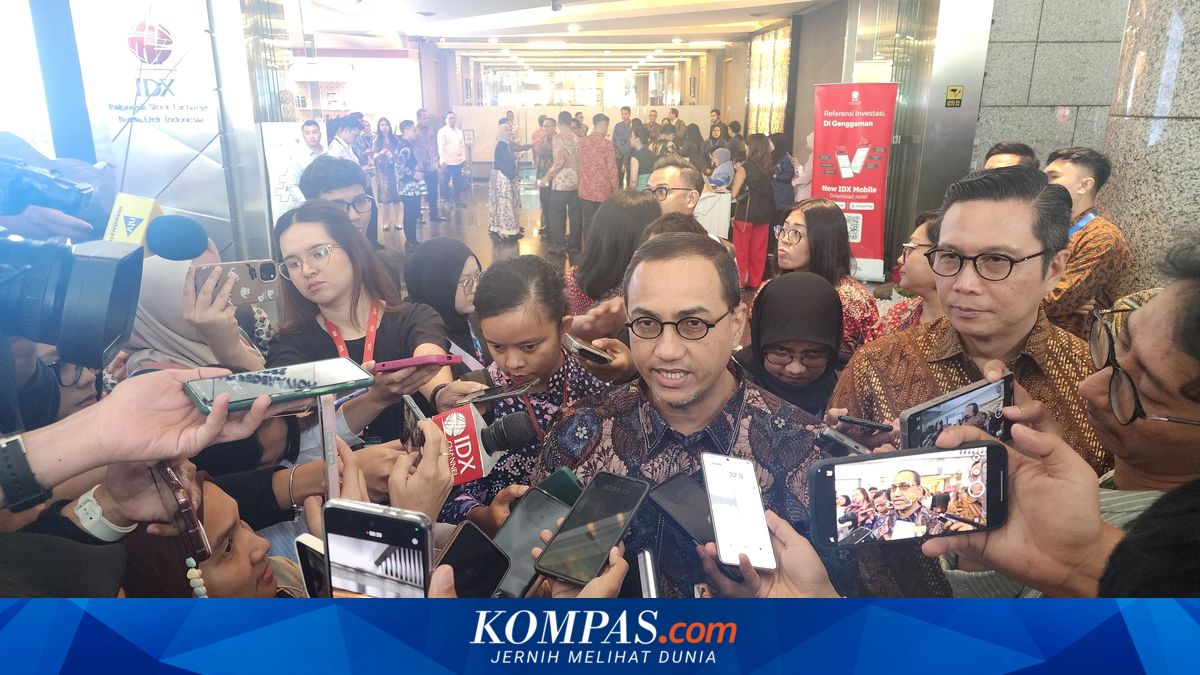
JAKARTA, KOMPAS.com - The Financial Services Authority (OJK) and Self-Regulatory Organisation (SRO) are preparing a phased evaluation mechanism to anticipate delisting risks for conglomerate issuers that do not meet the minimum 15 percent free float threshold.
The Executive Head of Capital Market Supervision, Financial Derivatives, and Carbon Exchange at OJK, Hasan Fawzi, stated that the free float increase policy, as stipulated in BEI Regulation Number I-A, will be implemented carefully, taking into account the actual market conditions.
The evaluation will also involve various parties, from the Indonesia Issuers’ Association representing the supply side to securities companies’ associations and investment managers representing the demand side.
The fulfilment of the minimum 15 percent free float requirement will be carried out gradually, with target setting between each stage, accompanied by monitoring and assistance to ensure achievement of the final target within the specified timeframe.
For example, companies with a market capitalisation above Rp5 trillion and an existing free float below 12.5 percent will be given one year to reach the 12.5 percent target.
Subsequently, those companies must achieve 15 percent by the end of the second year.
Meanwhile, the third group, companies with market capitalisation below Rp5 trillion, must all meet the 15 percent free float requirement within a three-year period.
Hasan noted that each annual cycle, especially towards the end of the evaluation periods in the first, second, and third years, will undergo a comprehensive assessment based on input from various parties.
The evaluation is crucial, even though the free float increase policy is seen as positive for improving market quality and liquidity; the regulator still considers the issuers’ capabilities and the market’s absorption capacity.
In practice, market conditions greatly determine the success of the policy’s implementation.
Even in normal situations, a simultaneous free float increase may not always be fully absorbed by investors.
The market tends to select selectively, so not all issuers can immediately meet the targets in the initial stage.