
15 Deadly Faults Splitting the Americas, a Catastrophic Earthquake Could Strike at Any Time
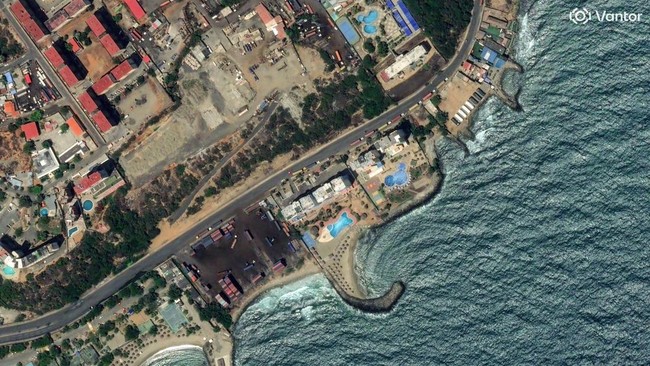
Venezuela has recently been struck by a major earthquake disaster. Not one, but two powerful earthquakes occurred in very close succession, causing heavy damage across several regions.
The two earthquakes occurred on Wednesday (24/6/2026) local time. The first earthquake had a magnitude of 7.2, followed by a second, even stronger earthquake of magnitude 7.5 less than one minute later. The epicentre was located around the western region of Caracas, the capital of Venezuela. According to USGS data, the second earthquake occurred only about 39 seconds after the first.
The impact has been immense. Recent reports indicate that between 188 and 235 people have died, while thousands of others are injured or remain trapped under rubble. Severe damage has been reported in La Guaira, a coastal region near Caracas, as well as several points within the capital. Approximately 250 buildings, including hospitals and public facilities, are reported to have sustained damage.
The earthquakes have also disrupted essential activities in the country. Electricity and communication flows in Caracas were temporarily interrupted. Airports and transport services were also affected, while schools were closed and some were repurposed as shelters and aid centres.
The tremors were not only felt in Venezuela. Shaking was reported in several surrounding areas, including neighbouring countries in South America and the Caribbean. This is unsurprising, given that the epicentre is located in an active tectonic zone near the boundary of the Caribbean and South American plates.
Why do large earthquakes occur in Venezuela?
Geologically, Venezuela is in a highly complex area. The country sits near the meeting point of the Caribbean and South American plates. When these two large plates move and slide against each other, energy can accumulate over a long period. When that energy is finally released, an earthquake occurs.
The recent major earthquake in Venezuela was triggered by shallow strike-slip movement. In simple terms, this means two large blocks of rock in the Earth’s crust move horizontally past each other. Rather than one moving over the other, it is more like two sides of land sliding in opposite directions.
The situation became more destructive because the two large earthquakes occurred within a very short interval. Such an event is known as a ‘doublet earthquake’, where two large earthquakes of similar magnitude, location, and timing occur close together.
This event has brought attention to an important issue: the existence of active faults or fractures in the Americas, particularly in northern South America and the Caribbean.
What are faults?
A fault is a large fracture in the Earth’s crust where two blocks of rock move against each other. This movement can happen slowly, but can also be held in place for years or even hundreds of years.
When pressure along the fault continues to build and the rocks can no longer withstand it, the energy is released suddenly. This release of energy is what is felt as an earthquake.
There are several major faults located in the Americas.
The Americas contain numerous faults. In northern South America and the Caribbean, many active faults are interconnected or exist within a single large tectonic zone.
Venezuela is prone to earthquakes because it is near the meeting point of the Caribbean and South American plates. In this region, several major faults are interconnected, namely the Boconó, San Sebastián, and El Pilar faults. This chain of faults makes northern Venezuela and its surrounding areas vulnerable to seismic activity.
One of the most significant is the Boconó Fault. This fault extends from western to northern Venezuela and serves as one of the primary pathways for crustal movement in the country. Due to its position in an active zone, the Boconó Fault is frequently linked to earthquake potential in Venezuela.
Additionally, there is the El Pilar Fault located in northeastern Venezuela. This fault extends around Sucre, Cariaco, to the Gulf of Paria. The El Pilar Fault is also critical as it lies on a crustal movement path that makes eastern Venezuela and its surroundings earthquake-prone.
Given its geological position on a plate boundary, Venezuela and several neighbouring countries cannot be separated from the threat of earthquakes.