
145 Regulations Slashed, Self-Sufficiency Achieved—Making Farmers Prosperous
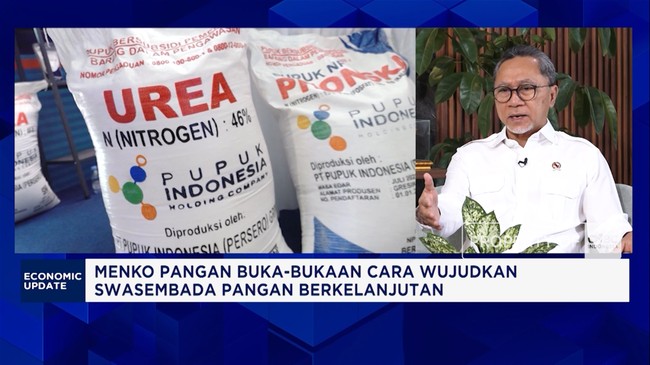
The administration of President Prabowo has officially announced the achievement of food self-sufficiency in 2025, faster than the 2029 target. Coordinating Minister for Food Zulkifli Hasan stated that the success of food self-sufficiency cannot be separated from President Prabowo’s steps to correct policies that had been in place for 28–29 years following the reform era in the free market period. This was carried out through strategies and policies for food self-sufficiency leading to food sovereignty, which focus not only on increasing production but also on efforts to boost the welfare of Indonesian farmers, fishermen, and livestock breeders. One of these policy reforms involved cutting 145 regulations on the distribution of subsidised fertiliser to farmers, resulting in a 7–8% increase in rice production. Additionally, rice field productivity was improved through the completion of irrigation projects. On another front, the government raised the price of unhusked rice for farmers and addressed the problem of middlemen to secure better prices. In an effort to maintain sustainable food self-sufficiency, the government is undertaking several programmes, including the creation of new rice fields in Merauke, Papua, Central Kalimantan, and South Sumatra covering 1 million hectares. The function of rice fields is also being strengthened through regulations prohibiting the conversion of agricultural land into residential areas and other uses. The government is also cooperating with the National Research and Innovation Agency (BRIN) to develop rice seed varieties that can increase rice productivity. Furthermore, the government is pushing for protein self-sufficiency by 2026, covering fish, shrimp, eggs, and chicken. The Ministry of Marine Affairs and Fisheries has launched the flagship Kampung Nelayan Merah Putih programme aimed at increasing fish catch productivity while ensuring fishermen’s welfare and tackling issues with middlemen and loan sharks. A total of 20,000 Kampung Nelayan Merah Putih, supported by the Merah Putih Village Cooperatives, will address fishermen’s problems through the construction of auction halls, ice factories, cold storage facilities, and the strengthening of distribution chains for fishermen’s catches. Regarding the Merah Putih Village Cooperatives, which are targeted to reach 80,000 units, Minister Zulhas said the initial phase is focusing on 40,000 units and they will begin operating in September 2026. These cooperatives are not supermarkets; their function is to resolve long supply chain issues. The cooperatives are also intended as government infrastructure to distribute social assistance accurately, as well as to channel subsidised fertiliser, subsidised gas, and access to low-interest financing. The cooperatives will also act as off-takers to support village economic activity by absorbing local rice and fish production.