
143.9 Million Indonesians Predicted to Travel Home for Eid 2026
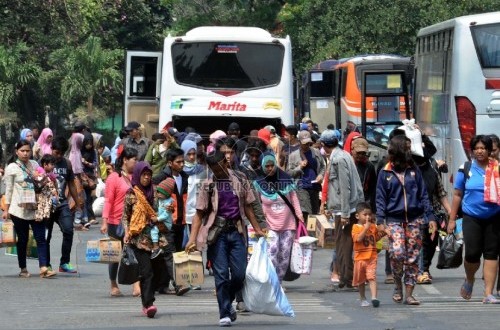
Bandung — West Java’s Transportation Authority (Dishub) is undertaking mapping and preparation efforts to manage the anticipated Eid holiday travel surge for 2026 (1447 Hijriah), assessing the potential scale of passenger movement across the region.
The Head of West Java’s Transportation Authority, Dhani Gumelar, stated that West Java is not merely a mudik destination but serves as a key transit passage for travellers heading to Central and East Java.
“Survey results from the Transportation Ministry demonstrate a significant volume of movement from western regions, including Banten, Sumatra and Jakarta and surroundings, heading eastward towards Central Java, Yogyakarta and East Java,” he said on Monday (9 March 2026).
Gumelar explained that West Java’s central location means that most journeys to East Java will necessarily transit through West Java and Central Java first. Given this situation, various preparedness and contingency measures have been implemented by authorities.
Beyond mudik, travellers in West Java are also expected to utilise the holiday period for tourism activities, particularly given the relatively lengthy 12-day Eid holiday period comprising work-from-anywhere arrangements, common leave and the Eid break itself.
“Based on movement patterns from previous years, tourism-related travel is likely to peak at H+2 (two days after Eid), whereas H-7 (seven days before Eid) will be dominated by people travelling back to their hometowns, with tourism activity increasing subsequently at H+2,” he said.
He noted that popular tourism destinations sought by travellers include the Puncak area in Bogor, the greater Bandung region including Ciwidey and Lembang, southern coastal areas such as Pelabuhan Ratu and Pangandaran, as well as the north coast route.
Transportation modes utilised include road vehicles, trains, ferries and air transport. Gumelar indicated that train services attract relatively high interest from the public, followed by road vehicles, ferries and air travel.
He added that 143.9 million Indonesians are predicted to undertake Eid travel, representing approximately 50 per cent of Indonesia’s population, whilst the remainder stay put.
“Seventy-six point two four million will use private vehicles, 24.8 million two-wheeled motorcycles, and the remainder will likely use buses, ships and aeroplanes,” he said. He noted that the primary mudik destinations are West Java, East Java, Central Java and Banten.