
140 Years of Medan–Labuhan Line: KAI Strengthens North Sumatra Rail Role in Trans Sumatera Agenda
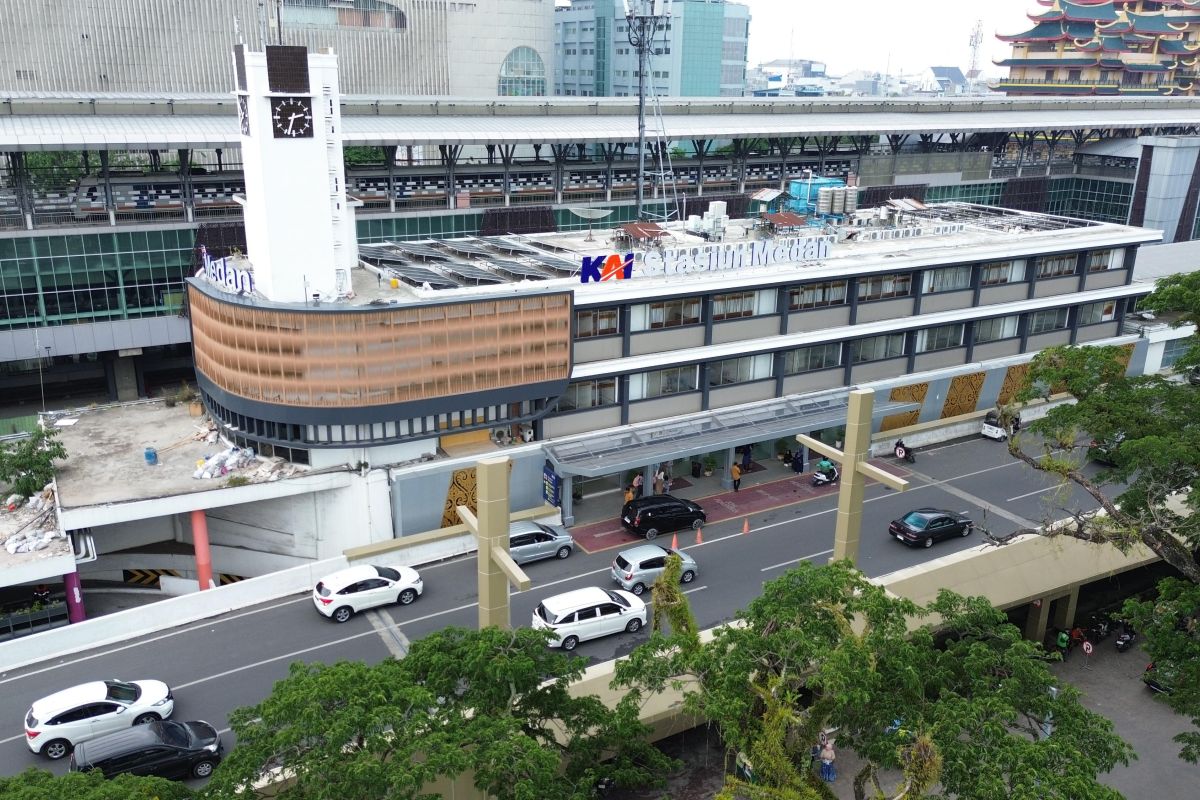
Jakarta (ANTARA) - President Prabowo Subianto’s directive to make the national railway system a development focus holds significant meaning for strengthening KAI’s services in North Sumatra. This region has a long history as one of the starting points of railway development in Sumatra and serves as a strategic node in the Trans Sumatera connectivity agenda.
The history of railways in North Sumatra is inseparable from the economic development of East Sumatra in the late 19th century. In 1883, Deli Spoorweg Maatschappij (DSM), a private Dutch railway company, built a network to connect plantation centres with trading hubs and ports. A key milestone followed on 25 July 1886, when the 16.743-kilometre Medan–Labuhan line officially began operations, establishing the railway’s role in linking Medan, plantation areas, and the port as a distribution gateway for agricultural produce.
Since then, the rail network in North Sumatra has evolved into an economic connector. From Deli tobacco, rubber, and palm oil to everyday commodities, the railway has shaped the movement of goods and the growth of key cities such as Medan, Binjai, Tebing Tinggi, Pematangsiantar, Tanjungbalai, and Rantau Prapat.
KAI Vice President of Corporate Communication Anne Purba stated that the history of North Sumatra’s railways demonstrates how the railway has always been present to serve the needs of the community and the regional economy. “The rail lines in North Sumatra were born from the need for access. In the past, they connected plantations and ports; today, they serve public travel, supply chains, industrial estates, airports, and economic centres,” Anne said.
According to KAI Regional Division I North Sumatra data for 2026, the region has 476.46 km of active track and 43 active stations spread across 13 regencies and cities. This network is a vital part of passenger and freight services, connecting Medan with strategic areas such as Binjai, Tebing Tinggi, Kisaran, Tanjungbalai, Rantau Prapat, Pematangsiantar, Belawan, Kuala Tanjung, and Kualanamu.
“Following the President’s direction, KAI views North Sumatra as a crucial node in the Trans Sumatera agenda. Strengthening rail services in this region must deliver direct benefits to the community and enhance regional logistics efficiency,” Anne said.
Currently, the KAI Group serves the people of North Sumatra through various services, including KA Putri Deli, KA Sribilah Utama, KA Siantar Ekspres, KA Datuk Belambangan, and KA Sri Lelawangsa. These services improve public access to city centres, buffer zones, workplaces, educational institutions, healthcare facilities, airports, and regional economic hubs.
Customer performance figures indicate that rail remains an important choice for the people of North Sumatra. In 2025, passenger volume for Regional Division I North Sumatra reached 2,638,292 customers. In May 2026 alone, KAI served 235,824 customers in the region. These numbers demonstrate that active stations and lines in North Sumatra serve a strong social function, assisting with daily commutes, family travel, work activities, education, and access to public services, while strengthening intercity connectivity with more scheduled travel times.
“For customers, the railway provides travel certainty. For businesses, it helps maintain distribution. For the region, stations open access to economic, educational, health, and government services,” Anne said.
In terms of freight services, North Sumatra holds significant potential due to its position between plantation centres, industrial estates, ports, and consumer markets. From January to May 2026, KAI Divre I North Sumatra transported 318,481.832 tonnes of goods, a 2.02 percent increase compared to 312,169.979 tonnes in the same period of 2025. The main commodities transported during this period included 145,959.255 tonnes of fuel, 130,012.781 tonnes of containers, 40,280.260 tonnes of crude palm oil (CPO), 1,692.906 tonnes of general cargo, and 536.630 tonnes of latex. This composition highlights the railway’s role in supporting energy distribution, industrial products, plantation outputs, and retail goods.
This potential is further enhanced by the presence of Belawan, Kuala Tanjung, the Sei Mangkei industrial area, and the Medan–Binjai–Deli Serdang growth corridor. With its established network, the railway can play a greater role in strengthening supply chains, reducing road congestion, and boosting regional economic competitiveness.
KAI also prioritises safety as a core element of service enhancement. In the Divre I North Sumatra area, there are 148 guarded level crossings, of which 107 are guarded by KAI, 15 by local government, 2 by private entities, and 24 by community self-help initiatives. Additionally, there are 376 unguarded level crossings, 17 flyovers, and 17 underpasses. This situation requires collaboration between KAI, local governments, the police, transportation agencies, public works agencies, businesses, and the community to ensure that improved connectivity goes hand in hand with the protection of rail and road users.
For lines and stations that are currently inactive, KAI treats them as part of its inventory and long-term studies. Any reactivation plan requires comprehensive assessments of safety, infrastructure readiness, spatial planning, community needs, economic potential, and support from central and regional governments.
“KAI preserves the history of North Sumatra’s railways as energy to serve the future. Every service improvement will be carried out gradually, measurably, and oriented towards customer needs and regional progress,” Anne concluded.
Source: jawawa.id (https://jawawa.id/newsitem/140-years-of-medan-labuhan-line-kai-strengthens-north-sumatra-rail-role-in-trans-sumatera-agenda-1781697448)
Originally published by Antara (Indonesian) (https://www.antaranews.com/berita/5611563/140-tahun-jalur-medan-labuhan-kai-perkuat-peran-rel-sumatera-utara-dalam-agenda-trans-sumatera), translated from Indonesian